 There are many Coming-of-Age films that try to make big statements, and then there are quieter ones like the Argentine drama Felipe. As someone who has spent years seeking out honest stories about youth, I am always drawn to films told from the awkward, subjective point of view of an adolescent. Felipe does not reinvent the genre, but it tells its story with sincerity and quiet confidence, capturing the weight of a divided family.
The film opens with a striking close-up of Felipe looking distressed, his hair almost blending into the flat yellow wall behind him. It is a simple but effective image that immediately shows us a boy who feels swallowed by his surroundings. From the start, we understand this is a character study about a teenager trapped in the emotional fallout of his parents’ separation.
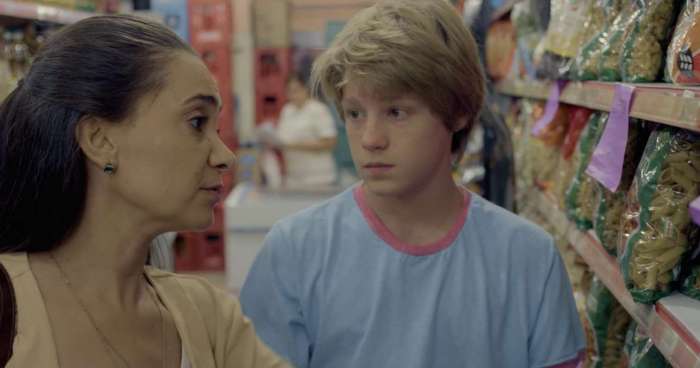
The specific Argentine setting may feel distant to some viewers, but the emotional reality is universal. Felipe’s father is affluent yet emotionally distant, and their relationship is marked by broken promises rather than open conflict. The boy quickly realizes that the adults around him “always make promises they don’t keep.” His father’s occasional presence offers only the illusion of stability.
With his mother, the sense of being trapped becomes more physical. Her world is filled with a heavy yellow tone that seems to press in on the scenes, including a tense restaurant dinner. Felipe is often shown behind barriers or looking out of windows, as if the framing itself reflects his desire to escape.
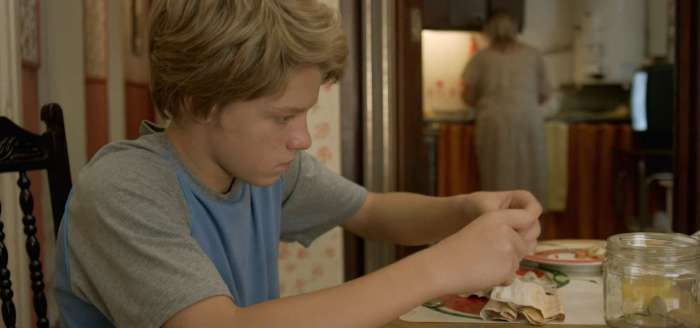
That desire finds a fragile outlet in his growing connection with a teenage neighbor. This first romance does not magically solve his problems at home, but it offers him a small breath of fresh air and the complicated excitement of youthful connection.
Even so, the film never loses sight of the deep, complex bond between Felipe and his mother. After he tries to run away and is found on the street, there is a powerful scene where they sit face-to-face on a bed. The tight framing and the shadows that fall across both of them bind them together visually, capturing the messy truth of their relationship: he wants to leave, yet he remains tethered to her when the outside world becomes too much.

Because the camera stays so close to Felipe’s face, we experience everything through his quiet awkwardness. The young actor has a vulnerable, expressive presence that reveals a kind of private devastation. Anyone who has lived through a family separation—and had to sit quietly while pretending to accept the adults’ new lives—will recognize that look immediately. It is a private pain that children often hide, and the film captures it with real honesty.
Felipe is a moving and deeply sincere Coming-of-Age story. For those who value authentic films about growing up, it is hard to remain indifferent. The movie understands something important: growing up is not always about breaking free in a dramatic way. Sometimes it is simply about learning how to sit in the awkward silence that the adults leave behind.