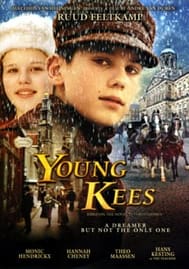
 “Lots of people didn’t know Kees Bakels. And one wonders why? Isn’t he the most important boy who ever lived?”
The quote above is from the opening of the coming-of-age film Kees de Jongen (Young Kees), based on the novel with the same name written by the popular Dutch writer and educator Theo Thijssen. If youdon’t know Keels Backels – don`t worry, because after you see the film you will know him and his world better than the kid next door. Isn’t Kees Bakels the most important boy that ever lived? You’ll have to watch the film to find out the answer to this question.
The main protagonist in Kees de Jongen is a twelve-year-old boy growing up in Amsterdam in 1895. He is not rich, but loves to dream about what he would wear or do if he were. In fact, being a sensible boy with a wild imagination, he loves to dream of just about anything – often mixing fantasy with the real world. His fantasies are illustrated in such a natural manner that one wonders whether he is observing reality or the boy’s dream world. The young Kees seems just as confused about that difference, or, rather, uses his resourcefulness to enhance his world to help him deal with the challenges that life has in store for him. And, as for every young person, there are plenty of challenges in his life – his father becomes sick, Kees has to find a way to support his mother and younger brother and sister, and do well at school, while all the while trying to manage his feelings for a newcomer to his school – a girl called Rosa Overbeek.
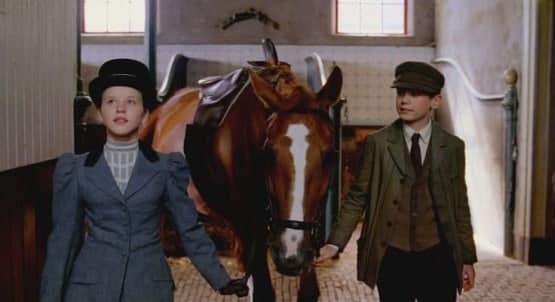
The story of the young Kees Bakels is told in a manner that combines the advantages of the film’s technologies (wonderful camerawork, digital effects and creative usage of colour filters), the theatre (wonderful costumes, props and a sense of closeness to the action and the actors) and the books (storytelling-like narrating).
The voiceover (Hans Kesting) added a nice touch to the film. Frequently the action would either pause to focus on a specific scene or happening, or would continue while the narrator would ask questions or make observations, which make the viewer feel as if he is being told a fairy tale (a similar sensation was achieved in the German film NimmerMeer – the only difference being that there the viewers were aware of the person who was narrating the story). The narrator also comments on the protagonist’s thoughts and leads the viewer through the story.
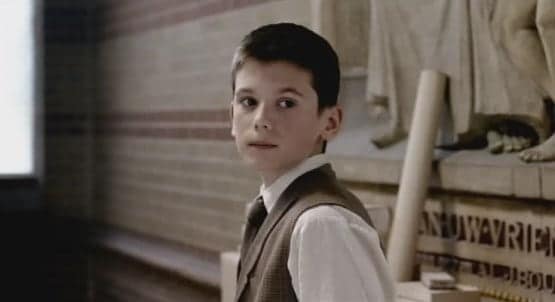
The young Ruud Feltkamp delivers an exceptional performance in the challenging role of Kees, which requires a unique blend of bravado and awkwardness. He also stars in Kruimeltje, another highly recommended coming-of-age film from the Netherlands. Fortunately for him (and for us as viewers), he was accidentally spotted by the film’s director (André van Duren) while shooting a commercial. Ruud has a real passion for acting and, thanks to his immense talent, contributes greatly to the film’s story. The rest of the cast (both the child actors and the adults) is equally good and, in combination with the authentic settings and wardrobe, allows the viewer to really sense the atmosphere in the Netherlands in the early years of the 20th century.
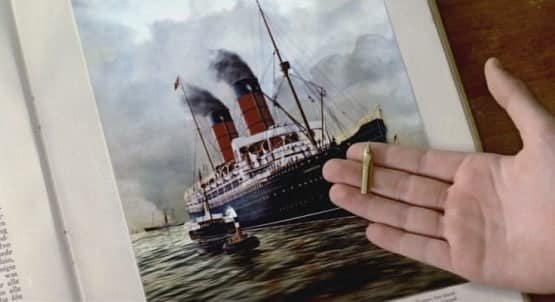
Sigma Pictures- the company that produced the film – is well known for its quality releases of independent films in the Netherlands, which every fan of coming-of-age films recognises. Among them are classics such as Ciske de Rat and Ritual, and controversial films such as Voor een Verloren Soldaat. For a complete list of the studio’s filmography, please consult its official web page. The studio’s tradition of adapting coming-of-age novels for the big screen and the creative direction of André van Duren made Kees de Jongen a real masterpiece, which I highly recommend. The film is likely to appeal to both younger and older audiences who would equally enjoy a fairytale-like story.
 Film title: Kees de Jongen
Release year: 2003 – Sigma Pictures
Director: André van Duren
Cast: Ruud Feltkamp, Ger Van Der Grijn, Hans Kesting, Sebas Berman,Yannick van de Velde, Monic Hendrickx, Theo Maassen and others