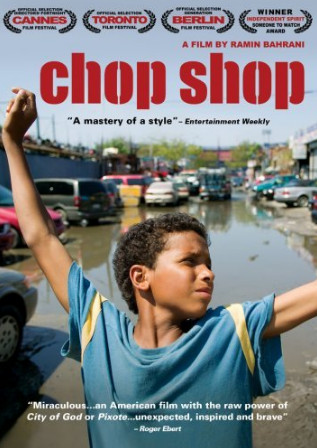
 The first thing that hits you about Chop Shop isn’t what you see; it’s what you hear. The grinding of scrap metal, the relentless wind, the heavy bass of reggaeton pulsing from passing car stereos. This is Willets Point, Queens, New York City—a sprawling, grease-stained labyrinth of auto-salvage yards and makeshift repair shops that feels entirely disconnected from the glittering skyline just a few miles away. This isn’t a traditional cinematic backdrop; it’s a raw, deafening, living ecosystem. And right in the middle of it is Ale (Alejandro Polanco) . He looks about twelve years old, but he already carries himself with the streetwise hustle of someone much older. The sheer volume of this scrapyard presses in on him, leaving almost no quiet room for him to just be a kid
Writer/Director Ramin Bahrani’s camera refuses to sit still. It shadows Ale everywhere, giving the film a restless, documentary-like rawness. Because the camera is constantly on him, you would think it would be easy to step into his shoes. The young lead actor has a wonderfully expressive face, and you can read the heavy toll of his daily grind just by looking at him. Yet, the camera keeps a strange, unyielding distance. It watches him work, it watches him hustle, but it rarely invites us into his heart.
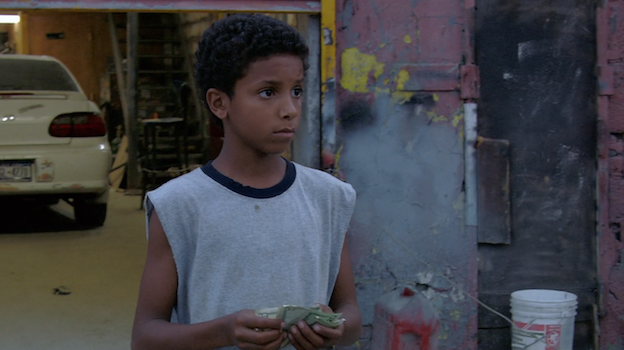
People often say that a film review should be objective. I have never believed that. Watching a Coming-of-Age story is a deeply subjective act; you invest your own memories and emotions into the act of watching. As a man who was once a boy, I usually find an anchor in young male leads, naturally connecting with the universal pains of growing up. But with Ale, I found myself hitting a wall. His reality in that Queens auto district is so foreign to my own that I struggled to fully identify with his journey. At times, his character felt a bit trapped in the cliché of a street kid, and the immense weight of his environment overpowered him—or at least, it overpowered me as a viewer.
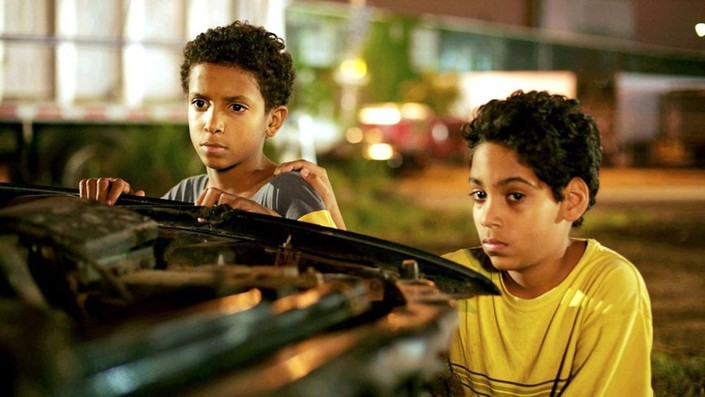
But sitting with that discomfort is where the true impact of Chop Shop lies. The film doesn’t offer us the warm nostalgia or easy emotional hooks we usually look for in stories about youth. Ale’s world is loud, abrasive, and unforgiving. The scrapyard is his playground, but it’s also his cage.
My inability to deeply connect with him isn’t a flaw in the viewing experience; it is the film’s most honest truth. It forces us to realize that some childhoods are purely about surviving the noise. It leaves outsiders like us with nothing to do but watch from the edge of the lot, acknowledging the vast, unbridgeable distance between our world and his.
I know critics like Roger Ebert have compared Chop Shop to masterpieces like Pixote or City of God, but honestly, I don’t feel it sits on that same level. And that’s not necessarily a knock against it; it’s just a completely different beast. Films like City of God grab you by the collar and force you to care, pulling you into a kinetic, heartbreaking tragedy that demands your emotional investment.
Chop Shop actively refuses to do that. It trades the operatic drama of the streets for the grinding, detached monotony of an American scrapyard. It doesn’t have that same narrative fire or momentum, which is exactly why it might feel like a tougher, less rewarding watch. It isn’t trying to be a thriller or a tearjerker—it’s just a record of relentless, unglamorous work, holding you at arm’s length while it happens.

In the end, Chop Shop is not a film that will hold your hand or offer a comforting moral. It doesn’t wrap up Ale’s struggle with a neat, satisfying bow. Instead, it leaves you standing in the dust of Willets Point, listening to the fading roar of the engines.
If you come to Coming-of-Age cinema looking for the warm, nostalgic ache of a simpler youth, this film will leave you out in the cold. But if you are willing to embrace the friction—to witness an authentic, uncompromising portrait of a childhood forged in iron and exhaust—then this is a vital watch. It is a difficult, alienating experience, but sometimes, that is exactly what a film needs to be to tell the truth.