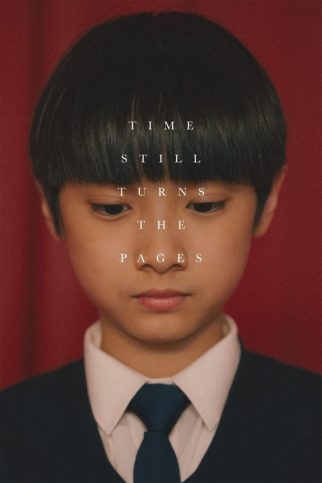
 That first tight, intimate focus on young Eli Cheng’s face: it’s the whole story in one frame. Writer-director Nick Cheuk doesn’t gently invite you in. He pulls you under. The camera rushes in, eliminating the environment entirely, and we are immediately gripped by a kinetic energy that forces us to witness a childhood bounded by demands.
Then, the lens pulls back. We see our young protagonist silhouetted against an oppressive, towering Hong Kong cityscape. The shadows do not hide his grief. They expose it, swallowing him in concrete and capturing the fragile, transient nature of youth.
As the story evolves, the camera sweeps us deep into the domestic space of young Eli, his brother Alan, and their parents. On the outside, the frame captures a pristine family. But as the lens lingers, that facade fractures. Adding to this tension is a soundscape drawn entirely from the characters’ world.
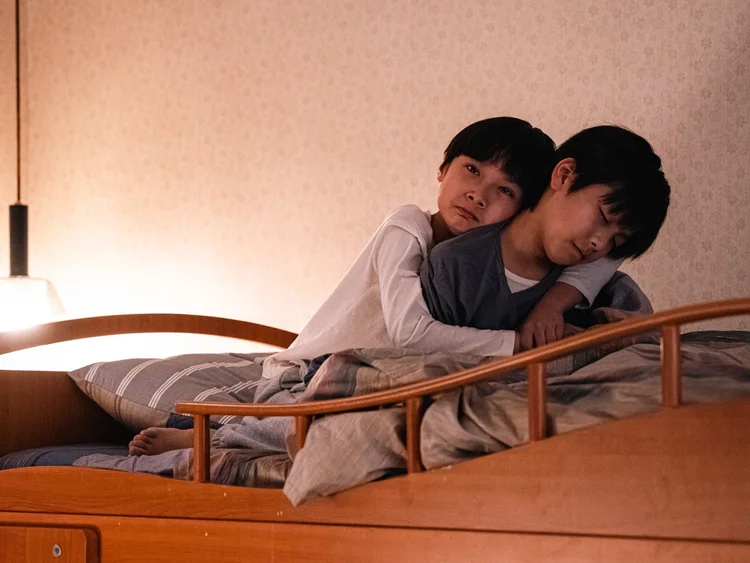
Rather than relying on an orchestral score to dictate our feelings, the music and ambient noise are pulled straight from the characters’ reality. Every stifled interaction feels intensely immediate. The raw, unshielded expressions of the young cast, anchored by Sean Wong, do the heavy lifting here, translating unchecked parental ambition into silent, onscreen tension.
One quiet scene shows the film’s strength perfectly. After a harsh punishment, young Eli is forced to throw away the shredded remains of his comic books. Instead of watching him from a distance, we are placed at the very bottom of the trash bin, looking up. Framed by the crinkled, suffocating edges of a black plastic bag, we aren’t just observing a boy discarding paper. We are looking up from the grave of his imagination. A blown-out ceiling light washes the innocence from his features, leaving only a hollow resignation. By destroying those comics, Eli actively participates in the erasure of his own youth just to survive his household.
The true power of this film, however, lies in its narrative revelation. Those vivid shifts in perspective are not a child’s daydreams; they are the inescapable memories of an older protagonist. The transition between past and present is never abrupt. There are no jarring cuts. Instead, the timelines bleed together organically. We are watching an adult project unhealed trauma onto the youth before him, turning a coming-of-age story into a haunting look back at survival.
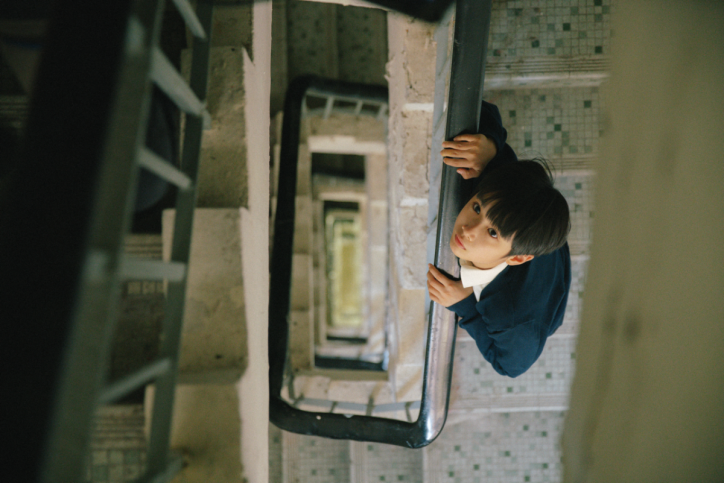
As the film races toward its conclusion, these fractured timelines come together with real precision. Watching this unfold, it is difficult not to reflect on my own childhood—on the emotional distance between the boy I once was and the adult I am now, recognizing the universal struggle to navigate those early, fragile years. The payoff highlights this vast divide between adults who demand perfection and the children who bear the consequences. We watch a boy who believes, “I am worth nothing to anyone,” only to be offered a desperate lifeline: “One day, you will grow into the person you want to be.” The film refuses to hand-feed a neat resolution. It lets these lessons hang in the theater, leaving their significance to be decoded. It is a deeply rewarding experience—one that demands a second watch just to catch every lingering shadow.