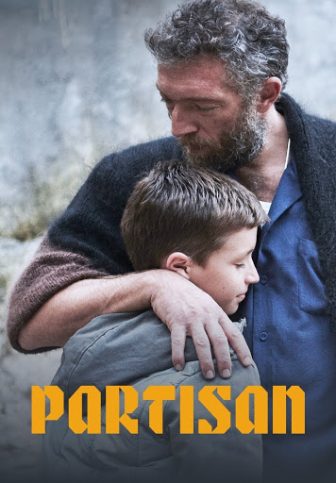
 The best thing about Partisan is its original narrative. For someone like me, who has watched thousands of Coming-of-Age films over the years, finding a story that feels genuinely fresh is a reward on its own. But let’s be clear: this is not a film I am likely to recommend to people who are new to the genre, or to those who want an easy-to-grasp, emotionally manipulative narrative—even if manipulation is a core part of the story itself.
From the opening, the film establishes a sonic and atmospheric dissonance that never quite lets you settle. There is an “electric” quality to the sound design and a deliberate linguistic friction. The characters speak English, yet the setting feels resolutely like an isolated, claustrophobic corner of Eastern Europe. It creates a “nowhere” environment, forcing us into the same state of displacement as the children living there.
The commune is a closed, patriarchal ecosystem ruled by Gregori (Vincent Cassel). His past is a bit of a mystery, and he certainly carries the traits of a modern-day Fagin from Oliver Twist. Yet, Cassel plays the role not with overt villainy, but with a terrifying, charismatic restraint. Strangely enough, at first I didn’t feel there was anything inherently wrong with how he ran his close-knit society. Yes, there are strict rules, but every society needs them to survive. The film doesn’t rush to judge him, and because of that, it doesn’t allow the audience to do so easily either.
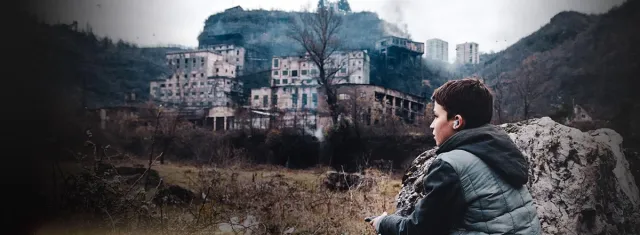
Instead, the film is primarily observational. The cinematography builds a world that feels simultaneously protective and prison-like. The framing of the commune itself is controlled, almost clinical, which contrasts sharply with how the camera treats young Alexander (Jeremy Chabriel). We are trapped alongside him, and the lens stays hungrily on his beautiful face—specifically his eyes, which act as our primary map for his internal awakening. We aren’t invited to identify with him easily; rather, we are forced to witness him. The true shift comes with the arrival of Leo (Alex Balaganskiy), a new boy whose verbal defiance of Gregori acts as a catalyst, sparking Alexander’s own search for self-awareness and autonomy.
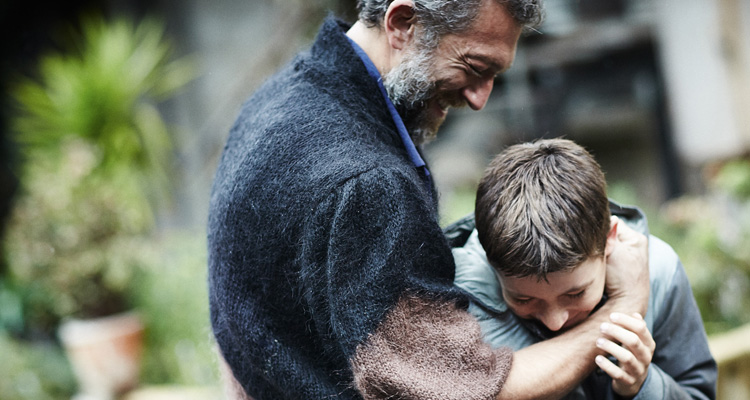
Partisan explores the loss of innocence not as a single dramatic moment, but as a slow, painful process of moral awakening and growing independence. And it leaves a mark. As a personal anecdote, shortly after watching the film, I sat down for a meal and found myself having trouble eating the chicken. Those of you who have seen the film will know exactly what I mean. It proved to me that whether I was completely fond of the film itself or not, the story had bypassed my intellect and affected me on a subliminal level.
True fans of thoughtful, slow-burn Coming-of-Age dramas are likely to enjoy it, even if the mysteries to be deciphered are numerous and you are left with more questions than answers as the final credits roll. But if you pay attention, you’ll know exactly how events are likely to unfold, and perhaps more importantly, why they have to happen the way they do.