The youngest person on the Tomorrowland bill was fourteen years old.
Not a mascot. Not a between-sets novelty. A working DJ on the same stages as the biggest names in electronic music, playing to people two and three times his age — and he is not alone. Behind the decks at festivals, on talent shows and across every social feed, a generation of boys has arrived years before anyone expected them: eleven, twelve, fourteen years old, mixing live in front of crowds that came to dance, not to indulge a child.
This site has spent twenty years finding young performers first and watching what happens next. The young DJs are the newest chapter of that story — and the most argued-about, because their instrument invites a question no young singer ever faces. Nobody asks whether the boy at the piano is really playing. Everybody asks it about the boy behind the decks. What follows is what the evidence actually shows: the technique, the records, the skepticism, and the moment every one of them now faces — when being able to play stops being enough.
A word about why this article exists, from me personally. I have loved electronic music since I was their age. My taste has shifted over the years — it runs to hard techno now — but I still go to parties to lose myself in the sound, and I love dancing as much as I love listening. Anyone who follows my personal account, @skykid, knows that side of me. So when these boys started crossing my path — eleven, thirteen, fifteen years old, already holding festival stages and club rooms — I recognised them for what they are: young talent in music, which is what theskykid.com has always dealt in. They deserve an article of their own. This is it.
ELFIGO — the Time Traveler
Elias Figoni was born in Brussels in 2011, grew up there, and moved with his family to Ibiza — the island that runs on the music he wanted to make. He started DJing at eight. He is fifteen now, and his stage name is ELFIGO.
The record line is short and verifiable. Tomorrowland Belgium, 2023, the Rise stage: the youngest artist ever to play the flagship festival, at twelve. Tomorrowland Winter, March 2026: the youngest artist in that festival’s history, at fourteen, playing two stages in the same weekend. Add Montreux Jazz, the Accor Arena in Paris and Got Talent Spain — and a management deal with One World Artists, the agency inside the Tomorrowland world.
What he plays is a formula he states himself: tech house underneath, the eighties and nineties on top. “I mash up songs from the ’80s and ’90s with current tracks to create a new style.” The fans call him the Time Traveler. His full Tomorrowland Winter set — eighty-five minutes, posted on his own channel — shows what the formula means in practice. He does not open with nostalgia. He opens with straight Drumcode techno, and only then reaches back: Daft Punk’s “Aerodynamic” two minutes in, Technotronic’s “Pump Up the Jam” at four and a half. From there the set moves at roughly twenty-five tracks an hour — hooks arriving every two minutes, acapellas layered over running tracks, a layer entering five seconds behind another in a way that only makes sense as live multi-deck work. There is no scratching anywhere in his record. He is a CDJ-generation DJ: the craft is selection, timing and layers.
And here is the tension this article will not smooth over. For a DJ branded on mashups, his biggest festival set contains not one slot credited as his own mashup. Six of its thirty-six tracks are edits by James Hype — the very DJ his critics accuse him of copying, an accusation he quotes himself in his own captions: “People say that I’m always copying the king James Hype… I dare anyone to replicate it.” The tracklist gives the critics half their case. The layering gives him the other half — three elements stacked under “Sweet Dreams” in his Amsterdam Dance Event set, acapellas riding tracks that never stop. In his earlier radio sets, most slots were credited as his own mashups; on the big festival stage, he leaned on finished edits by others. Both facts are true. And the second defines the test he has already named for himself: a DJ who does not make music, he says, “can’t go that far… so I can become a real artist.” A debut track with Spinnin’ Records is the down payment on that sentence.
His audience, where it can be read, is not asking the fake question. On a widely shared repost of his Robert Miles × Benny Benassi mashup — a blend his father set him as a challenge — the readable comments run about nine-to-one supportive, in French, in an older register than kid-hype: “Talent incroyable.” The nearest thing to skepticism in the sample is two people asking what his decks cost. The argument about ELFIGO is not whether he plays. It is whose music he is playing.
I will say plainly what I hear. He knows how to move a crowd — that is the first thing, and it cannot be faked. The time he has devoted to improving his craft is notable; you can hear the work in it. I have listened to his sets over and over again, and I have been recommending them to friends. Everyone was impressed. Great sound selection as well — the boy has taste.
DJ Archie — the apprenticeship
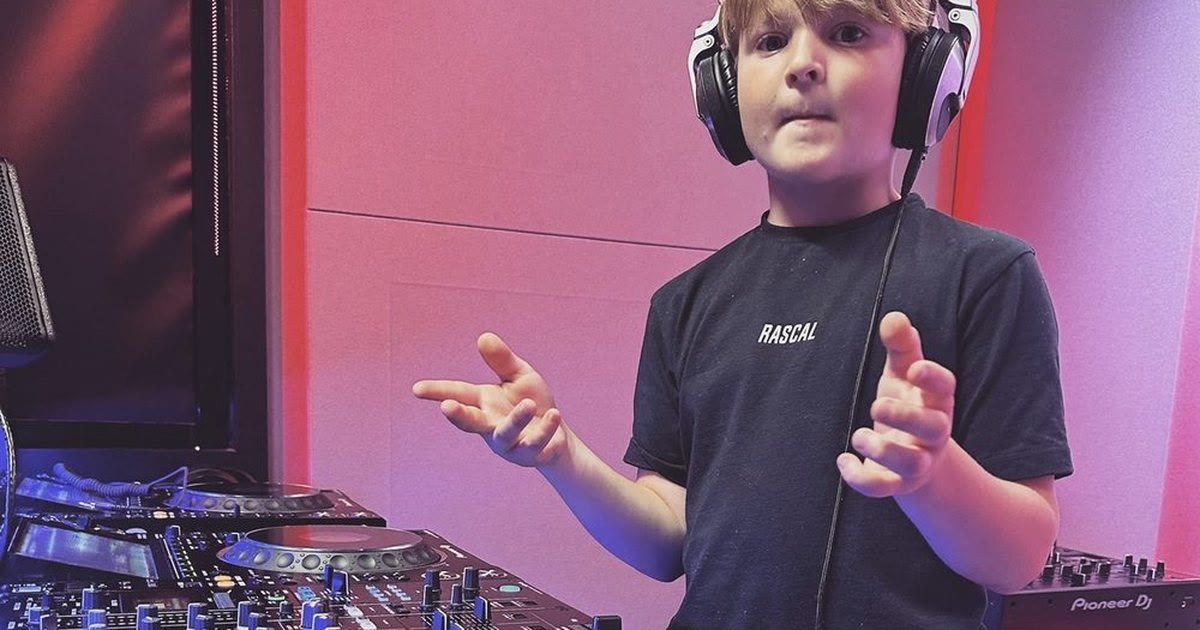
If ELFIGO is the festival story, Archie Norbury is the trade story. He was caught on his father’s decks at two years and ten months, already mixing two tracks in time. His father John — himself a DJ — taught him the way you teach a small child anything technical: colour-coding the equipment, “like Guitar Hero.” Then, in the father’s own words, he stopped teaching: “Now I don’t teach him anything really — I just let him fiddle around.”
At four years and 130 days, in a Hong Kong club, Archie played a full hour-long set, unattended, to a room of adults — and Guinness certified him the youngest club DJ in the world. Hold on to that word unattended. It is the strongest live credential in this entire article: not a two-minute television medley, but an hour alone with a room.
The rest followed in order. Glastonbury at eight, playing drum & bass, with Andy C calling him his “new best mate.” Tomorrowland at nine. The technique is documented and unglamorous: beat-mixing with filters and EQ, and an ear for structure — “he knows what an intro is, what a drop and a breakdown is.” His site lists his tempos like a working DJ’s card: house at 125, UK garage at 135, drum & bass at 178. What he wants next is a third CDJ-3000 “so I can triple drop.” He still gets nervous at the start of a set, he says — and for a long time he carried a step to reach the decks.
At eleven he has done the thing that separates a record from a career: he has started building the ladder behind him — a DJ school, an agency managing some twenty young DJs, and his own festival, Archfest, launched this year. In none of the press coverage gathered for this article does the pre-mixed accusation appear. The debate around Archie is not whether he can play. It is how far playing alone can take him — the same question as ELFIGO’s, in a different accent.
And my take is personal: Archie is inspirational. I have bought an FLX4 controller, hoping I can manage even one percent of his talent. I am a better dancer than a DJ — but Archie is so cool, and so amazing, that he makes you want to try.
DJ Arch Jnr — the original

Every story in this article has a first chapter, and it is a South African toddler. Oratilwe Hlongwane — DJ Arch Jnr — started on a DJ app on his father’s iPad before he could walk properly. In November 2015, aged three, he won South Africa’s Got Talent. He remains the youngest winner the franchise has ever had.
He is also where the skepticism was born. Within days of the win came the claims: cables not connected, a pre-recorded mix, a father pulling strings. The broadcaster answered on the record, and its answer is more interesting than either side’s shouting. There were two laptops on that stage: one running the DJ software, and one running a countdown system that cued a three-year-old through his set. The controller in front of him was connected. The playlists were set up by his father. That is neither fraud nor unaided club DJing — it is a cued, assisted performance, and it should be described exactly that way.
What answers the accusation best is not the rebuttal but the record. In June 2017, aged five years and thirty-eight days, he played an hour on professional decks in a Johannesburg club in front of a hundred people — his third attempt at the Guinness record, after failing at three because he could not concentrate for the full hour. In 2019 he took a standing ovation on America’s Got Talent: The Champions — “You are a total, total little star… I have plans for you,” said Simon Cowell — and played Wembley Arena on the British edition. And still, that same year, a South African television blog was writing that his act “raises a side eye of suspicion,” blaming editing that never lets you watch his hands for long. The doubt was never fully dispelled in those quarters, and this article will not pretend otherwise.
He is fourteen now. The medleys have localised — gqom, amapiano, a headline closing set at a kids’ festival in Mafikeng. His Instagram, followed by some nine hundred thousand people, still ends its bio the way it always has: “Page managed by Daddy.” He is not a discovery. He is the second chapter — the first child the world watched behind decks, now a teenager still working.
Efan Electro — the control case
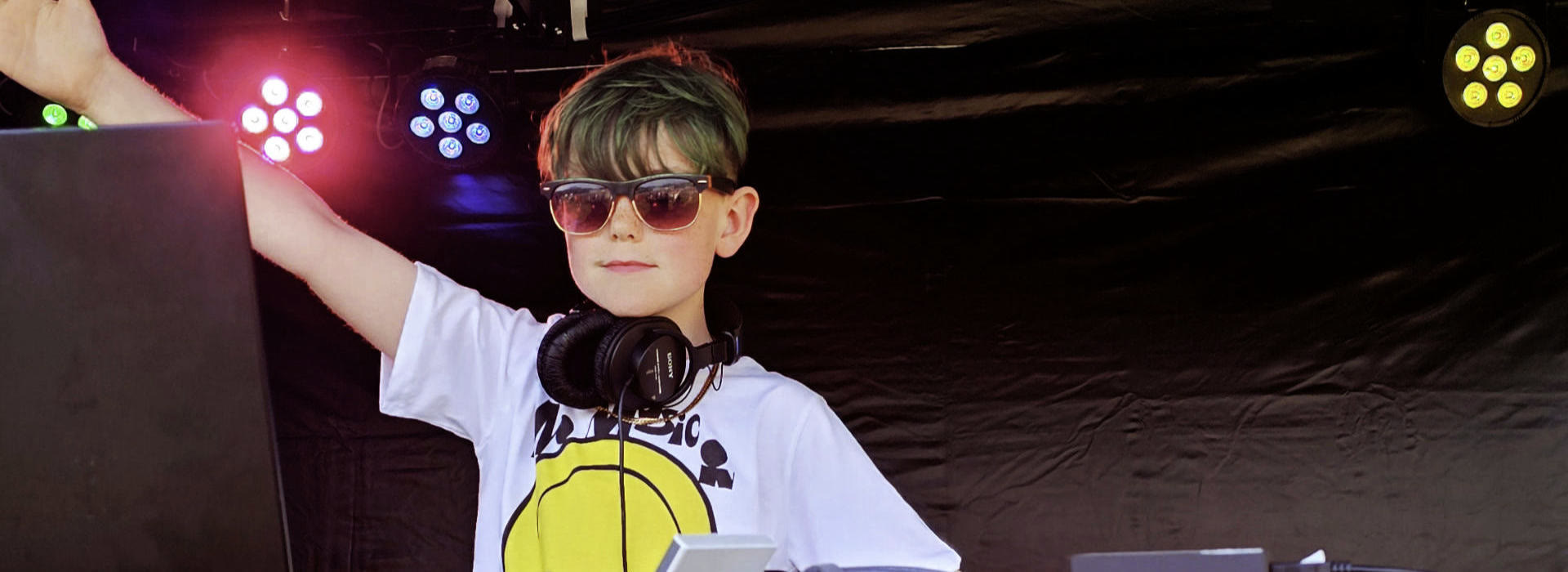
Now consider the same story with the industry removed. Efan is eleven, from Llanllechid, a village in Snowdonia. He started at seven. His favourite DJ is Fatboy Slim — “he’s the reason why I play house music.” At Kendal Calling last year, aged ten, he met the man backstage. He had folded “Blue Monday” into “Mr Brightside” in front of a dance presenter, and played a forty-five-minute set of house classics to a room that filled until the barriers went up.
His calling card is not a record or a ranking. It is a catalogue: dance tracks in Welsh. “Dyheadau.” “Swn Yn Anhygoel.” And this summer “Cofiwch,” a single about the flooding of Tryweryn — a wound in Welsh memory that most adult artists approach carefully — made as dance music by an eleven-year-old who lives in its landscape. BBC Introducing has played him more than once. BBC and S4C cameras have followed him for a documentary. Judge Jules calls him “the youngest warm-up DJ I’ve ever had.” The mix his own site puts first is titled “Ibiza Sunset Vibes — but on a farm.” That gap — Ibiza in the title, a Welsh farm in the picture — is the act, and he is entirely unembarrassed by it.
In everything gathered for this article, no skepticism about Efan exists. Not one “pre-recorded” thread. The likely reason is instructive: his circuit is family festivals and Welsh community media, not EDM social media — and the accusation lives where the EDM audience lives. Same age, same classics-heavy repertoire, cameras on him since he was ten, and nobody is asking whether he really plays. The question, it turns out, says as much about the room as about the boy.
His mixes live on his official music page.
Ethan English — answering with his hands

Ethan English is thirteen, born in Secunda, South Africa, and based in Dubai. He saw a schoolmate DJ at nine, found the craft boring at first — his own admission — and then did the least glamorous thing in this article: he took lessons, for four years, at Dubai Sound Academy, before the professional bookings came. The bookings are considerable: he opened for David Guetta at Ushuaïa Dubai, and is billed as the youngest DJ to have played both that stage and the UNTOLD festival.
His method, as he describes it, is a storyteller’s: a set should flow “like a story — peaks that lift the crowd, valleys that give them breath, and surprises that keep them guessing,” with sections road-tested at small gigs before a festival crowd hears them. His production habit is a field recordist’s — a subway train’s squeak looped into a track’s backbone, a dripping faucet kept as a hi-hat.
And Ethan is the one who shows you the skepticism from the inside. In March he posted a longer behind-the-decks clip for one stated reason: “I saw a few comments saying I am just pressing buttons and my set is pre recorded so I thought I’d share a longer clip to show a bit more of what I’m doing behind the decks. Everything is played live.” The clip has since been played more than seventy thousand times, and the supportive response dwarfs the accusation that provoked it. But notice the form of his answer. Not an argument. Not a statement from management. More footage of his hands. At thirteen, he already understands the rule of his trade: the only rebuttal is evidence.
His rebuttal clip is on TikTok, @dj_ethanenglish.
His crewmate in the Kids Rave collective comes from the other end of the music entirely.
Pulsar — the hard end
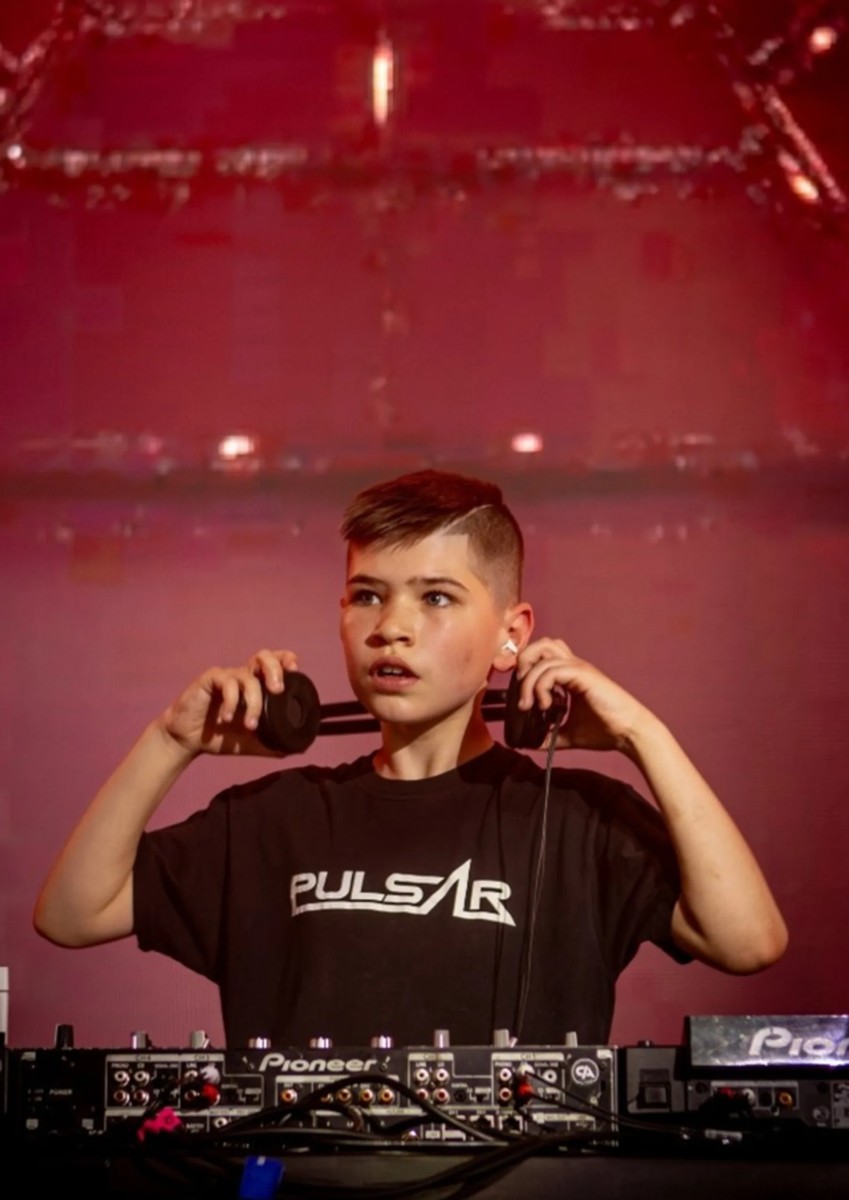
And then there is the hard end. Jay, who performs as Pulsar, is thirteen and from the UK. He was mirroring his father on the 1210s at two years old, mixing competently on CDJs at three, and running livestreams that went viral at eight. Some children inherit a record collection. He inherited the craft itself.
The rooms came early, and they were not soft rooms. Before his twelfth birthday he had played Hindsight, Wax Format and the Tidy Weekender — institutions of the UK hard-dance scene. In 2024 he played the Solar Storm Festival in Germany, Cyberdog in London, and the Hard Trance Europe Weekender on the Grand Pier at Weston-super-Mare. In 2025 he rode the Kids Rave float at Rave the Planet in Berlin, recorded a set for Radio Sunshine Live, and played the 1Live stage at the FISU World Games. He performs nearly every weekend, in a country where clubs and festivals need special permission to have him — and give it.
His heroes tell you the sound: Mark EG and Amber D, the high priests of hard trance. Pulsar is a resident of the Kids Rave collective — which makes him a crewmate of Ethan English, above; with these two, the next generation is not a metaphor, it is a float in a Berlin parade. His accounts are run by his parents. The sets are his.
I have followed him on Instagram for a long time, and I love his attitude and his sound. I love how energetic he is when he performs, and the garb he wears. His is the sound my own taste runs to — the hard end — and he is thirteen, and already carrying it onto festival stages.
Jeremy Gomez — the name to file
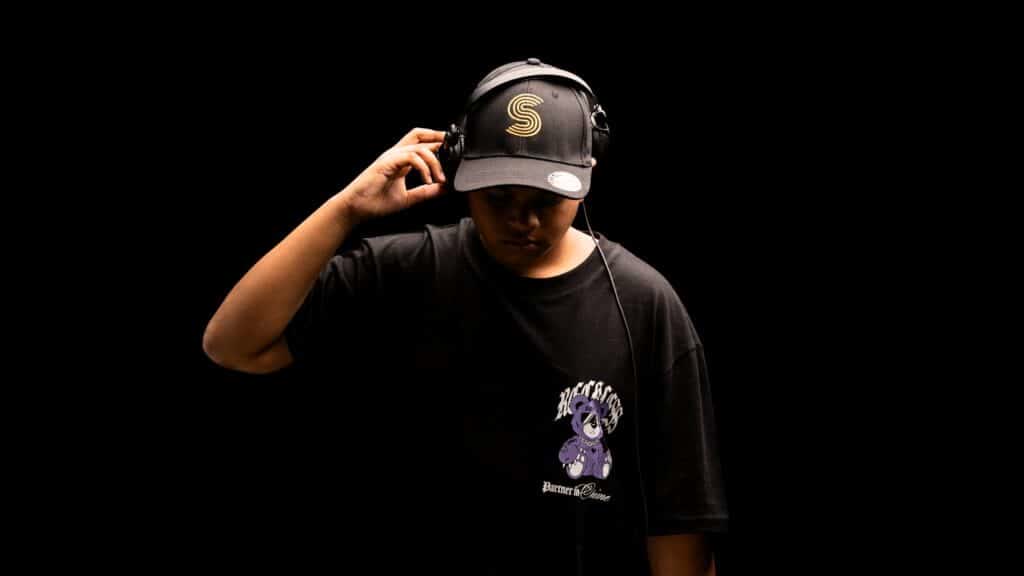
One paragraph, honestly sized. Jeremy Gomez is a Dubai-based melodic-house DJ reported to be fourteen, whose single “Take My Hand” — 127 BPM, five and a half minutes in its extended mix — came out on UFO Recordz in March. Everything written about him traces back to a single label press release. There is no performance footage, no set recording, no public audience yet to analyse. He has not met the internet, in either its generous or its suspicious mood. theskykid.com files the name — that is what this site is for — and waits for the evidence.
What the decks ask
Seven boys, three continents, one instrument that hides its own evidence. A piano shows its work. A voice cannot be cued by a countdown laptop. But a DJ set is the one performance a child can give where the audience cannot see the join — and so the audience argues, and the argument itself has become part of each of these stories.
Strip the argument away and a shared shape remains. Technique arrived first, and youngest: a record at four, a talent show at three, festival stages at nine, twelve, fourteen. What none of them has finished is the second act ELFIGO named in a single sentence — becoming an artist, with music of his own. The mashup has to become the catalogue. The warm-up slot has to become the headline. That is the passage this site has watched a hundred young performers attempt, in cinema and in song. The decks are simply where it is happening now, in front of the largest crowds any of them will ever face, while they are still young enough to be doubted by the people dancing.
We will be watching. That, too, is what this site is for.
Researched and written in late October 2026; ages are as of then.