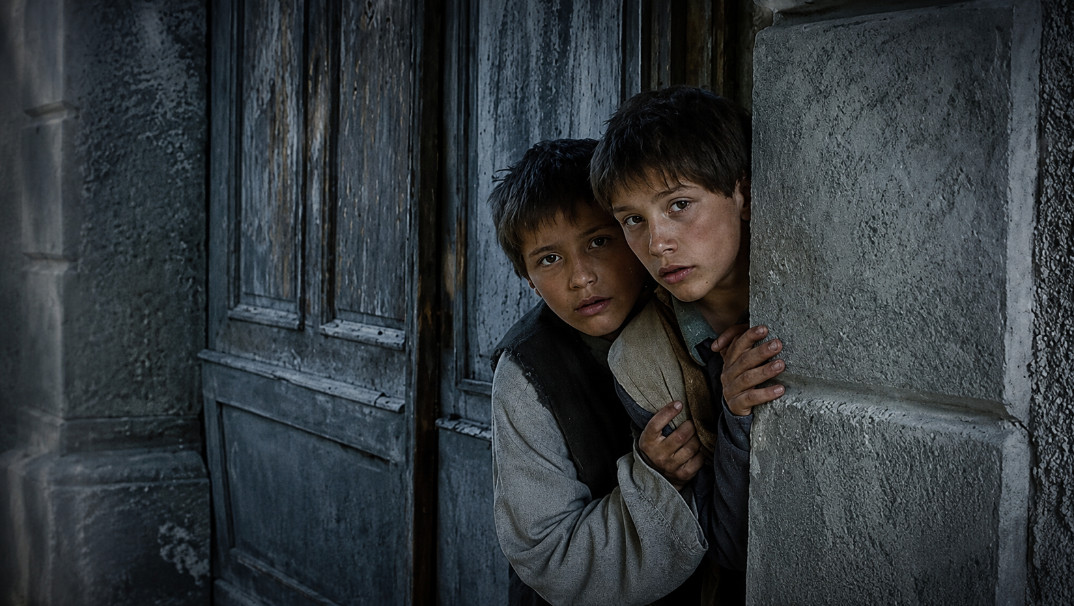
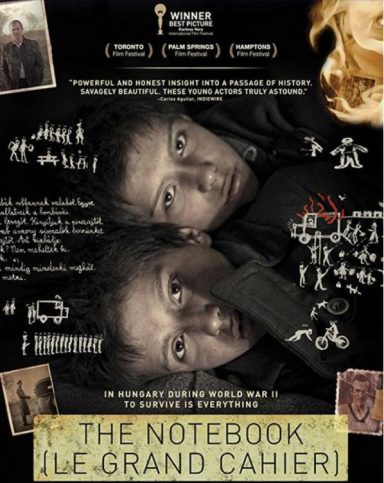
 Some Coming-of-Age films are crafted to entertain, inspire, or evoke a sense of nostalgia. The Notebook (A nagy füzet), the 2013 adaptation directed by János Szász, falls firmly into a different category.
It does not ask for your enjoyment, nor does it beg for your tears. Instead, it leaves you with a profound, hollow feeling in the gut—a testament to its unyielding portrayal of childhood stripped to its barest, most brutal mechanics of survival.
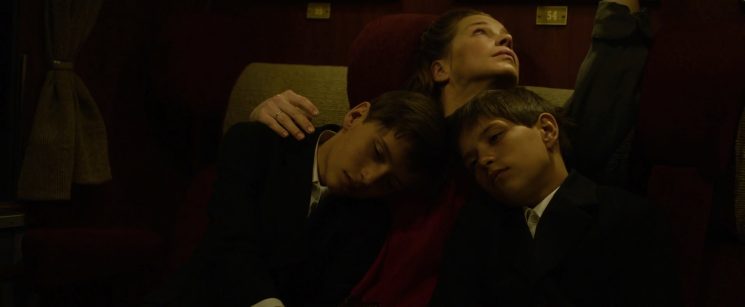
From the opening frame, the visual language establishes a high-caliber professionalism. The lighting is pristine, casting a deceptive intimacy over the quiet introduction of our protagonists: two tween twin brothers, played with remarkable, chilling restraint by real-life twins László and András Gyémánt. Yet, the smooth, unobtrusive editing and calm atmosphere act as a fragile veneer. We are quickly anchored in a specific, terrifying reality—August 14, 1944—delivered through a clinical, first-person voice-over.
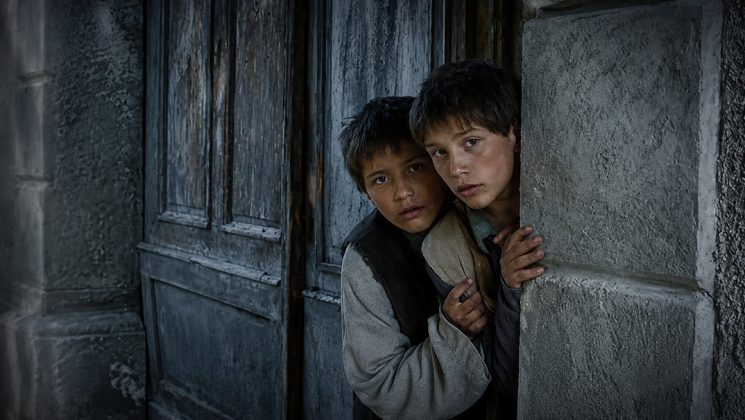
With their soldier father away and the shadow of World War II looming, the boys are sent to live with their cruel grandmother in the countryside. Before parting, their father gives them a notebook, urging them to record everything. It serves as a classic “Chekhov’s Gun“—a narrative promise that the blank pages will soon bear the heavy weight of their shattered world.
The film’s most striking artistic triumph lies in how it visualizes the boys’ psychological descent. The storytelling fractures beautifully, interweaving the twins’ matter-of-fact narration with startling mixed-media elements. Hand-drawn illustrations, black-and-white photography, collages, and stop-motion animations bleed directly into the narrative.
Trailer
By animating the abstract horrors of conflict (“In a war, people kill each other”), the notebook becomes an active participant in the storytelling. It serves as a physical, meta-cinematic record of their trauma, transforming the audience into unwilling archivists of their destroyed youth. We are forced to engage with the story not just as viewers, but as witnesses to their twisted diary.
What makes The Notebook truly haunting is its emotional vacuum, anchored perfectly by the Gyémánt brothers’ performances. As the camera shifts from intimate first-person subjectivity to cold, third-person observation, we watch the boys engage in a dark form of survival conditioning. Realizing the world will offer them no comfort, they decide to harden themselves. They beat one another to numb their bodies to pain; they starve themselves to acclimate to hunger. A distinct, hardened look overtly takes over their eyes.
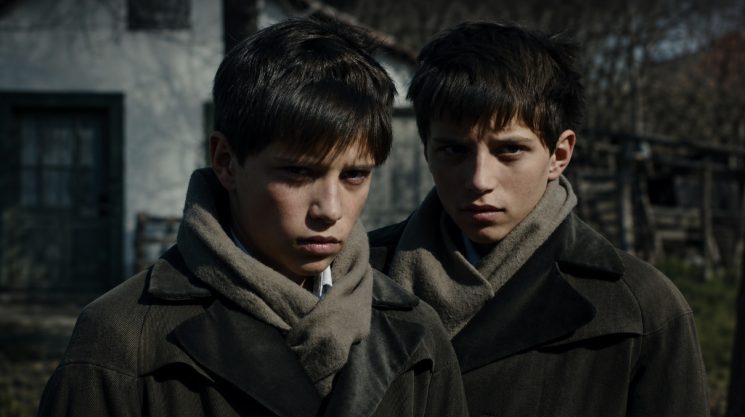
We watch as the innocence of the tweens evaporates, replaced by a chilling apathy. When the abstract war finally manifests in grotesque human behavior right in front of them—Jews being led away to their deaths, or a woman lamenting that the boys aren’t older so she could have “fun” with them—László and András observe it all with the same detached, clinical gaze.
As a viewer, you remain deeply intrigued by the fate of these two boys, yet you are deliberately kept at arm’s length. The director successfully ensures we do not develop a warm, sentimental association with the protagonists. To feel sentimental would be to misunderstand their reality; there is no room for warmth in a world that has discarded empathy entirely.
The film culminates in an ending that leans heavily into ambiguity. It is confusing, bleak, and deeply unsettling—which is precisely why it works. It refuses to offer the audience a tidy resolution or moral comfort. Ultimately, The Notebook is an unflinching ode to the loss of innocence, proving that the deepest casualties of war are not just the bodies left behind, but the humanity hollowed out from the children who survive.