The opening of Fatih Akin’s Amrum echoes the steady, grounded realism of the 2018 short film Turning Tide. It instantly pulls us into a world defined by vast plains and heavy skies. The film plunges you into its setting without holding your hand. For non-German audiences, the opening scenes can be slightly disorienting. The remote geography of the Frisian island and its distinct local dialect create an initial wave of confusion. Yet this brief frustration ultimately serves the narrative perfectly. My own sense of being lost mirrors the profound isolation of the setting.
Set just before the fall of the Third Reich, the film follows 12-year-old Nanning (Jasper Billerbeck). The island serves as a geographical refuge for Nanning, his mother, and his younger siblings, while his father, a famous Nazi author, remains away at war. Yet it quickly becomes a psychological battleground. Nanning must navigate the conflicting signals of the collapsing regime while confronting the quiet, indifferent reality of the natural world around him.”
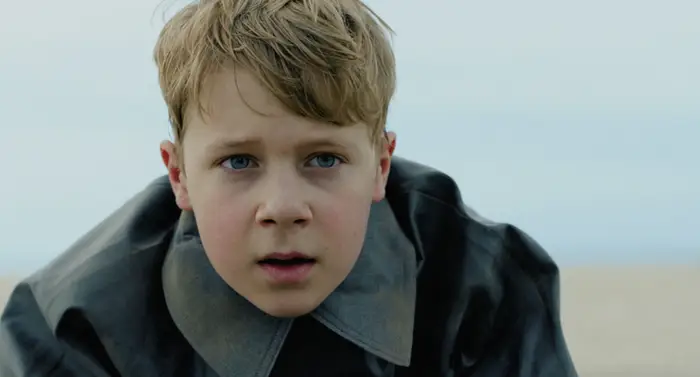
12-year-old Nanning (Jasper Billerbeck) in Fatih Akin’s Amrum
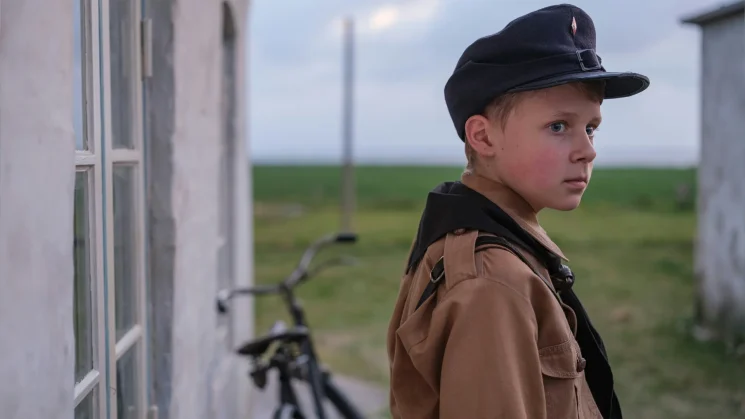
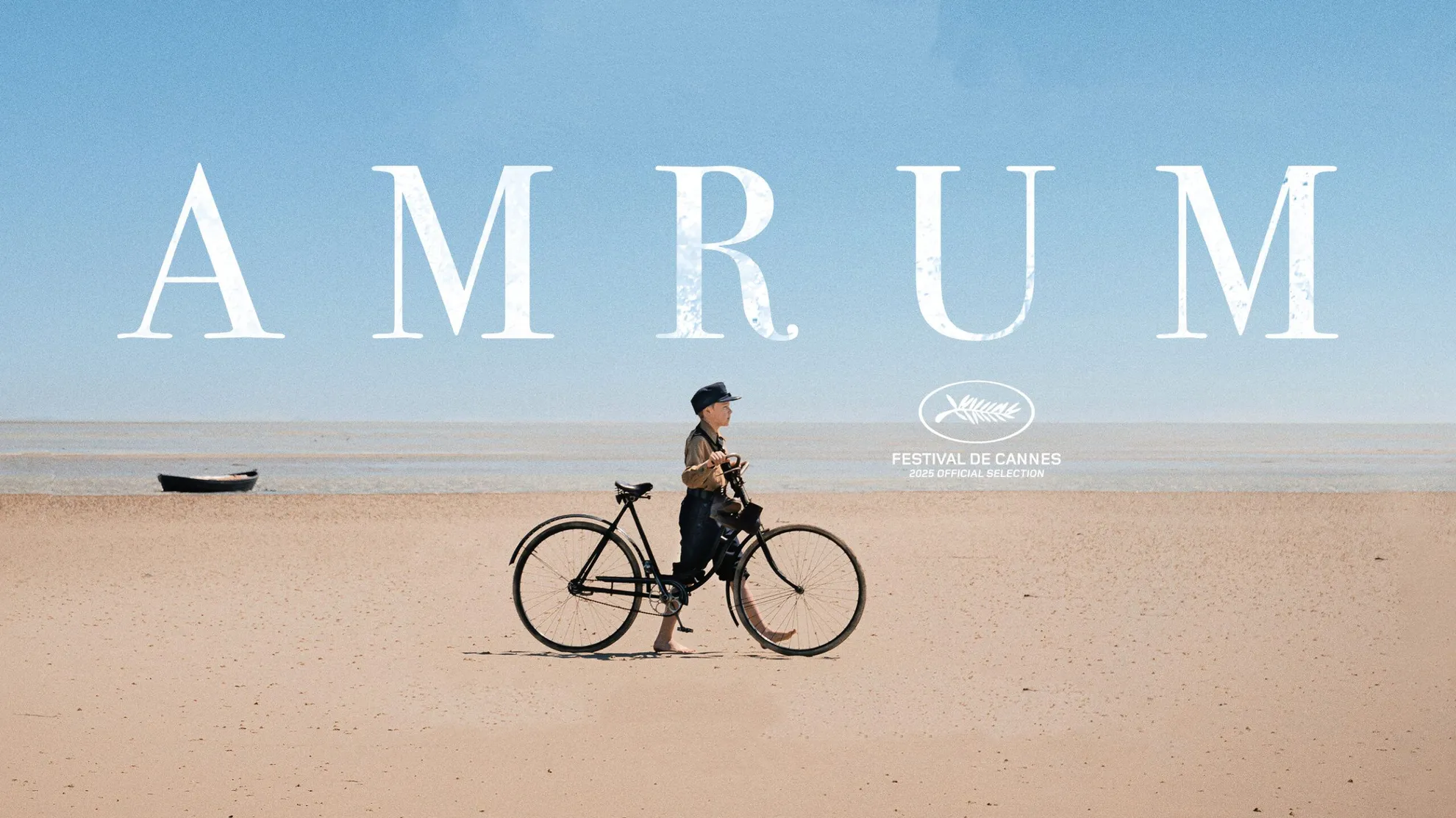
The emotional weight of the film rests squarely on the boy’s small frame. He is constantly juxtaposed against open, isolated landscapes. Akin’s camera refuses to flatter or sentimentalize. Instead, it stays low, locked at Nanning’s eye level, and pushes the horizon line oppressively high. The sea and sky do not liberate the boy; they press down on him. Nature itself becomes a beautiful cage that mirrors the crushing collapse of an entire generation’s reality. Nanning carries not just his own isolation. He is the avatar for every boy raised in the Hitler Youth whose worldview is quietly shattering.
Nanning (Jasper Billerbeck) stands small against the vast, indifferent landscape that becomes his beautiful cage
Visually, the film is defined by a muted, desaturated palette that anchors the story firmly in the past. It feels like a lived-in, worn memory. The atmosphere echoes that of other German Coming-of-Age films, such as The German Lesson (2019). The costumes—dark jackets, knee socks, practical satchels—ground me in unromanticized authenticity. The film is also brilliantly stripped of a heavy musical score. Instead, I hear the silence: the crunch of footsteps, the hum of crickets. The story is deeply interested in the small, unremarkable rhythms that quietly shape a child’s day.
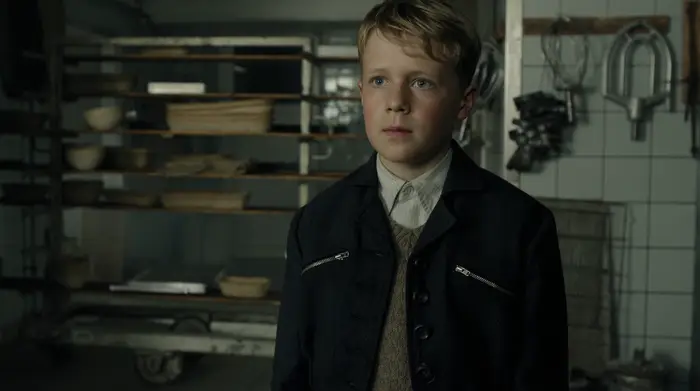
Nanning (Jasper Billerbeck) quietly carrying new adult weight in the unremarkable rhythms of island life.
The performance by young Jasper Billerbeck is almost entirely physical and inward. The camera does not perform for him. Instead, it lingers on small adjustments in his posture and the stillness of his gaze. I see his childish hands engaged in the unremarkable rhythms of island life, but they now carry new, adult weight. In a time defined by scarcity, he trades the carefree innocence of childhood for the quiet, exhausting responsibilities of providing. He takes on chores not out of desperate survival, but because he is willing to do whatever it takes to secure a bit of milk, butter, or white bread for his mother. When I watch him endure these trials, the experience is raw. I found myself physically flinching at the screen—not because of explosive violence but because of the sheer physical toll this premature growing up etches into his small frame.
Amrum ( 2025) – Trailer
Rather than manipulating us with constant, tear-jerking melodrama, the camera adopts a disciplined, observational distance. Watching Amrum feels like reading a profound book. I felt like an observer of a rite of passage, not a participant drowning in emotion. Billerbeck is allowed to be quietly competent and visibly a child—no forced wonder, no manufactured innocence.
Director Fatih Akin is clearly aware of the power in Billerbeck’s specific look. The direction is so restrained that, when Akin finally cuts to rare, striking close-ups of Nanning’s blue-eyed, blond face, the impact is jarring. I am not just looking at a boy. I am looking squarely at the shattered “ideal” of a toxic regime.
Amrum stands as a poignant triumph not through explosive drama but through what is simply and quietly watched. It is a masterclass in cinematic restraint that exposes the sacrifices and tragedy of a lost generation.
Amrum Film Review: A Masterclass in Restraint by Fatih Akin
In short
Set during the collapse of the Third Reich, Fatih Akin’s Amrum is a devastatingly quiet coming-of-age story that captures the physical and psychological toll of a lost generation.
Set against the vast, oppressive landscapes of a remote Frisian island, Fatih Akin’s Amrum strips away Hollywood melodrama to deliver a raw, unvarnished look at a boy forced to trade his childhood for survival at the end of the Second World War.
Set against the vast, oppressive landscapes of a remote Frisian island, Fatih Akin’s Amrum strips away Hollywood melodrama to deliver a raw, unvarnished look at a boy forced to trade his childhood for survival at the end of the Second World War.Amrum Film Review: A Masterclass in Restraint by Fatih Akin
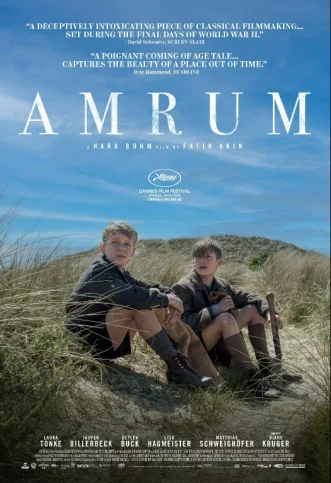 The opening of Fatih Akin’s Amrum echoes the steady, grounded realism of the 2018 short film Turning Tide. It instantly pulls us into a world defined by vast plains and heavy skies. The film plunges you into its setting without holding your hand. For non-German audiences, the opening scenes can be slightly disorienting. The remote geography of the Frisian island and its distinct local dialect create an initial wave of confusion. Yet this brief frustration ultimately serves the narrative perfectly. My own sense of being lost mirrors the profound isolation of the setting.