DevlynTyree, a 7-year-old rapper with swagger beyond his years, is on a quest to change music. He is not defined by one genre, but refers to himself as an artist. He explains that he enjoys all kinds of music and does not prefer one over the other and has plans for releasing music in all the varied genres.
DevlynTyree was born in Mississippi, but currently resides in Houston,Texas. He was reared around music, as his mother is a writer. His interest in music began at the tender age of 3. When he learned his ABC’s, he remixed what most would consider the original version of the song, changing the style completely. Instead to singing, “now I know my ABC’s, next time won’t you sing with me”, he rearranged the melody and added his own flare concluding the song with, “now I know, my ABC’s, momma taught them and she sang them with me”. Not bad for a three-year-old!
As he grew older, his interest in music never disappeared. However, his mother’s focus for him was not on music, but on his education. As he says, “She is a teacher you know.” With that said, his education was and is placed ahead of all other things. She has taught him much and has concluded he is a quick study. At the age of 4, he was reading and doing math. At the age of 5, he was regrouping and carrying numbers as well as reading chapter books. Because his mother realized he was a quick study, she allowed music to reenter his life at the age of 7.
Introducing Jacob – a talented young singer from Canada. Like most Canadians, Jacob speaks both English and French – but chooses to sing in French, much like his fellow Canadian actor/singer Élie Dupuis. Nowadays, almost every young singer who sings contemporary music and R&B is inevitably compared with Justin Bieber. Which is why Jacob is considered by many to be the French language answer to that other Canadian pop-R&B singer who has taken the world by a storm.
Jacob started singing at a very young age and by April 2009 had already been signed by the independent Canadian label Orange Music and released his debut album Partir pour les étoiles (Go for the Stars). Filled with melodic ballads and catchy pop songs and featuring covers of the songs Deux frères sous le soleil originally performed by Bryan Adams and Dans un spoutnik by Daniel Bélanger, the album became a favorite of many people across the world who appreciate the soulful performances and pure treble vocals of the young Canadian singer. In 2009, Jacob had many appearances in events across Canada and France.
In June 2010, just one year after his debut, Jacob surprised his fans by releasing a single Jacob featuring Karl Wolf, followed by the release of his second album Si jeune in collaboration with the R&B singer, songwriter and producer Karl Wolf. From chansons and ballads to R&B – a real transformation! The songs in Si jeune are enjoyable even if you don’t know French and (I know I say this with the risk of being attacked by the millions of Justin Bieber fans out there) I think that Jacob’s voice and the music arrangements of his songs are on higher level than those of Justin.
But don’t just take my word for it, find out for yourself by watching this official video clip of Jacob’s songs in Si Jeune:
“Just before Pap died, he told me that I’d be fine as long as I never depended on anybody but myself.”
Having read the opening quote of this review, you may think that you already know the kind of film this review is going to be about. But I would suggest that you read through the entire review, as everything is not always as it seems.
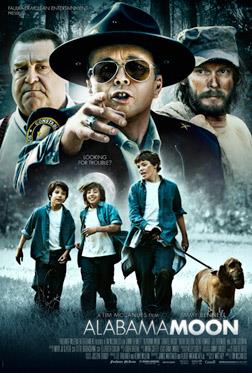
Moon Blake (Jimmy Bennett) is an eleven-year-old boy who lives with his father in the deep forests of a national park in Alabama. They live in isolation, as the father is obsessed with the idea that the government wants to control them and their lives. These days, this doesn’t sound like such a ridiculous idea, when one thinks of the extremes to which some governments are willing to go to establish various surveillance mechanisms and techniques aimed at increasing their power over the people under their jurisdiction.
One unfortunate day, Moon’s dad breaks his leg (in what probably is the most dramatic scene of the film) and dies from the infection a few days after. Left by himself, Moon decides to follow his father’s instructions and head to Alaska (or some other rural state) in the hope of finding other people who live in the wilderness to avoid the government. Unlike the book by the same name, written by Watt Key, the film leaves a lot to be desired in the portrayal of the forest, the wilderness and extreme isolation in which Moon and his dad spend their days.
With the naivety and exuberance of childhood comes an innate understanding of the truth within one’s self. The child’s predominant personality force is his Id, the other side of the superficial human façade that most experienced adults are able to control. With his ability constantly tapped into the extremes of his personality, a child may fall prey to obvious ridicule in a society that forces us to fold into ourselves and forget our innate desires to feel good.
Then there was The Dress Code.
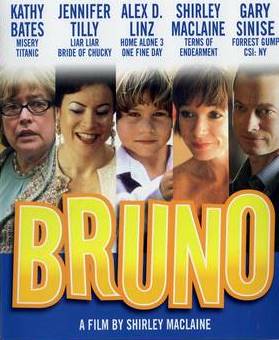
Originally entitled Bruno, The Dress Code, this movie follows the life of a precocious wonder child, Bruno, as he deals with aggressive bullying from his peers and teachers, the absence of his father, and the (understandable) over-protection of his mother. Bruno, played by Alex D. Linz, attends Catholic school and has a particular capacity for the English language.
The most important aspect of Bruno’s story is his connection with everyone around him. His mother (Stacey Halprin providing the emotional epicenter) is morbidly obese, a condition brought on by the trauma of her husband (Gary Sinise) leaving her for a younger woman and essentially making her a single parent — having a son whom the father rarely visits. His mother’s obvious weight problem proves to be the biggest factor that demonizes Bruno in his school amongst, not only by the violent bullying at school from bigger boys, but also because of the disgusting flex of authority from Mother Superior (portrayed by Kathy Bates).
However, the crux of the story isn’t the bullying, Bruno’s unparalleled academic prowess, or even the emotional avalanche that is his obese mother. Bruno has a special interest in wearing dresses. He calls them “holy vestments”, garments worn to portray divine beauty and majesty. His argument is that some of the most powerful and influential men in the world wear dresses and cites the cultural significance of wearing dresses, from South African cowboys to the Pope himself. However, his style of dress (no pun intended) really allows him to express his own sense of power and self worth. His desire to wear dresses is a way to hide the pain that is the daily deluge of his life. He also claims that his dresses give him the courage to stand up to everyone who would seek to harm him.
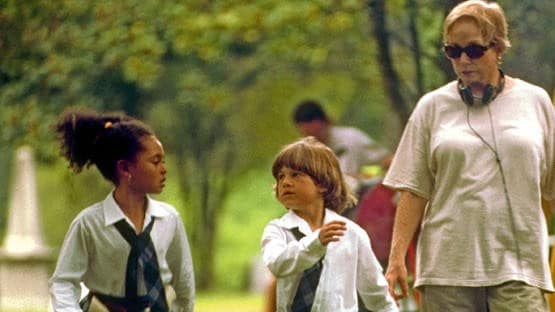
Along the way he meets another social outcast, Shawniqua (played with surprising emotional depth by Kiami Davael), a Black transfer student with tomboy tendencies (wearing a cowgirl outfit complete with hat and fake pistols) and a penchant for fighting anyone and everyone who attempts to exercise superiority over her –including her White peers (Bruno’s tormentors) and Mother Superior. Her outer strength is used to hide the pain of an abusive father and an absent mother. Together, Bruno and Shawniqua form an unconventional bond that sees them lift each other up to rise above the tumult of their circumstances.
Following a series of emotional events (Bruno’s mother being accosted by his emotionally disturbed tormentors and having a heart attack, and an emotional discovery that his father’s outward disgust for him correlates to a misguided self-loathing), Bruno gets an audience with his biggest influence, the Pope. He wins a national spelling bee (wearing a new dress everyday that his seamstress mother created for him).
Throughout the film, we see how one boy’s understanding of his identity leads him to conquer the snide remarks, violent outbursts, and the heartbreaking disdain of his father. His brilliant sense of self allows his mother to move towards bettering herself, allows Shawniqua to be at peace about her circumstances, and allows his father ( in his late 30s) to learn to accept himself in the same way that his son has managed to at 10 years old. It’s obviously a coming of age film about social acceptance. But it also rings true as a story about a child’s ability to know himself within and without, being fearless in the face of dangerous odds. Though not an incredible film, it’s brave enough to explore a child’s emotional depth and manages to get that emotional depth from its characters, especially its underage cast.
This review of Bruno (The Dress Code) is a guest contribution by Camiele White. As unexpected as her path was to loving all things weird, more unexpected is her ability to get attention for writing about the stuff. From Japanese horror and Korean melodrama, to the acid soaked animation of the 70s, Camiele White loves to talk about, debate, and watch film that teases, pleases, and messes with the senses.
Christian music – until a few days ago I had no idea what was behind this term. What came to my mind naturally was classical choirs (Vienna Boys Choir, L’Escolania de Montserrat, St Edmundsbury Cathedral Choir…etc.) or Gospel performers. Then I find out there is Christian Rock, Rap, Pop and even techno music. I knew that various events are organized across the globe – gatherings, festivals – but because of some (wrong) assumptions on my part, based on my feeling that most things associated with religion are not be on the “cool “side – I never expressed a real interest in so called Christian Music.
Then I discovered the music of Ariel Sebastian from Argentina. And I like it. I like it not only because of his astonishing treble voice, but because of the well-arranged and modern music he sings. After hearing this, I was on my way to changing my pre-set assumptions – when something happened to accelerate the process. I discovered a new independent label Technopraise that uses a totally new and unique approach – mixing techno (House actually) and Christian songs in what they call the “NEW sound of Christian music”. They have released a music video of Johnny Hammer performing Mary Did You Know? – a great song with a real message, set to catchy vibes that makes me want to dance. Of course, just as some people have wrong assumptions towards Christian Music, others have the wrong assumptions towards techno music. I should know. In the past few years I have been to hundreds of dance clubs across Europe and have a first-hand experience with what some people think about anything “different and new”. Yet, Technopraise proves that sending a positive message out there can be done just as effectively via modern vibes, which are guaranteed to have a bigger impact on youth than anything else.
Now what’s left for you is to watch the new clip of Mary Did You Know? and share your opinion of it.
The 6th Christmas since theSkyKid.com was launched. Six wonderful years – more than two million people visited the site. 600 articles were published , 5284 comments were made. Thank you!
May your world be filled with warmth and good cheer this Holy season, and throughout the year! Wish your Christmas be filled with peace and love. Merry Xmas.
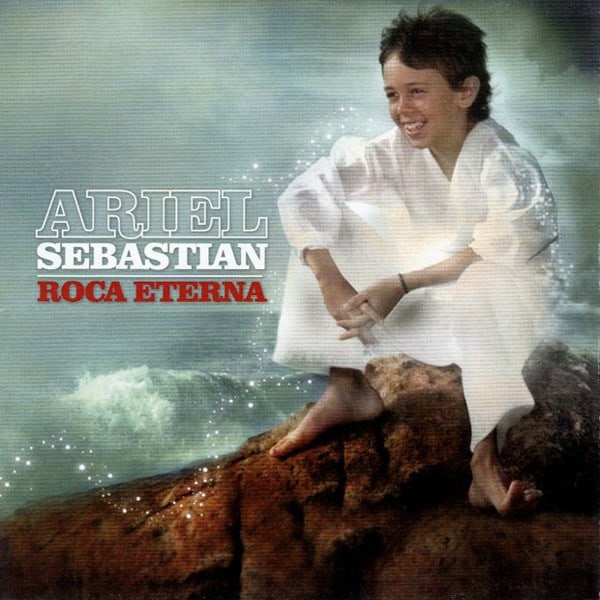
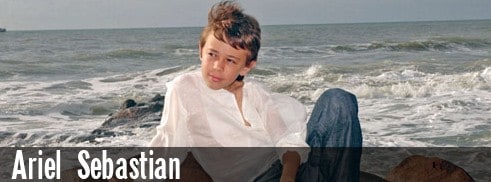
His name is Ariel Sebastian and he is an immensely talented young singer with a beautiful treble voice that evokes strong emotions in those who hear it. It’s an angelic voice which reflects both his passion for God and for music. Regardless of what your religion may be – once you hear Ariel singing you will know just how the angels praise the Lord.
Ariel Sebastian is twelve-years-old and is from Buenos Aires, Argentina. Raised in a religious Christian family, he has always felt close to Jesus. His parents recognized his talent and signed him up for piano lessons at the tender age of eight. He continued to develop both his vocal and instrumental skills and, at age eleven, was discovered by the legendary Argentinian producer Pablo Ramírez with whom he released his first album Roca Eterna, making him the Youngest Psalmist of Christian Music. His album contains thirteen songs containing a unique mixture of melodic pop vibes and touching ballads.
His talent was properly recognized when, in 2010, the National Academy of Music and Christian Arts nominated him in seven of the 22 categories of the Arpa Awards. Among the nominations were: Best Male Vocal Album, Launch of the Year, Producer of the Year, Album of the Year, Best Cover Design, Best Music Video and Best Independent Album.
When I first discovered Ariel’s music just few days ago, I could not believe that I had not previously heard of this gifted singer and his captivating voice. I have often wondered what the meaning of Christian Music is – Christian Pop, Rock…etc. and I think that, thanks to Ariel, I finally have an answer to this question. It is a music with a message – a message of love and hope, of peace and freedom. Currently, one can hardy find any information in English about Ariel. Yet, those of you who know Spanish will be able to discover many articles in various blogs and online publications.
httpv://www.youtube.com/watch?v=tgNW56m92-Q
I hope that you have enjoyed this introduction to Ariel Sebastian and will share your impressions of him and his music with the readers of theskykid.com, using the comments form below.
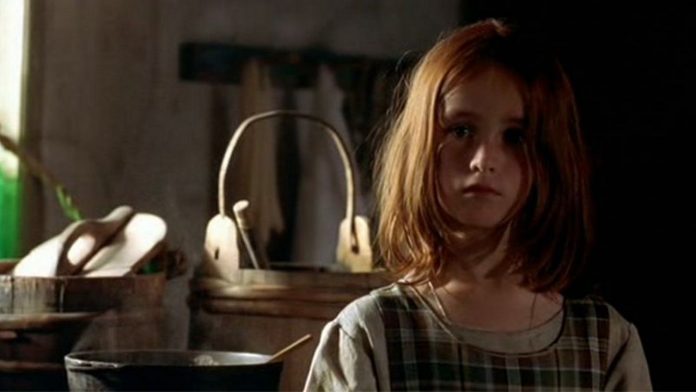
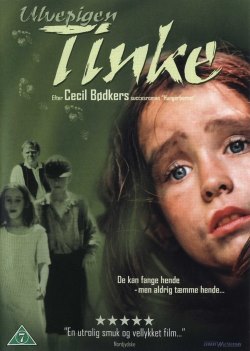
The Danish cinema is notorious for its high-quality films suitable for family entertainment (the same statement is valid for such films from almost all Scandinavian countries, including Norway and Sweden). Naturally, many of those films can be categorized as belonging to the coming of age genre. The 2002 coming-of-age drama Ulvepigen Tinke (The Little Big Girl), based on the novel Hungerbarnet by Cecil Bodker, tells the story of an eight-year-old girl (Sarah Juel Werner) who has to take care of herself after the death of her parents. The little girl has to find food and protect herself from the wild animals to survive.
One rainy day, she meets Larus (Peter Jeppe Hansen) – a young shepherd boy from a poor family who is tending the cows for a family in the nearby village. Scared but hungry, the little girl approaches the boy who shares some of his bread and milk, assuring her that she should not be afraid of him. Soon she approaches him again and the two begin to develop a true friendship. When Larus finds out that the girl doesn’t have a family, he does the only thing he can think of and takes her to the house of his employers. They are an elderly couple – and have different opinions about the new friend of their shepherd. The woman sees in her a chance to finally have a little girl who she could raise as her own daughter, while her husband is taken aback by their guest’s lack of table manners and respect/obedience. The old couple has a son of their own – but he is severely retarded, and the family keeps him locked in the stable.
While looking for more information about the short film Displaced, which was recently reviewed at TheSkyKid.com, I stumbled upon an intriguing article in which its director, Rick Stevenson, shared why he believes that “Shorts are the Films of the Future” (1). In it, Mr. Stevenson shares his opinion that two main factors affect the international cine industry. The first being that independent film makers are having a hard time securing financing for their projects (you may recall the interview with the director of the acclaimed Canadian drama Jet Boy, Dave Schultz, in which he shared similar concerns) and the second being the impact on the video sharing sites such as YouTube and the shift of the audience’s preference towards the short time versions of entertainment now widely available. The opinion of Mr.Stephenson, and a follow-up conversation with a colleague of mine, made me realize that most of the films in the coming of age genre in the past few years have been released in the short format, while their longer counterparts somehow fail to create a hype comparable with the one that films such as TheSixth Sense or AI created in the past. While such a turn was expected by me (it explains why one of the main categories of theskykid.com is devoted to short features), the extent of this invasion of the short film format exceeded my expectations.
That being said, I would like to ask for your opinion. Where do you think the future of the coming of age films lies? Do you expect to see more short films than full features?
1. Rick Stevenson Shares Why He Believes “Shorts are the Films of the Future” by Allison Ackmann (via trulymovingpictures.org ) ( link)
Well-produced and directed short films manage to transmit their message despite the time limitation typically associated with the format. The success of such films, as in full features, depends greatly on the acting skills of the lead characters and their ability to engage the audience. In 2010, Rick Stevenson directed Displaced, a moving short drama about a young boy having trouble adjusting to the foster homes he is being sent to. Nathan Gamble (The Hole, The Mist, Babel) plays the role of Daniel, delivering an emotional and moving performance that makes it clear why he is one of the most sought-after young actors in Hollywood.
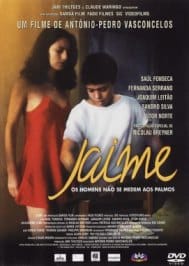
“We are not the same. I have never carried other people’s bags. Even when I was your age”
Jaime (Saúl Fonseca) is a thirteen-year-old boy who lives with his mother, her boyfriend, and his two little sisters in a suburban neighborhood in Oporto, Portugal. The years are tough, and across the country, many children are made to work by their parents to contribute to the family budget. Child labor is illegal in the country, but most families are on edge and are forced to take desperate measures. The businesses are also willing to take in the kids and exploit them as they are able to demand as much from them as for adult workers while paying reduced wages and no taxes to the government.
Jaime’s parents are separated – he lives with his mother – but, unlike some of his classmates, no one forces him to work. Yet, he sneaks out each night to work at a local bakery and saves the money, hoping to improve his life and reunite his mother and father. The film opens up with a scene in the bakery where we see how Jaime and other teenage boys spend their evenings. The job is not easy and after witnessing a job-related accident with a friend of his who loses his fingers, Jaime is fired by his boss, who fears that the accident will attract the attention of the work inspectors.
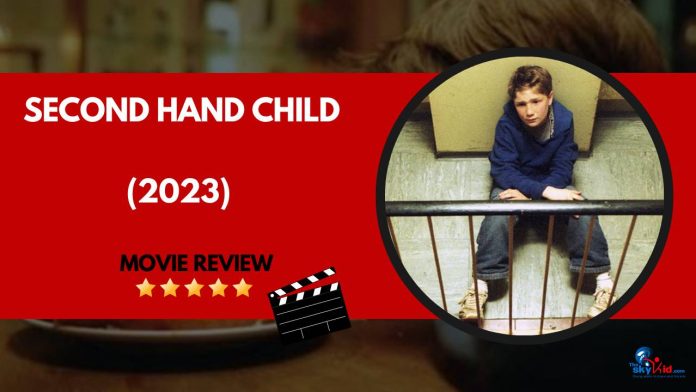
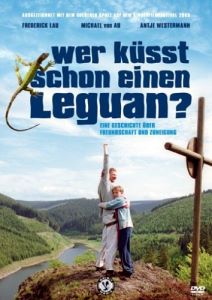
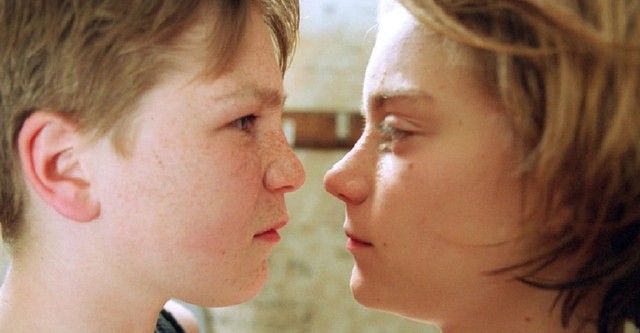
Tobias Baumann (Frederick Lau) is a troubled kid – and there is a reason for that. His family is not as well off as the other kids at his school, and the boys in his class enjoy picking on him because of his social status. The fact that he doesn’t know who his father is and has a young but careless mother (too young to have a teenage son anyway) does not help either. That is why it’s unsurprising that Tobias, tired of being ridiculed for things he has no control over, loses his nerve. His schoolmates call that “becoming anti social” – but can you blame him? I could not – he has no choice but to try to cope with life alone…
Alone until one day, he meets a man who moves into the neighboring apartment. They buddy up, and when the kids at school start to pick on him again for having no father, Tobias comes up with the idea to present his neighbor, Max Feldkamp, to his classmates – claiming that Max is his father. The lie causes some consequences – as it increases the chances of further complications in the life of the thirteen-year-old teenager. Is his new neighbor suitable for a father figure? Will he even consider playing such a role?
This is the premise in the German film Second Hand Child (Wer küsst schon einen Leguan?). The film is powerful and touching and is guaranteed to evoke a whole range of emotions from its viewers (and may even induce a few tears in their eyes). The action is set in an urban ghetto in Eastern Germany, and the soundtrack, which is predominantly German rap addressing social issues, perfectly suits the film’s theme.
A pivotal moment occurs when Tobias sits on a hill overlooking the city, symbolizing his isolation amidst a bustling world. The scene is underscored by the haunting lyrics of a German rap song, perfectly capturing his sense of loneliness. Second-Hand Child is heartbreaking to watch, but the movie does a powerful job of showing the effects of neglect on kids. You feel for Tobias and want things to improve for him.
The young Frederick Lau delivers an outstanding performance in the role of Tobias. If you see the film, he will likely leave quite an impression on you with his natural performance in the dramatic and turbulent situations in which his character finds himself. The film has an immense coming-of-age value as the story of a young boy striving for things that all children should be entitled to – love, friendship, and attention. The power in Second Hand Child does not lie in special effects and similar cinematic tricks. Still, instead, in the powerful story of the life of an ordinary boy dealing with issues many children have to deal with, bullying is just one of them, though by far the most significant.
The film’s ending is bittersweet, leaving a lasting impression on the viewer. Second-Hand Child is a powerful and thought-provoking exploration of childhood trauma and the enduring impact of neglect.
Second-Hand Child is one of the best German dramas I have ever seen, and I highly recommend it to the readers of theskykid.com. The film has received acknowledgments from various festivals in Germany and abroad, winning the European Children’s Film Prize and the Audience Award in 2003 and the “Best Children’s Film” award at the Children’s Film Festival “Golden Sparrow.”
Film title: Wer küßt schon einen Leguan?
Also known as : Second Hand Child
Release year: 2003 – Children’s Film GmbH , MDR
Director: Karola Hattop
Cast: Frederick Lau,Michael von Au,Antje Westermann,Mario Irrek,Justine del Corte,Dirk Schoedon,Carina Hinzen,Sven Lubeck and others
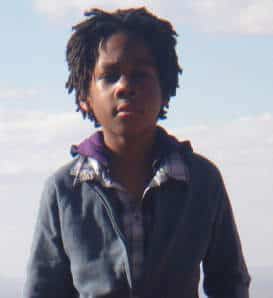
 DevlynTyree, a 7-year-old rapper with swagger beyond his years, is on a quest to change music. He is not defined by one genre, but refers to himself as an artist. He explains that he enjoys all kinds of music and does not prefer one over the other and has plans for releasing music in all the varied genres.


 Christian music – until a few days ago I had no idea what was behind this term. What came to my mind naturally was classical choirs (Vienna Boys Choir, L’Escolania de Montserrat, St Edmundsbury Cathedral Choir…etc.) or Gospel performers. Then I find out there is Christian Rock, Rap, Pop and even techno music. I knew that various events are organized across the globe – gatherings, festivals – but because of some (wrong) assumptions on my part, based on my feeling that most things associated with religion are not be on the “cool “side – I never expressed a real interest in so called Christian Music.
 “I’m afraid of nothing….Once I bit a wolf!”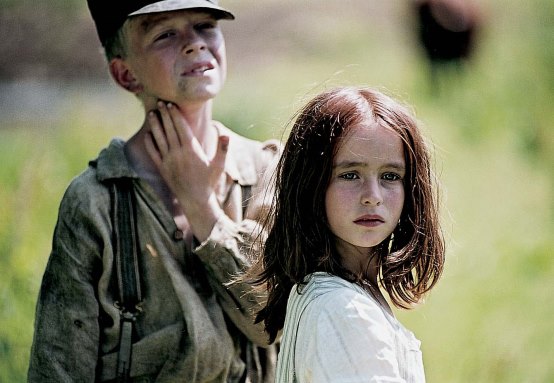
 While looking for more information about the short film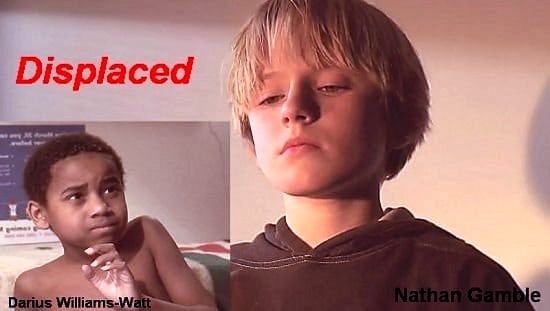
 Tobias Baumann (Frederick Lau) is a troubled kid – and there is a reason for that. His family is not as well off as the other kids at his school, and the boys in his class enjoy picking on him because of his social status. The fact that he doesn’t know who his father is and has a young but careless mother (too young to have a teenage son anyway) does not help either. That is why it’s unsurprising that Tobias, tired of being ridiculed for things he has no control over, loses his nerve. His schoolmates call that “becoming anti social” – but can you blame him? I could not – he has no choice but to try to cope with life alone…
 Film title: Wer küßt schon einen Leguan?