Cinema Paradiso tells the story of Salvatore, also known as Toto to his family. The movie begins as Salvatore, now middle-aged (played by Jacques Perrin), is returning to his hometown for the first time in years to attend the funeral of the man who encouraged his love of film. This allows the film to freely, without any encumbrance or having to make any excuses, go back in time and tell our protagonist’s story. During the recounting of that story, the film flashes back to Salvatore’s childhood, at three different ages.
The first flashback shows him as a child being fascinated by film, bugging Alfredo (Philippe Noiret), the local theatre’s projectionist, about getting into the booth. The story eventually progresses to Alfredo embracing him as an apprentice. Also, as Toto becomes a teenager, he falls in love and, as he pursues his goal, he is encouraged to leave home and never look back — which makes his return and reminiscing in his middle-age even more poignant.
As I noted in my article titled Top 20 Film Titles of All-Time, the title of this film is incredible and encapsulates a lot of what the film is about. It is very much about how its protagonist believes there’s nothing better in the world than film — not only as an art form, but also because of what it got him: a best friend and it took him away from home, to a job and a purpose in life. However, Cinema Paradiso also refers to the theatre itself, as that is its name. It is a kind of heaven on earth for our protagonist and all those who love film. Surely, in watching this film, one can equate it to the movie houses we frequented in our own youths. Whether or not those theatres were as beautiful or as storied as Cinema Paradiso is another matter.
And not only that, but your grandparents hated your parents’ music when they were growing up.
Music feeds a need inside us. Good music is good because it taps an emotion and makes us feel. When we are teenagers, our feelings are often raw and huge and almost constant. Music connects to that, and helps explain and validate those feelings. It’s always been like that, for hundreds of years. That is why every culture and every generation in the whole world, since the beginning of humans, have had music.
The music your parents listened to when they were teenagers felt like the first and only “real” music to them. It was written by people their own age with similar experiences and feelings and it made sense to them. Now, you have music you love, written by people your age who really get you. So it’s pretty obvious why most adults wouldn’t feel connected to today’s popular music and why music from twenty years ago or more sounds just “OK” or even stupid to you.
So why should it matter? Why are you and your parents arguing about this? Love and fear.
Love makes us want the people we love to appreciate the stuff we love. Even better if they can agree. Example: You see a movie that you really like. You tell your friends about it. If they’ve seen it, you want them to have liked it too. If they haven’t seen it, you want them to go see it (and love it) and you’re pretty sure they will, since you feel connected to them.
It’s the same with music. On those days when you like one of your parents and want to feel connected to them, you play your music where they can hear it. It is really frustrating if they reject that music because it feels like a rejection of you. Same for them, when they play music they love and you don’t feel it.
If you want to solve this, you have to be fairly sneaky. Your parents might never like your music but they do like you, most of the time. They will listen to your music all day if it means that you tell them more about what’s going on in your life. So after they hear something that is important to you and you don’t want them to disrespect it, tell them one thing about the song that means something to you. Really want to hook them in? Tell them WHY it is important to you.
To avoid lying and saying that you love their music, but still be respectful (which matters a lot to your parents) you can listen to their music, and try to figure out something about their teenage life from it. There are a lot of clues in music about what mattered to the people it was written for. You may discover some surprising things about your parent.
Fear is a bigger challenge. Why should your parents fear your music? Two reasons. One is that your musical taste is proof that you are growing up. That’s probably one of the reasons you like music – it can feel like freedom. The second reason is one you may want to reject.
Some music is actually damaging. Most music talks about experience and emotion. Some music makes danger sound appealing. Even if we disagree when we listen to it, a good song charms us into believing its message. In much the same way as subliminal messages in commercials, the more often we hear suggestions that violence is exciting, that sex has no consequences, that money solves everything, the harder it is to resist believing that.
If the music you love conveys messages that your parents fear, you will continue to have conflict over it. Remember, though – you have the ultimate weapon. The more you are willing to talk about this with your parents, the more they will respect your views. This often means finding new ways to say what you feel like you’ve already said. It means speaking a lot more respectfully than you want to. It means being willing to compromise or negotiate.
Is it worth it? Might it be easier to just have your parents hate your music? Well, when people who love you hate something you love, it can really suck out a lot of the fun. And you know that music is a great way to connect with people. So it may be worth some extra conversation.
________________________________________________
Guest article by : Dr. G
Dr. G is a board certified family physician, mother of four, and professional parenting speaker and writer who helps parents raise children they can respect and admire. Find her at www.AskDoctorG.com, Twitter @AskDocG or email drg@AskDoctorG.com
Maltiysky Krest (2008) is not really a coming of age film – yet it has its place at TheSkyKid.com because of the brilliant performance of a young actor whose name many who are fond of the coming of age genre will recognize – Pavel Melenchuk. He is one of the most hyped young Russian actors and, if you have seen any of the films he stars in as such asCheesecake (2008), you would probably agree.
In Maltiysky Krest, Pavel plays the role of the Grand Prince Dmitry Romanov – a descendant of the Romanov dynasty (rulers of Russia from 1613 until the Russian Revolution) who is kidnapped by a mafia boss – who also claims to have royal blood and sees himself as the new Russian emperor. A cinema stunt man comes to his rescue after the prince is kidnapped during a visit to the Mosfilm studios (The Russian Hollywood).
All grown-ups were children first (But few remember it).
Antoine de Saint-Exupery
The Little Prince by Antoine de Saint-Exupéry is not only one of the best-selling books ever – it is also one of the best coming of age novels ever written.
The book reveals the author’s superb story that revolves around ‘The Little Prince’, a small boy who is affectionately concerned about his little home planet, which features a rose plant, two active volcanoes, and an inactive volcano. Due to his caring nature, he waters the rose daily. However, as a twist, the rose hurts him one day, which leads to the boy abandoning his own planet and the beginning of his discovering other planets. Although the author narrates the life of the little prince whimsically, it is no fanciful tale. Rather, it is a caustic reflection of the ‘grown-ups’ who have failed to comprehend the truly important things of life. Even before the boy leaves his planet, the author discloses his message. But he also says that though adults may be misguided, children need to be considerate of their elders.
On his journey, the little prince moves from one planet to another and greets several different types of men. A majority of them are busily involved in so-called ‘serious activities’. In the eyes of the prince, however, these activities are actually absurd as he gives no importance to doing things such as counting things the whole day, making maps (even though the world is yet to be seen), and ruling or owning something without any chance of attaining a joy filled life.
The explanation of today’s society that motivates this story features a combination of ‘wiggle and wisdom’, which leads the kids of today to perceive our presidents, geographers, and accountants with a new insight. The book’s message is that such men are foolish if they seek to boost their power and wisdom without spending some joyful moments within their own small kingdoms. The story takes a positive twist when the little prince finds two admirable friends while traveling from one planet to another. These two friends are a fox (who makes him understand the meaning of love) and a pilot (the author himself who is trapped in the hot sand dunes of the desert). The small boy shares everything with the pilot including that he loved the rose despite of the hurt it caused him.
The book clearly has a coming of age theme, as the author narrates how the “the grown-ups” neglect to perceive the real meaning of things because of over analysis, which keeps them from loving the things that count in life.
I have lived a great deal among grown-ups. I have seen them intimately, close at hand. And that hasn’t much improved my opinion of them.
The Japanese animation house Studio Ghibli is often rather tritely passed off as ‘the Disney of Japan’. Mascot character Totoro is ‘the Mickey Mouse of Japanese Animation’, and main director Hayao Miyazaki is merely ‘a Japanese Walt Disney’. The association is simple: Ghibli makes traditionally animated movies and, when many people think of traditionally animated movies, they think of Disney.
As flattering as the association is meant to be, it’s thankfully not true. The sources of inspiration for Ghibli’s films include fairy tales and popular children’s tales, but the results are illustrative in how they contrast. The Little Mermaid is as typically Disney-fied as you’d expect (catchy songs and an ending where ‘the princess gets her prince’). Ponyo’s values are entirely different. Miyazaki seems more concerned about an old folk’s home than the princess’ fate.
Studio Ghibli Promo Trailer
Ghibli also takes stories from more mature sources, including young adult fiction and autobiographical wartime novels. Among the eighteen Studio Ghibli films released to date, a substantial number of them feature a coming of age theme. Disney has tended to stick to releasing (and publicising) those releases which fall into their brand of whimsy, meaning that Ghibli’s coming of age titles sometimes seem a little more obscure than they deserve to be.
Here are four of the best:
Kiki’s Delivery Service [1989]
Kiki seems, at first, a typical fantasy tale that fits comfortably into Disney-style animation, vibrant disarmingly sweet with a happy-go-lucky protagonist. Accordingly, it was one of the first films Disney dubbed (with Kirsten Dunst in the title role and Phil Hartman as her cat). But the magical theme hides an emotional core that is actually a lot more down to earth. Kiki is a 13-year-old witch, an age when all witches apparently fly away from home to live a year in the real-world and learn how they can use their skills to benefit themselves and society. Kiki settles on operating a flying courier service in a beautiful seaside town but, when her efforts go unappreciated, she starts to lose her magic.
Wonderfully, even a witch’s power is shown to derive from the mundane needs we have to feel appreciated, to matter and feel like we’re achieving something new. Like many of Ghibli’s films, the crisis is explained by a positive female role-model: Kiki befriends Ursula, a young artist who recognises that Kiki’s problem is just ‘artist’s block’, setting the scene for Kiki to conquer her depression in the final act.
Only Yesterday [1991]
The vast majority of Studio Ghibli’s films feature female protagonists. But even among such a wide range of female voices, Only Yesterday stands out by being specifically about a woman’s experiences. Perhaps that’s why Disney steadfastly refuses to release a version in North America (subtitled versions in Australia and the United Kingdom fill the void). It is rumoured that scenes in which young girls talk (around) the subject of menstruation are behind Disney’s attitude, but then they’ve never seemed especially interested in slice of life film-making from a feminine perspective.
Only Yesterday is the creation of Ghibli’s other master, Isao Takahata. And, while Only Yesterday doesn’t have quite the same impact as his harrowing Grave of the Fireflies, it’s a beautiful film about affectionate nostalgia and regret in which a young woman finds herself drifting away from the career and the city that her life has steered her towards. There’s more than a hint of Taeko’s story being a metaphor for modern Japan. But even with the references to old children’s shows and other Japanese minutiae, the themes are very easy to appreciate as an English speaker.
Ocean Waves [1993]
Ocean Waves is another film unreleased in North America, but it’s rather more obscure even in its native Japan: made as a practice project for young talent and to be aired on television. You can pick up subtitled DVDs from the UK and Australia.
Despite its obscurity, Ocean Waves is interesting as drama with a coming of age theme. It stands out in the Ghibli canon by featuring a male central character: Taku Morisaki. But the film is as much about the love triangle that forms between Taku, his best friend Yutaka and new girl Rikako Muto. The subjects dealt with are not uncommon for drama anime: a school romance against the backdrop of final year exams.
But the film handles the uncertainty of being a teenager with a universal skill and also realistically portrays what it’s like to be the new kid in a place you’d rather not be in, as well as modelling how relationships evolve, disintegrate and reform stronger than ever in adolescence. Still, it may be a little ponderous for some to enjoy!
Whisper of the Heart [1995]
With Whisper of the Heart we’re back in high-school once more. Shizuku Tsukishima is a budding songwriter and novelist who is inspired by a strange antiques shop she discovers whilst out walking one day. It turns out that the antiques shop belongs to the grandpa of one Seiji Amasawa, a boy whose name appears in every book she checks out of the library. Seiji works his way into Shizuku’s affections, despite having repeatedly offended her in the past.
Unusually driven for a boy his age, Seiji’s desire to be a violin maker inspires Shizuku to concentrate on writing a fantasy story, even if it means sacrificing grades at school. In many ways, both characters aren’t typical 14-year-olds. But, then, that seems to be the underlying message, that perhaps school curriculums aren’t always one-size-fits-all solutions. It also seems to suggest that our journeys from childhood to adulthood are wildly different as well. Love, too, is shown to be romantic and fairy-tale like, but only within the confines of a very urban, quite mundane existence. A beautiful feel-good film, and probably the one on this list that you should watch above all the others.
In a cell on the ground floor, the light shifts dark shapes into a small stool, a scrawny table, and a bed made of wooden boards with no mattress or blanket. On that bed, a thin, huddled figure, Helmuth, a boy of seventeen, lies awake. Shivering. Trembling.
It’s a Tuesday.
The executioner works on Tuesdays.
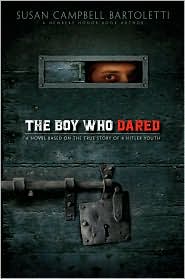
The Boy who Dared is a coming of age novel by Susan Campbell Bartoletti. I’d had it for a while in my audio books collection and now, having finally listened to it, I wish I had done so long ago.
The book opens in a cell on Death Row, in Berlin’s Plotzensee Prison, where the 17-year-old Helmut Hübener awaits his fate. Alone and afraid, he remembers moments of his life. He remembers his childhood – Germany suffering the consequences of The Treaty of Versailles which forces the country to pay heavy reparations after the end of World War I. Various parties in Germany are fighting for power. The leader of the Nazi party is gaining popularity. His name is Adolf Hitler – and he makes big promises: peace in Europe, food to every table, and jobs for all. Hitler’s party wins the election and Hitler is appointed as Chancellor of Germany. Helmut is only three years old then, yet he couldn’t help wondering why his grandparents spoke of Hitler with such fear. Why would they fear someone who only wants to make Germany better? But soon the country changes.
Not a pirate but an adventurer of independent means
What would you do if you met a real pirate – a high seas pirate who sails on a ship in pursuit of treasures and adventures? Maybe he will become your best friend – or foe…
Bobby (Seth Adkins) is a young boy with a wild imagination. He imagines aliens, cowboys and robbers – imaginary playmates filling his world, which otherwise would have been pretty boring as Bobby lives in rural Nebraska with his mom. Bobby’s fantasy world Bobby is so vivid, its characters so real to him, that his mother even thinks it’s spooky.
One day, fantasy becomes reality – supernatural forces sent through time in the form of a high seas pirate Captain — Jezebel Jack (Tim Curry). So a boy and a pirate meet and, despite their differences, they become friends – best friends. But can you trust a pirate? And what happens when Bobby, Jack and the crew of Jack’s ship, Delilah, end up “sailing the amber waves of grain “ in Nebraska?
As a genre, coming of age films are more usually made about boys becoming men, than girls becoming women. It has been a male dominated area, from the directors, to the stars, to the storylines. Yet one should not ignore the fact that there are movies out there, focused on girlhood, which both shaped and reproduced adolescent femininity.
Today, new films are emerging, made predominantly by female directors and covering the experiences of teenage girls. It is refreshing to see these films dealing with social issues. Girls are being featured in commercial films produced both within and outside of the Hollywood movie industry. The idealized image of girlhood concerned primarily with innocence and following the traditional forms of male authority is being replaced with a more realistic portrayal of the experiences shaping a girl into a young woman. Girls grow up in a harsh world and have to fight for what they want. Heightened teenage emotions are laid out in all their glory, making every step more tragic, yet more compelling.
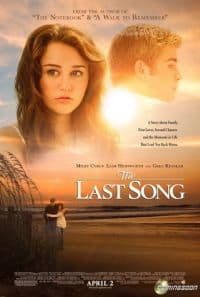
The image of the rebellious girl ready to take on the world is projected in titles such as Thirteen, Mean Girls, Juno, and Fish Tank…to name but a few. The 2010 drama The Last Song offers an intriguing portrayal of a teenage girl in emotional turmoil. Other examples of the shift in the female coming of age films can be seen in the 2001 film Glitter, starring Mariah Carey, and Lone Scherfig’s film An Education. The 2009 film Precious leaves mawkish sentiment at the door and gives a view of urban female rite of passage not usually seen.
Its clear now the Coming of Age films for Girls have finally Come of Age !
That familiar feeling …. you hear a song and the next thing you know it’s stuck in your head. In the next few days you lose count of the number of times you have listened to that song over and over again. The singer releases a new song. Maybe you were thinking that he could not do better than his last release, but he does and now you have a new song to adore.
Meet 17-year-old Ulrik Munther from Sweden – gifted guitarist, songwriter and singer. When I first heard his original song – Boys Don’t Cry – I was blown away. Finally! A song with a meaning that I really enjoyed. It’s been a while since I’ve heard such a melodic song – especially nowadays when so many young singers lean toward the much hyped R&B style, with beats and lyrics one can hardly tell apart (they all go: “I love her, she doesn’t love me. Love me, Love me, Love me”. Or “Let’s party “…etc ).
Now listen to this:
Impressed?
If so, it’s not just you. Ulrik was spotted on YouTube and signed by Universal Music Sweeden. Boys Don’t Cry was released as a single in January 2011 and an album is in the works. In the meantime, Ulrik kept releasing hit after hit, covering Lady Gaga’s Born this Way (it’s astonishing how many young singers find inspiration in Lady Gaga’s music) and his own original composition – a powerful acoustic ballad titled Life.
Maybe you’ve noticed the similarities: Ulrik seems to be best performing ballads filled with emotion and meaning. Yet, recently, he released Sticks And Stones, which is a more upbeat song. It’s part of the promo for his first album, which is now available for pre-order .
Admittedly, Ulrik’s music reminds me of Hanson – and it’s no secret that I am a huge fan of that band. Ulrik’s music sounds real and sincere and, to me, that makes all the difference in the world. Ulrik is not only a wonderful vocalist but every video he creates is not only professional in appearance but is truly captivating. Take my word – this boy is going to go far!
Hollywood is a place of glitz and glamor. But there are some people who see the stars of movies differently. More than actors, more than singers and more than fashion icons, these stars are endeared by the young and they aim to follow their paths. Being role models, these young ladies inspire their generation to become better people.
Could your favorite make it to the list? Check out the following young actresses of this generation:
1. Emma Watson
With everyone so hipped up by the soon to be released final installment of the Harry Potter series, who would ever forget Hermione Granger? From the time she was still in her curly locks strangled all over her face in the very first Harry Potter movie, to her becoming a prim and proper young lady in the later HP movies, a lot of girls have adored Emma. She is considered one of the richest young people in the world, though she would say that she did not even know much money she made playing her famous role from the J.K Rowling book series. One of the finest teen actresses of this generation, she is a symbol of persistence, low-profile and elegance and everyone loves her subtle aura wherever she goes.
More then a few coming of age movies deal with the issues of grief and loss. As children often lack the life experience of adults, the manner with which they face and react to loss and traumatic experiences can significantly differ from the ways society commonly associate with these unfortunate events in one’s life. Very often, for children, coming to terms with a loss in life becomes a transformational journey that shapes their identities.
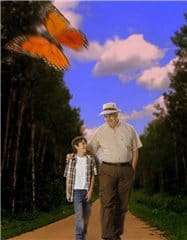
In the 2011 short film Billy’s Angel, directed by Matt Metz, we meet Billy (J.R. Fondessy), a ten-year-old boy who has to overcome the feeling of loss after his granddad passes away.
Billy’s Angels is a calm and reassuring “feel good“ movie that features some of the most prominent features typically associated with coming of age experiences related to a loss: soft lighting, comforting background music, and heartfelt voice overs by the young protagonist of the film. This mise-en-scene is tastefully accented by symbols of life and death (a butterfly’s journey through life) and male bonding (a grandfather or a father spending quality time with the youngest member of the family while fishing and sharing experiences and thoughts).
“The rich and compelling history of films about youth informs us of more than changing social conditions and perceptions of young people; it gives us a special appreciation of how successive generations have endured the conflicts of claiming identity and seeking recognition for their actions.”[1]
Parents, have you ever thought of watching a coming of age movie with your child as a way of reinforcing a point you’d like to make to him/her? There’s a lot to be said for using this medium when other attempts for getting through to the child don’t seem to work. And there could be a benefit or two for the parent as well.
Childhood can be a tough, yet unforgettably magical period of life. It’s a time when imaginations are running wild and new adventures can be found around every corner. You probably remember a time when that fort you built in the living room was your very own castle or private getaway. Having friends over, talking about the opposite sex, and trying to figure out if you were normal may have been an every weekend occurrence. Watching coming of age movies with your pre-teen or teenager can bring back some memories and perhaps allow you to understand the world they’re living in.
 Cinema Paradiso tells the story of Salvatore, also known as Toto to his family. The movie begins as Salvatore, now middle-aged (played by Jacques Perrin), is returning to his hometown for the first time in years to attend the funeral of the man who encouraged his love of film. This allows the film to freely, without any encumbrance or having to make any excuses, go back in time and tell our protagonist’s story. During the recounting of that story, the film flashes back to Salvatore’s childhood, at three different ages.

 It’s the same with music. On those days when you like one of your parents and want to feel connected to them, you play your music where they can hear it. It is really frustrating if they reject that music because it feels like a rejection of you. Same for them, when they play music they love and you don’t feel it.
 Guest article by : Dr. G
Dr. G is a board certified family physician, mother of four, and professional parenting speaker and writer who helps parents raise children they can respect and admire. Find her at
Guest article by : Dr. G
Dr. G is a board certified family physician, mother of four, and professional parenting speaker and writer who helps parents raise children they can respect and admire. Find her at 
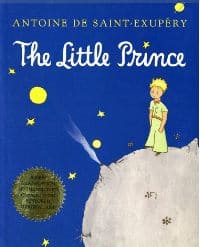
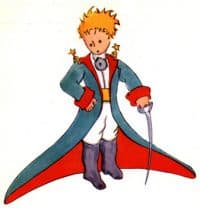 The Little Prince by Antoine de Saint-Exupéry is not only one of the best-selling books ever – it is also one of the best coming of age novels ever written.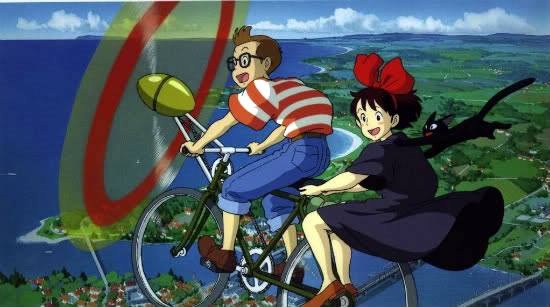
 The Japanese animation house Studio Ghibli is often rather tritely passed off as ‘the Disney of Japan’. Mascot character Totoro is ‘the Mickey Mouse of Japanese Animation’, and main director Hayao Miyazaki is merely ‘a Japanese Walt Disney’. The association is simple: Ghibli makes traditionally animated movies and, when many people think of traditionally animated movies, they think of Disney.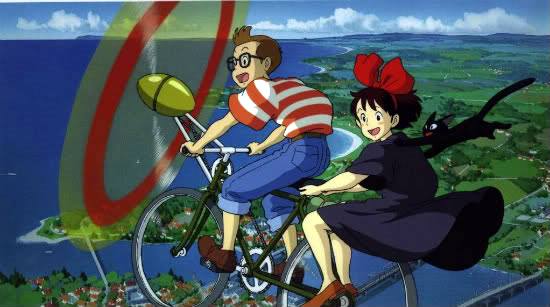
![Only Yesterday [1991]](https://theskykid.com/wp-content/uploads/2011/07/Only-Yesterday-1991.jpg "Only Yesterday [1991]")
![Ocean Waves [1993]](https://theskykid.com/wp-content/uploads/2011/07/Ocean-Waves-1993.jpg "Ocean Waves [1993]")
![Whisper of the Heart [1995]](https://theskykid.com/wp-content/uploads/2011/07/Whisper-of-the-Heart-1995.jpg "Whisper of the Heart [1995]")





 Parents, have you ever thought of watching a coming of age movie with your child as a way of reinforcing a point you’d like to make to him/her? There’s a lot to be said for using this medium when other attempts for getting through to the child don’t seem to work. And there could be a benefit or two for the parent as well.