 The Mystery Artist Show is a weekly program on the radio at TheSkyKid.com. Each week Jeffrey, the program’s host, introduces a young artist from somewhere around the world. On 20-May-2012, TheSkyKid.com radio aired an exclusive interview (conducted by Jeffrey) with Allan Clelland-Goddard, a multi-talented young musician/singer who is well on his way to a career in music and entertainment.
Note: This publication is a transcription of the original interview aired on TheSkyKid.com radio. The clip included below features the whole interview and snippets of the songs that were played during the live broadcast. In this transcript, “TMAS” will represent the questions posed by the Mystery Artist’s Show and “ACG” will be Allan’s answers. Jeffrey has also provided some post interview commentary that were not part of the interview as aired, but rather represent his impressions of the interview after the fact. Those comments will be shown as “Jeffrey“.
Jeffrey: Having done as many interviews as I have so far, it was an extreme pleasure to actually sit down beside today’s Mystery Artist, Allan Clelland-Goddard, for my very first live interview with an artist. Having being born in England and spending most of his life in Trinidad-Tobago and now living in Orlando, Florida, I couldn’t help but ask…
 TMAS: What was the reason for the decision for you all to move from Trinidad to Florida here in the US?
ACG: First of I’d like to thank you for having me on the show today Jeff. My parents decided we would have greater opportunities moving to the US for my music and future careers, rather than Trinidad. There’s lots of stuff that I’m engaged in. I’m in school, I’m doing bio-engineering which is like engineering of parts of the body for humans. Let’s say you have an arm cut off and you want to create a synthetic limb for somebody. It’s like engineering DNA and nerves for them. Music… well it’s been quite good. Eight months after I moved here, I heard of a competition on WMMO Radio. They had a free contest for the band YES, which of course is a famous band from England. They were having a competition to see who could open up for them by singing the National Anthem. You uploaded a song of you singing it a capella. Based on their decision and votes from the public, they’d decide who would get to go through and well I won, long story short. So I got to open for them, which was very exciting, especially after just coming here eight months earlier.
Allan singing ‘The Star Spangled Banner’ at WMMO’s ‘Yes’ rock concert
http://youtu.be/baCzb269JHw
TMAS: Was it hard for you, after being here only eight months, to remember the Star Spangled Banner?
ACG: HEHEHE. Not really. I just practiced it a lot. If I mess up, it’s in front of a huge crowd that’s easily 2,000 people. And, of course, it was for YES. It was astonishing.
Jeffrey: I was really surprised that, at only 14-years-old, Allan had already decided that as a backup to his music he wants to become a bio-engineer.
TMAS: What exactly is a calypso?
ACG: A calypso is basically a four-versed chorus song that originated in the Islands. I guess you can say it’s a reggae beat song. There’s no way to describe it unless you really listen to it and appreciate it.
Jeffrey: Of course, like so many young artists nowadays, not only does Allan sing, but he also acts as well. While in Trinidad, he played the role of Oliver in the musical Oliver, Kurt in The Sound Of Music and Chip in Beauty and The Beast.

TMAS: Since being here in the US, have you done any acting?
ACG: Not as much, no. It’s been primarily singing and putting videos up on YouTube. Acting was fun and I would really like to get back into it whenever I see a play that is close to where we live.
Jeffrey: Besides singing and acting, Allan enjoys playing the tenor steelpan (commonly known as steel drums to many), piano and drums. After doing a little research, I found out that the steelpan originated in Trinidad, so I couldn’t help but ask Allan about that.
TMAS: Can you tell me a little bit of the history of the steelpan?
 ACG: When Trinidad was colonized, the African slaves were banned from playing music out in the streets and celebrating and stuff by the colonists, as punishment. After they left, they used all kind of leftover material, including oil drums on which the lids were cut off, and they realized they could make different notes out of it by heating it up and pounding it with a hammer, causing different tensions in the steel which produced the sound. It’s quite interesting and was developed in the last century and it’s considered a skill to be able to make one.
Jeffrey: Unfortunately Allan wasn’t able to bring his steelpan with him to the states because it was too big. I was really hoping to be able to find someone, here in Florida, who had a steelpan that I could’ve borrowed so that Allan could’ve played a few songs, but unfortunately was unable to.
TMAS: With your music and everything, do you have much time to spend with your friends?
ACG: I do, actually. Music isn’t my whole life. I’m still down to earth. I’m not completely focused on it. Whenever I get the chance, I’ll put out a song. I mean I’m dedicated to it, but I’m not a music head you could say. I like to spend time with friends and I like to play football (also known as soccer). Music is a passion, but it’s not my only passion.
TMAS: What’s it been like for you since you’ve moved here to the United States?
ACG: The initial months were kind of rough. Well… not rough… but, of course, you miss all your friends. Life otherwise, in school, isn’t really that much of a change. I miss the friends, I miss doing musicals in Trinidad, I miss the food, of course. There’s lots of good food, but other than that, coming over here, I’ve made a lot of new friends and the people are real friendly. It’s been nice.

TMAS: How big of a difference has there been as far as the school systems and the people compared to over there in Trinidad?
ACG: Well, the school systems are fairly different. The actually follow the British way of teaching. There’s something called primary school (standard 1, standard 2, standard 3, standard 4, standard 5), which would be grades 1-5 and you go to secondary school which is middle school and high school combined. You take examinations called “key” in all levels, instead of SAT’s, which determine colleges. Actually, in order to get into standard schools, there’s stream, there’s A standard schools, B standard schools, C and so on. At the end of primary school, you take a test known as Secondary Entrants Assessment, also known as the SEA exams. Depending on how well you do on that, you get into an A, B or C level school and I, not to brag, I actually got into one of the top schools in the country, St. Mary’s College. It was a fun school. Life I wouldn’t say was laid back, as you had to work. The community was nice; the teachers were friendly and friends, of course, they were great. Up here it’s not too different. The teachers are nice up here. The friends are great, as well. They’re very friendly. People walk up to you at lunch and introduce themselves. It’s a great environment to be up here in school.
TMAS: Do you still have people come up to you wanting to hear your accent?
ACG: Yea, all the time. On a daily basis, yea.
Allan Clelland Goddard Audio Article
http://youtu.be/fVNxYUN3iDY
TMAS: What kind of advice would you give to other young artists, such as yourself, who are just starting out?
ACG: I would say to stay grounded. Don’t let your head get too big. Remember that you need to do some work in order to reach the top. If it doesn’t work out, then you have to have a Plan B. You don’t have a definite chance of getting it, but still try for it and ask for all the help you can get from your parents, family, etc. Just take every opportunity to sing.
Jeffrey: Of course, when I asked Allan that question he looks over at his mom, Deborah, who is using her hands to tell him about not letting your head get too big. LOL Like any other young artist, Allan dreams of one day being known internationally as a singer and an actor.
 TMAS: Do you still have those same dreams?
ACG: Yea. But you know what? If it happens, it happens. People always ask me on Facebook, my friends, are you famous yet? We’ll leave that up to God. We’ll see what happens. Because if I put all my effort into it and I end up not making it, what am I going to have as a Plan B? So, it’s not the only thing I’m focused on. I do put some time into it, though, because God helps those who help themselves.
Jeffrey: Besides Allan and his mom Deborah, there were also twin sisters Genevieve & Kiona (also singers who sometimes appear on Allan’s YouTube page) who also came along for the interview.
TMAS: How well do you and your sisters get along?
ACG: It’s frustrating, at times, but when we get along, it’s good.
TMAS: Do you three argue all the time and stuff like that?
ACG: YES! (laughs from mom and sisters).
Jeffrey: Allan’s song Street Children (written by his mother), focuses on homeless children all over the world who are living on the streets.
Allan Clelland-Goddard Street Children (Original song)
http://youtu.be/bSH9jlFMnEI
TMAS: Tell me a little bit more about Street Children?
ACG: I’ve always felt emotional about the situation. Street children, their government sees it as their humiliation and, rather than try to help them, they mask it to help beautify themselves so they don’t look bad to other countries. It’s a disgrace because there are millions of them. It’s not a problem specific to one country, it’s the whole world and I dream of helping them.
Jeffrey: Deborah had mentioned to me that Allan may re-record this particular song now that his voice has changed and all proceeds from the sale of this song go towards helping that cause.
ACG: Yea. I look forward to doing that in the near future. The video was done, I think, when I was 11. It’s gotten a lot of notice since then. It’s provided a lot of world-wide views. I have 28,000 views on that right now, which is exciting for me. Hopefully, when I produce it again with a new voice, people will like it as well and it will gain even more notice around the world.
TMAS: Has it been difficult for you once your voice changed?
ACG: Not really. I’ve been singing through it, trying to find out how to control it more. Because, once it breaks, it’s different. It’s a bit challenging because you lose some of those high notes that you were able to sing when you were younger. But, instead, you have to go into your head voice which is a different tone. It’s a challenge to produce that same sound in your head voice that you were able to in your chest voice. It’s exciting I guess.
TMAS: Do you by chance have a vocal coach?
ACG: Yes I do – Mr. Mark McKee. He’s fantastic and a great, great pianist. He’s guided me through my voice breaking and helped me gain more control over my voice. Overall, he’s fantastic. Great vocal coach.
TMAS: Before we go, is there anything else you’d like to add?
ACG: To everyone listening out there, thank you to all my subscribers, especially to Rod (Rivenmaster – owner and administrator). He’s done so much. Thanks a lot. To Chris from Thailand, he’s helped me a lot on my videos. And also to you Jeff, thank you so much.
Shortened version on the interview originally aired on TheSkyKid.com Radio
http://youtu.be/7gwPWGUtYnM
Jeffrey: I’d like to give a special thanks to Deborah for taking the time to bring Allan by for the interview and to Allan for being able to squeeze me into his busy schedule so he could sit down to do the interview with me. If you’d like to learn more about Allan, you can visit his website at www.allanclelland-goddard.com or his YouTube page at www.youtube.com/user/clellard.
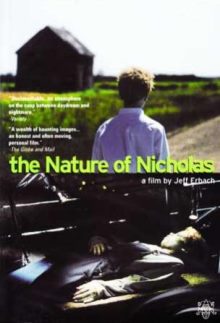 A while ago, I was told that this was a very “weird” film. When my friend said it was “weird”, I was expecting more along the lines of visual abstraction. This was not the case. This film takes “weird” to a whole new realm.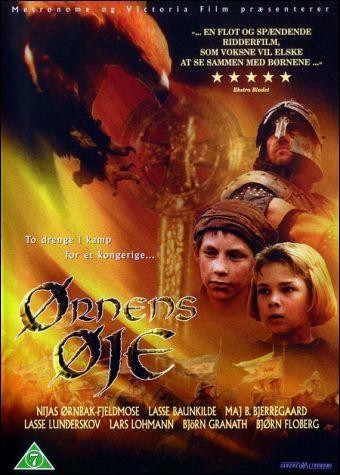
 In the style of Robin Hood and The Prince and the Pauper, a medieval adventure, the Danish movie Eye of Eagle has all it takes to keep viewers of all ages glued to the screen.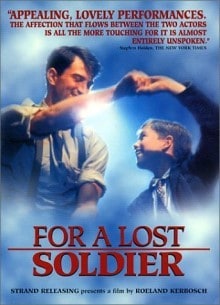
 SK
SK

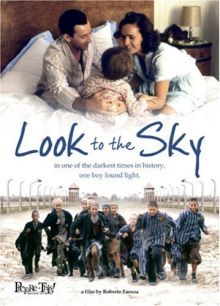

 When I finally received the answers from Razvan to be able to put the show together, his mom told me that he had re-recorded his answers several times because he wanted to make sure that everything was just right, since his English isn’t that good. I wouldn’t consider this as being a perfectionist, but rather someone that takes pride in what they do to make sure everything is just right.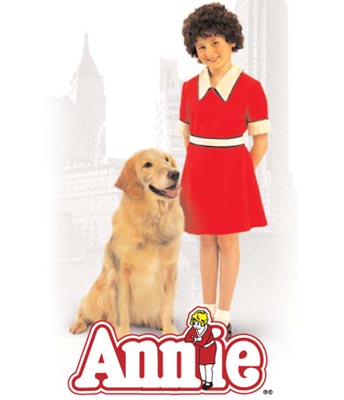
 In 1977, the original Annie opened on Broadway and ran for nearly six years (2,377 performances) at the former Alvin Theatre (now the Neil Simon Theatre). The show was based on the comic strip,
 For some weird reason, the Western media pays little attention to the talented young performers from Israel. One reason might be the choice of the most young Israelian singers to perform their songs in their native Hebrew.
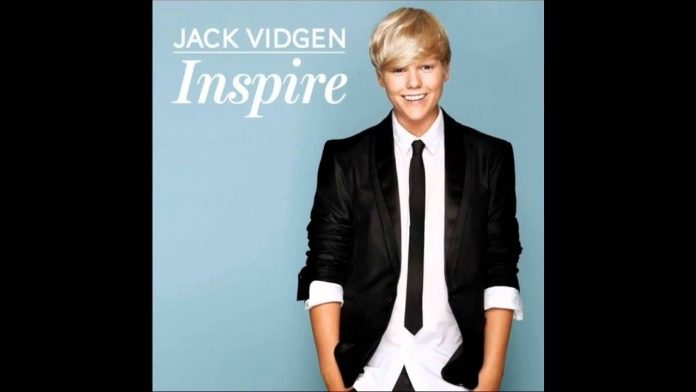
 When you listen to Inspire, you enter the realm of spiritual influence. You hear classics from the ’70s and ’80s that influenced an entire generation-a generation grown older like myself. These interpretations by Australia‘s Jack Vidgen, whose prowess and vocal skills were evident in his first album, do indeed carry inspirational memories.
 The other Michael Jackson comparison from The Jackson Five (1970) is highly interesting. It supports my theory that Jack is actually capable of singing with three voices, not just one! In the original I’ll Be There, Michael’s older brother sings the deeper parts and young MJ belts out the high lines. In this cover, Jack Vidgen handles both tonal levels gracefully. Jack3Voice is more stylized and versatile. One voice is a boyish sweet falsetto. The second is a creative R+B voice, bending notes, turning almost harsh at times. The third is the new deeper teen voice, below tenor. Michael‘s child voice was a single voice, more rounded, holding notes longer, hardly capable of deep tones.
 In contrast to this, and suiting Jack well, is the Higher Ground cover (Stevie Wonder-Inner Visions-1978), a funky, difficult to master song, which challenges the inner kangaroo. But JV booms it out with aplomb.
 Over time, movies have touched our lives in ways that will never allow us to be the same. As bigger blockbuster hits come to the big screen, we have seen many emotionally filled movies. The comedies give us quotes to live by, the cult classics that we never forget, and the romantic movies that define the relationships we all want. However, there is one genre of film that has come a long way over the years.