That’s somewhat of a weird request coming as it is from 10-year-old Fetus (Lucian Maisel), the young protagonist of Jacob Medjuck’s 2013 film Age of Summerhood (originaly released in 2008 as Summerhood).
The Greatest Journeys Are The Ones That Bring You Home
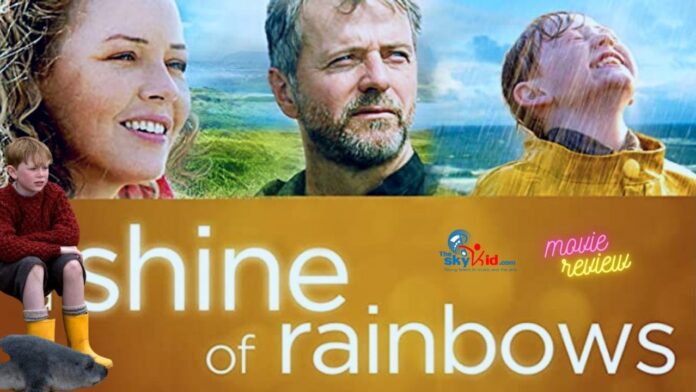
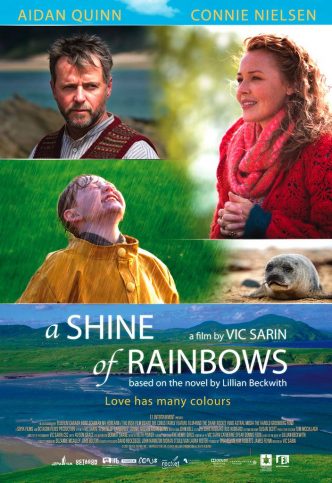
Tomás (John Bell) is a small, eight-year-old boy living in an orphanage in Ireland. He is a sensible and shy lad with a melancholic expression. The daily life in the orphanage is not easy for him; his nervousness and stuttering make him an easy victim for the bigger boys who don’t miss a chance to pick on him. He is the main protagonist in the Canadian/Irish co-production A Shine of Rainbows. The film is based on the novel by Lillian Beckwith, a coming-of-age tale about hope, love, and acceptance.
One day, Tomás’ life changes forever. A young woman, Maire O’Donnell (Connie Nielsen), decides to adopt him. She takes Tomás to Corrie Island, just off Ireland’s coast. There she introduces the boy to her husband Alec (Aidan Quinn). He is a tough, hardworking man and seemingly does not approve his wife’s choice (he had hoped for a hardy boy who has what’s needed for life in a remote house on the island) and doesn’t show any sympathy for the young Tomás. Maire, however, doesn’t give up – asking her husband to give the boy a chance and welcome him to his home. With her support and encouragement, Tomás starts to enjoy his new life – he learns his chores, makes new friends, and enjoys the island and its nature. Things seem to settle down – but then a tragedy strikes…
If you are looking for a good family film for some Sunday afternoon - A Shine of Rainbows is a good pick.The film's focus is on human nature and spatiality, and its value lays in the moral lessons and the messages it transmits to its viewers.
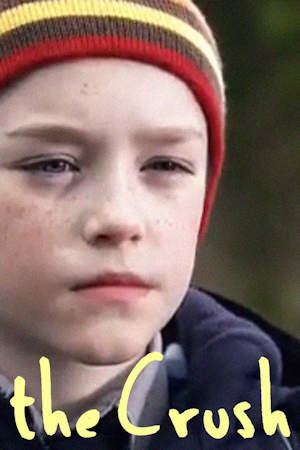
Closely associated with the years of one’s growth – first love is commonly addressed in Coming-of-Age movies. But as wonderful as love can be, it is sometimes accompanied by great complications – especially if your beloved happens to be your teacher. The story of one such adoration — told in first person — is the focus of the 2010 Oscar nominated Irish short film, The Crush, directed by Michael Creagh.
Ardal Travis (Oran Creagh) and his second grade teacher Miss Purdy (Olga Wehrly)
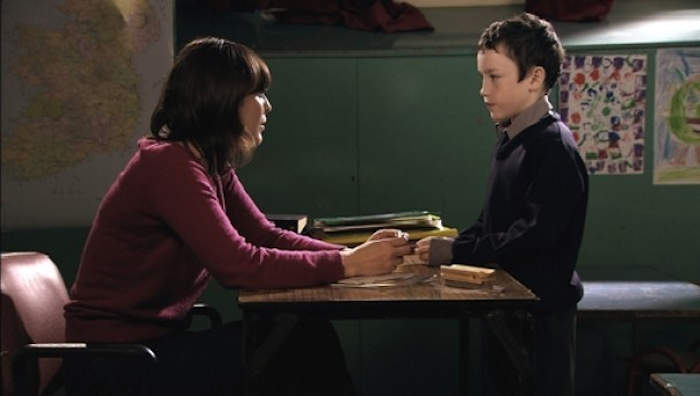
The main protagonist of the film, Ardal Travis (Oran Creagh), is an eight-year-old boy hopelessly in love with his second grade teacher Miss Purdy (Olga Wehrly), who he thinks is very, very beautiful. Unlike many nervous teens, Ardal is not afraid to reveal his feelings and even considers marrying Miss Purdy. Yet, soon he realizes that he is not the only one fond of the beautiful teacher and that his rival is bigger, older… and meaner. But Ardal will not give up! He will fight for the heart of his beloved!
Despite the witty plot, The Crush has a few shortcomings – such as the camerawork: a bit stale and unnatural at times, and the score (with the exception of the final song) which, when addressed, could have resulted in a real masterpiece. Sometimes the characters’ actions did not ring true, though those of the main protagonist (though played by an obvious newcomer to cinema)inspires heartwarming feelings and sympathies.
On the positive side, the action picks up intensity as the narrative develops – so much so that (even if you approached this as just another “kid film”) the story will engage and intrigue you. (Of course, it’s my hope that few, if any, of the readers of this site would approach any film in that manner.)
The Crush manages to evoke suspense, raise tension, shock and/or make one smile, which is all you can ask from a 15 minute film.
Watch the entire film below:
http://youtu.be/KrRSjaNmbLE
The Crush (2010)
Watch it
The Crush evokes suspense, raises tension, shocks and/or makes one smile.
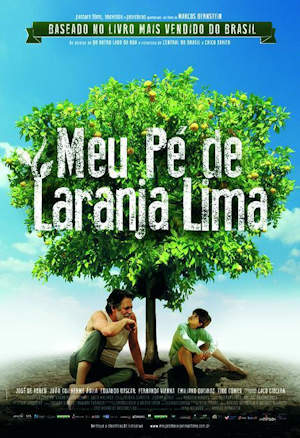
Coming-of-Age films originating in Portugal and Brazil tend to emit a certain warmth that makes watching them a rewarding experience. Saying this, the first film that comes to mind is the 1996 Portuguese drama Adeus, Pai (Farewell, Father). Based on that observation, and the fact that the Marcos Bernstein film My Sweet Orange Tree (original title: Meu Pé de Laranja Lima) is based on a best-selling novel of the same name by the Brazilian writer José Mauro de Vasconcelos, I had high expectations of this 2012 drama. And it did not let me down.
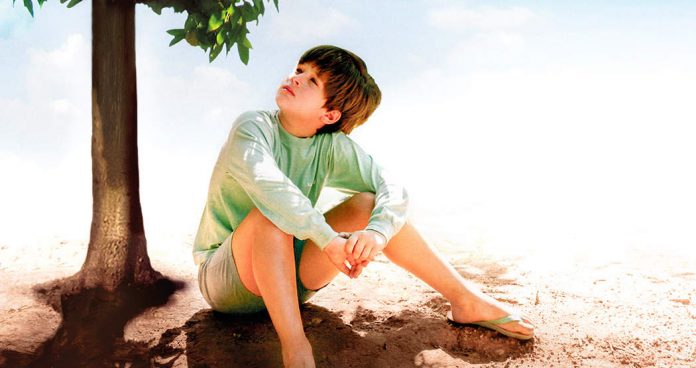
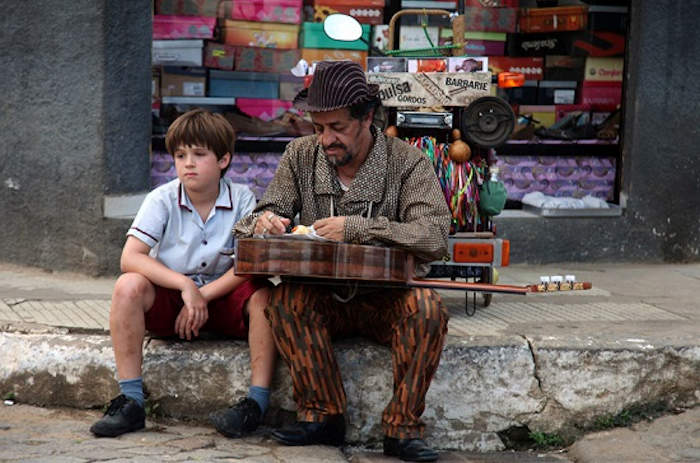
The main protagonist of the film is eight–year–old Zezé (João Guilherme Ávila) who wishes that his father was not poor and unemployed so that his little brother could have a real gift for Christmas, and his mother could then work less and be able to take proper care of him and his brothers and sisters.
Zeze and a street musician
Asking for heavenly help doesn’t seem to produce any results, so Zezé decides to take matters into his own hands by doing odd jobs — such as shoe shining and helping a local street musician sell his CDs.
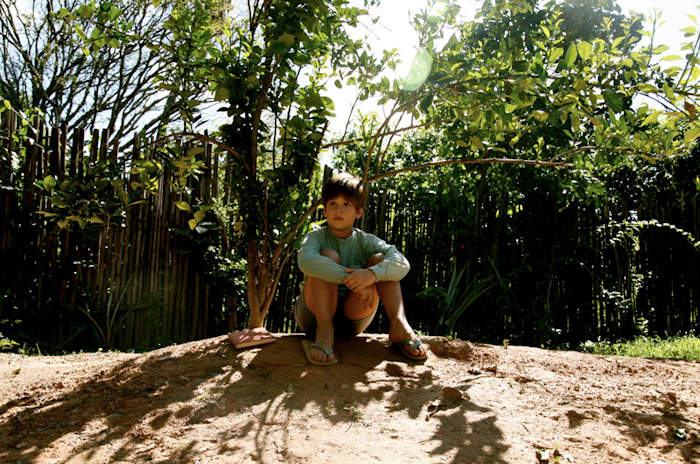
Despite his good heart and intentions, Zezé always seems to find himself in trouble. His family’s financial problems create real tension, and the boy often finds himself in the wrong place at the wrong time. Perceived as “bratty”, “mischievous”, and the “incarnation of evil”, he often takes a beating from his older siblings. Zeze is a daydreamer with great imagination, unable to cope with the daily beatings and being misunderstood, he takes solace in a fantasy world that he creates for himself and his younger brother. While most boys have pets for companionship and friendship, Zezé befriends an orange tree – and not just any orange tree, but one that talks and is able to take Zezé on magical journeys.
Zeze and his Sweet Orange Tree
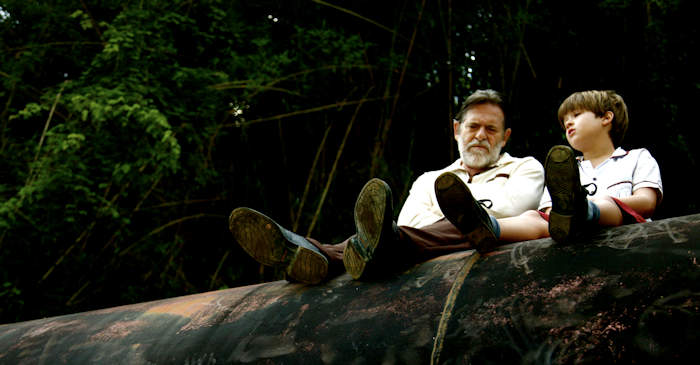
One day, challenged by other boys in the village, Zezé decides to ride the bumper of an older gentleman’s car. Manoel Valadares, or “Portuga” (José de Abreu) as he is known in the village, is somewhat richer than most of the other village inhabitants, and he has explicitly warned the boys that any kid caught touching his fancy car will be punished. Unlucky for Zezé, he gets caught and spanked. Humiliated in front of the other boys, Zezé wants his revenge, but it turns out that the older gentleman is not the monster he is believed to be. A further encounter between him and the little boy ends with them starting to warm towards each other, and a new friendship arises.
José de Abreu and João Guilherme Ávila in My Sweet Orange Tree
Portuga: I’ll take you for a ride in our car. And you’ll tell me those amazing stories. You’ll tell your stories to everyone.
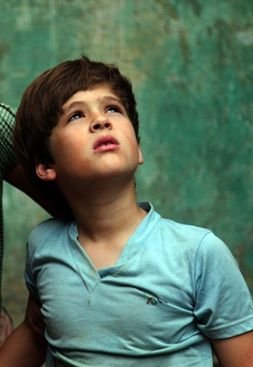
The chemistry between José de Abreu and João Guilherme Ávila in the film’s lead roles is one of the factors that give a unique feel to the movie. João Guilherme Avila has the saddest eyes I have ever seen on a kid, and I can’t imagine anyone watching the movie and not wishing for his happiness. He is able to express a wide range of emotions – from frustration and rebellion to awe and happiness, which reflect greatly on the emotional impact his character has on the viewer. The fact that the story is told in the first person — narrated by his childish voice — enables the viewer to associate with his character and/or remember what it felt like to be a kid trying to make sense of the world around him.
Trailer
The beautiful cinematography (best appreciated in the scenes portraying the imagination of the young protagonist) and skilful camerawork (the action is often shot from a low angle –aiming for a realistic representation of the world as seen through a kid’s eyes) are other highlights of the movie.
The friendship of little Zezé and Portuga is mutually beneficial despite the significant age difference between them — or maybe because of it. Portuga does not look down at Zeze, and his advice to him and ideas shared between them are given and received with ease. Appreciation, concern for the other’s well-being and tenderness are ever-present, making My Sweet Orange Tree one of the best films with an intergenerational friendship as a central theme of its narrative.
I am not ashamed to admit that I watched the movie’s final scenes with tears in my eyes. Tears not necessarily brought by sadness, but a weird mixture of joy, nostalgia, appreciation of life itself, and gratefulness for a beautifully told story. Any movie that can evoke such emotions is a masterpiece, a gem to be discovered and cherished, and My Sweet Orange Tree is just that! A must see!
http://www.imdb.com/title/tt2402186/combined
My Sweet Orange Tree (2012)
A must see!
My Sweet Orange Tree is a masterpiece, a gem to be discovered and cherished.
Flamboyant, quirky, funny, provoking and original – all of those adjective are a perfect fit for the 2012 short film from Switzerland Hazel. Provoking as it focuses on the same sex attraction of a young boy. It’s a turn of events that absolutely terrifies his mother, who attempts everything (and I mean EVERYTHING) to scare the gay away from her precious child – including sessions with a dreadful child-psychiatrist.
Hazel’s production design is top notch. Bright colors, carefully arranged scenes and great costumes (as if coming straight from a Benetton Kids commercial) result in a vibrant visual theme bursting with energy. The lush visuals and exaggerated characters create an extravagant atmosphere, which sets a tone for the film, while at the same time wrapping it in a humorous layer of caricature similar to that of colorful action comics. Such an approach to cinematography is often seen in the French and Belgium cinema (Toto the Hero is a film that comes to mind), and I was not surprised to see it in a production coming from Switzerland.
The musical score is adeptly applied and features songs such as Miriam Makeba‘s Pata Pata, accompanying the cheerful dance of the young protagonist, and the infamous song Mama, by the former child-singer and actor Heintje Simons (which will please many admirers of the treble voice).
Maxime Mori as Hanzel
Maxime Mori‘s performance in the role of Hazel is both charming and convincing. The viewer is allowed to peak into his world through his own eyes and many will end up sympathizing with his character and his quest for self-expression and acceptance.
Some scenes in the film aim to shock the viewer, others to provoke laughter and to entertain. But behind the pleasant visuals, one should not miss the drama of a kid who is forbidden to be who he really is.
http://www.youtube.com/watch?v=A9GM8SO2ZPY
Hazel (2012)
In short
Flamboyant, quirky, funny, provoking and original.
Writer and director Nick Corporon is a name to watch out for if you enjoy movies that focus on gender issues and sexual orientation. His work is largely crowd-funded and made to professional standards that rival those of corporate productions. At the time of writing, his first full-length feature Retake is about to première at the acclaimed San Francisco LGBT film festival.
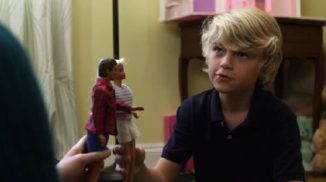
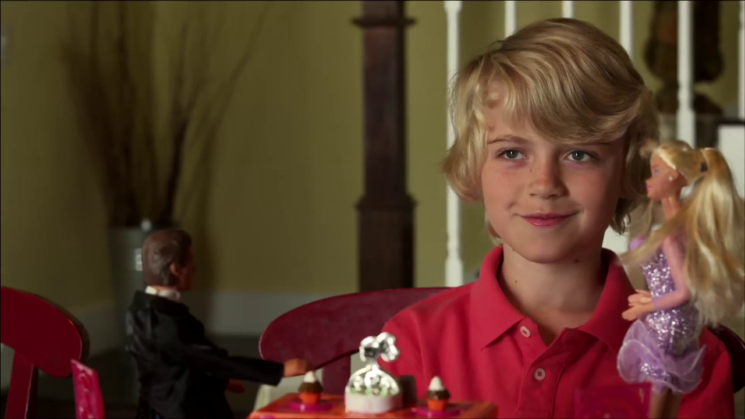
Corporon’s 2014 short Barbie Boy is a delight. The eponymous boy is seven year-old Bobby who, as the title suggests, loves playing with his Barbie doll. His parents are tolerant of this quirk but, while his mother is entirely non-judgmental, his dad finds it hard to hide his disapproval. When he tactfully explains to Bobby that dolls are for girls and that he should probably keep his playing with them private, the boy starts asking himself some searching questions.
Trent Carlton as Bobby
Filmed, edited and acted to near perfection, Trent Carlton makes a particularly strong début as Bobby.
This film has a special connection for me because I used to play with dolls as a boy too (albeit a couple of years younger than Bobby). My parents also accepted this as natural. It wasn’t until several years later that my grandma told me that my mum used to have an Action Man (GI Joe) when she was a girl!
Barbie Boy’s storyline is straightforward but it packs many issues into its 13 minutes. Gender roles, peer pressure, societal norms and growing up are all addressed in what is nevertheless a light-hearted film. It doesn’t try to make any noble political statement and, in fact, its non-presumptuous presentation is for me its greatest strength. It’s just beautifully observed and brimming with empathy.
The whole film is available to watch on Nick Corporon’s Vimeo channel.
Nikias Chryssos`s 2006 short film Hochhaus (Tower Block) offers a grim portrayal of an urban jungle in Germany where 12-year-old Daniel and his older brother Patrick have to resort to unconventional methods to earn money. Having raised his younger brother, Patrick feels as if he owns Daniel’s life and treats him with sadistic cruelty.
The young boy is forced to beg or do humiliating acts to amuse his older sibling, and his only salvation is the imaginary world he creates in his mind. It’s a world filled with Cowboys and Indians, in which even the junkie he accidentally meets during one of his begging trips achieves an almost heroic aura to Daniel and can be relied on for friendship.
Despite being a German film, Hockhaus has the characteristic of an art work inspired by Italian Neo-realism. It was shot on location and focuses on oppression and injustice, with the protagonist living in difficult economic and moral conditions. Some of the scenes are rather harsh to watch as the action and the talented acting performances, especially the expressions of the young Paul Preuss as Daniel, evoke a strong range of feelings in the viewer: from sadness to anger, but also from hope to despair at times.
Hochhaus is essentially a Coming-of-Age film as well, having a young character as lead protagonist with a strong emphasis on the effects of his surroundings on his personality. Despite living with his brother, Daniel is lonely – living in isolation. The boy’s parents are missing (it never becomes clear why), and Daniel is obviously in need of mentoring, of a father–figure and a friend. For a while, he creates and lives in an imaginary world in which a random junkie (who desperately needs help himself) becomes a person to look up to.
It’s not a crowd–pleaser, but the poignant and distressing Hochhaus is a film well worth one’s time and attention.
In 1967, Disney released a dumbed-down animated adaptation of Rudyard Kipling‘s Mowgli books: The Jungle Book. It’s not widely regarded as one of their greatest animated features and, indeed, by today’s standards it looks like the period piece that it is. But it was one of my favourite films as a child and I now realize that it was seminal to my interest in vintage cinema.
Some have suggested that the only reason for its enduring popularity lies in its being Walt Disney’s swansong (he died during post-production). I disagree. While it undoubtedly benefited from Disney’s personal input, having that intangible charm their subsequent animations lack, for me it was the musical score by the Sherman brothers (who also did Chitty Chitty Bang Bang, The Aristocats and other classics) that made the film outstanding. Even today, most kids in the western world can at least hum the tune of The Bare Necessities and I Wanna Be Like You. I rest my case.
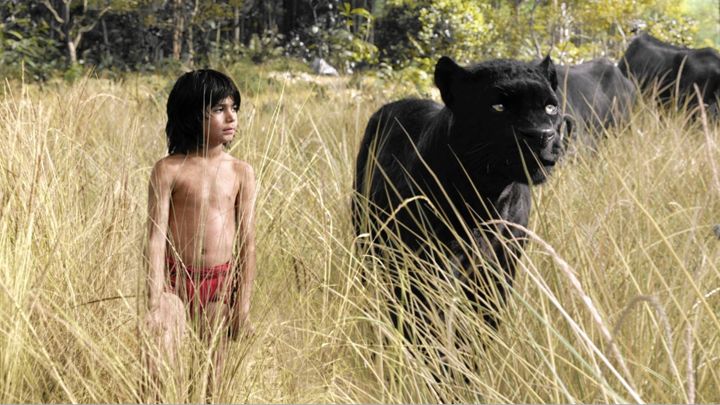
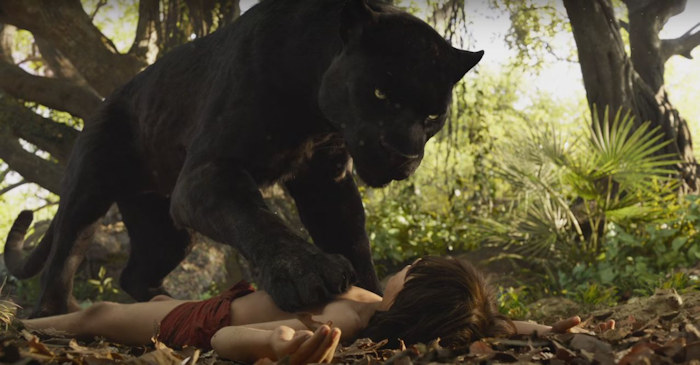
This is the tale of orphaned Indian boy Mowgli, a feral child raised by a pack of wolves. The tiger Shere Khan sniffs out the “man cub” and vows to kill him. The pack decide that the child will have to return to the “man village” both for their safety and his own.
It’s a story that, in one sense, needed dumbing-down. The imagery and underlying message of Kipling’s original books looks imperialistic, if not downright racist, in today’s world. But in deodorizing the politics, Disney threw out some of the darker aspects of the tale: the struggle in the pecking order of the animals and that between the beasts and mankind. He even turned the vultures, terrifying creatures in the Mowgli books, into a caricature of The Beatles. While, obviously, I still love the merry romp that resulted, I was hoping for more from this year’s lavish re-make.
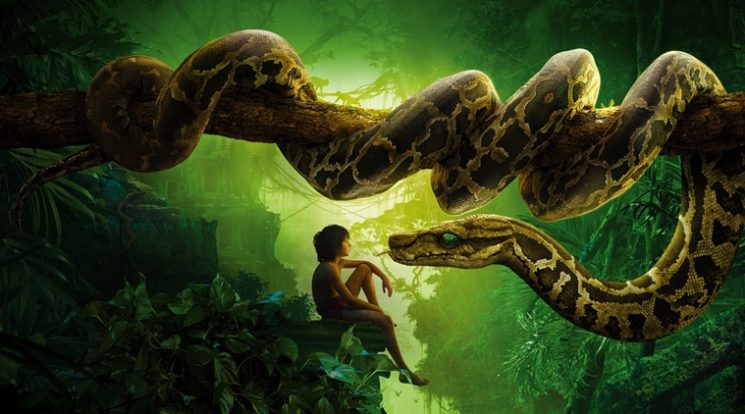
In many ways it delivers. The CGI is amazing with animation so convincing that one really does suspend disbelief and find oneself in a jungle full of talking animals. The production uses this to great effect. It is at times beautifully cute, at others truly scary – perhaps too much so for smaller children.
I should add that, being virtually blind in one eye, I can’t comment on the 3D effect. I can only relay the feedback I overheard from some of the younger members of the audience, and that was mixed – ranging from “F’ing awesome” to “Pretty lame.” I still believe that 3D cinema is an ephemeral gimmick, but then I live in a world of two dimensions.
The voicing and characterization are excellent too. But it was Neel Sethi as Mowgli, the only live-action character in the film, who stood out for me. This must have been a singularly difficult role to play, even for an experienced adult actor, but young Neel handles it so persuasively that you forget that the whole thing is an illusion. He was perfectly cast here, but I get the impression that his talent is far broader. He looks like a star in the making.
I don’t know how well this film will transfer to the TV screen. I recommend catching it at the theater while you have the chance.
Yet, for all its brilliance, this production lacks a certain soul for me. I found the nostalgic references to the songs from the original rather wistful (and not a patch on the 1967 versions). And, stunning though it is, it felt at times like the visual equivalent of Canderel – convincingly sweet, but overly so; artificially so.
I grew up with early CGI pieces like Toy Story and Babe. State-of-the-art then, they look pretty primitive now, but I miss their simplicity. I left the cinema yearning for the technical innocence of yesteryear. I longed for some back-to-basics hand-drawn animation.
On my return home I put on the original 1967 version. I found myself enjoying it even more.
The Jungle Book (2016)
In short
Convincing and impressive CGI re-make of the Disney classic.
The Newcomers is an American family drama telling the story of a 12-year-old boy named Sam Docherty (played by Christopher McCoy) whose family moves from Boston to Vermont in search of a calmer, more wholesome life. Victimized by bullies in Boston, Sam discovers that the small town boys in his new hometown don’t like newcomers, and he has to struggle to win their acceptance and friendship.
The story is not very plausible, for it so eagerly aims to inspire moral values in its audience that it often achieves the opposite result — making positive characters appear overly dorky and insincere. Though the actors have tried their best to overcome this, they haven’t been able to make the stereotypical characters come to life. In some scenes, the acting looks so phony that it becomes irritating. Thank God for the calming musical score which, while overused, fits very well into the traditional Hallmark movie stylistic.
Christopher McCoy as Sam Docherty
On the positive side, one gets to see nostalgic references to the 80s such as Walkmans and huge computer screens. At one point you can hear Sam announcing that he is going to “Surf the Internet”. Granted, some people may find enjoyment in that memorabilia itself. Another positive is the abundance of heartwarming “boy and his dog” scenes which, while clichéd, one will find hard to dislike.
I found the ending amateurish, featuring wipe and dissolve transactions so obvious it’s as if a kid had edited the film using Windows Movie Maker.
That would not have bothered me as much if the story was less predictable and more engaging. Yet I found myself picking out all the technical imperfections in the film in an effort to make it feel worth my time spent watching it.
The Newcomers is marketed as a family movie and it may indeed fill someone’s lazy Sunday afternoon. But while appropriate for all ages, most ages will find it hard to sit through. And, if you somehow do manage to hold your breath waiting for a surprising plot twist at the end, you’re out of luck as the finale is as trivial, preachy and fake as any I have ever seen in a movie. Do yourself a favor and skip this film all together.
The Newcomers Trailer
http://www.imdb.com/title/tt0221431/combined
The Newcomers (2000)
In short
A bullied boy's family moves from Boston to Vermont in search of a calmer, more wholesome life.
A co-production of Germany and Czechoslovakia, Did Michael Knight End The Cold War? is an intriguing student’s short film telling the story of Jachym, a young boy obsessed with the hero of the TV series Knight Rider.
The action is set in the last years of the Communist regime and the film’s atmosphere bears a lot of resemblance to films produced in the eastern bloc before 1989, which is likely to evoke nostalgia in some viewers.
The most impressive scenes of the film are the ones focusing on Jachym and his heroic bike stunts. This is due to dramatic camerawork and Indiana Jones themed musical score. The addition of documentary footage helps in setting the film in the proper time frame.
Yet the film’s story loses its appeal after a while. This could have been remedied by a better written ending. As it is, one learns little from Did Michael Knight End The Cold War? regarding the changes that brought democracy to Czechoslovakia as the movie only showcases the adventures/mindset of the main protagonist.
The acting is decent and so are the camerawork and the score. It’s just too bad the storyline isn’t more captivating.
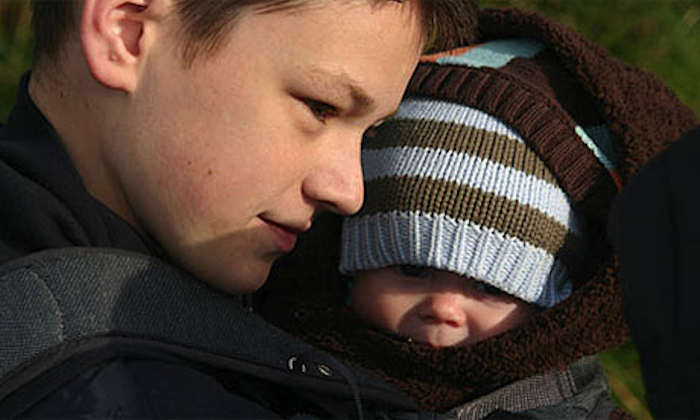
After a casual, fumbling encounter with classmate Leanne, 14 year-old Robbie becomes a father. But only in the biological sense: she doesn’t want to know him or him to know the child.
Robbie longs to meet the baby, but does nothing to confront the situation.
Then, in a chance encounter, Robbie meets his own long-estranged father. They bond right away and the scene is set for a great story about adolescence and father/son relationships.
This is a film I’ve seen numerous times, as I use it in social and health education classes with young people around Robbie’s age. I never tire of it, and teenagers love it. Although it has appeal to all ages, the story is pitched at older children – despite the ridiculous 15 classification. (Yes, it contains strong language, but nothing you wouldn’t hear in a typical playground.)
Kyle Ward
It’s hilarious from the outset (“It’s OK, it’s a safe day.” “What, Monday?”) but this is a comi-tragedy in which Robbie learns that the father he has just begun to love again is a compulsive liar and loser. And when he finally plucks up courage to approach Leanne and meet his infant son, they are disturbed by her older hard-man boyfriend. With no one to turn to, Robbie is left angry and broken. Angry broken adolescents do some weird stuff, but what happens next leaves the audience sharply divided. Well, adult audiences at least.
Robbie snatches his son and runs for the hills.
Some viewers find this unbelievable or just plain silly. Others think it’s a wasted opportunity: writer Julie Rutherford should have developed the story of the relationship between Robbie and his dad. Either way, it’s the death of a potentially good film. But I’ve yet to meet a teenager who feels this way. Deep down, young people know how impulsive and short-sighted they can be in times of stress and panic. Although it’s about half a lifetime ago for me, I still remember what it’s like to be 14 too – and I find the plot perfectly plausible.
The Boy Called Dad Trailer
Whatever one’s reaction, the quality of the acting here is undeniable. I don’t know what became of Kyle Ward, but his début portrayal of Robbie is one of the most convincing and touching I’ve seen. Seasoned character actor Ian Hart (Harry Potter, Finding Neverland) is cast in type for once as the rough ‘n’ ready Scouse father, and his performance is superb. Even the bit parts are acquitted with a finesse that is remarkable for a film made on a £1M budget (barely shoestring by today’s standards).
Those stumped by the abduction aspect must still surely admit that the ending is a work of genius. Without going into detail, this is a rare case of an unsentimental tear-jerker.
The music and songs in the soundtrack fit the theme well. Strong cinematography and editing provide the icing on the cake.
Although I don’t dismiss the views of those who find it fundamentally flawed, I love this film and couldn’t recommend it too highly.
http://www.imdb.com/title/tt1433514/combined
A Boy Called Dad (2009)
In short
A great story about adolescence and father/son relationships. Though some feel its flawed, the reviewer can't recommend this film more highly.
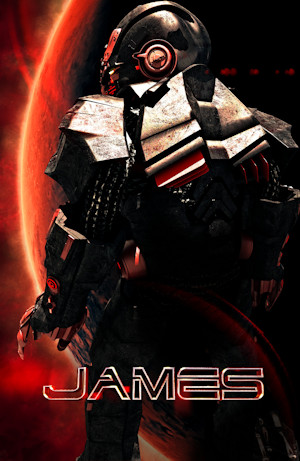
Inventively mixing elements of childhood fantasy and real life, Kyle McCauley‘s short film James offers a unique insight into the mind of a young boy dealing with bullies and family issues. The movie impressed with its approach, including commentary on social reality through the use of indirections (metaphors and allegories), and through the usage of well-crafted visual and sound effects.
The special effects reminds one of the American animated TV series Voltron: Defender of the Universe, or more recently Transformers, in 2007. This guarantees an appeal to younger audiences who, while they may not pick on the dramatic layers of meaning the story holds, will enjoy the amazing visuals.
At times, the story leaves the audience confused, as it appears the action is often left open to interpretation. This is especially true regarding the role that James parents play in his life. It is possible that some viewers will disapprove of fantasy as a form of escapism when facing real problems. The best way to decide if you like the film, once having found out about it, is to watch it now.
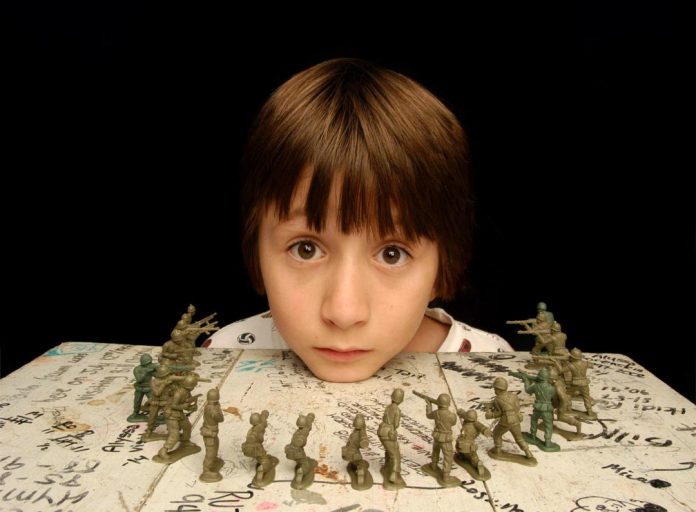
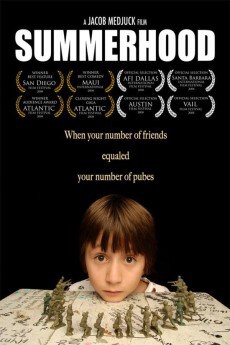 That’s somewhat of a weird request coming as it is from 10-year-old Fetus (Lucian Maisel), the young protagonist of Jacob Medjuck’s 2013 film Age of Summerhood (originaly released in 2008 as Summerhood).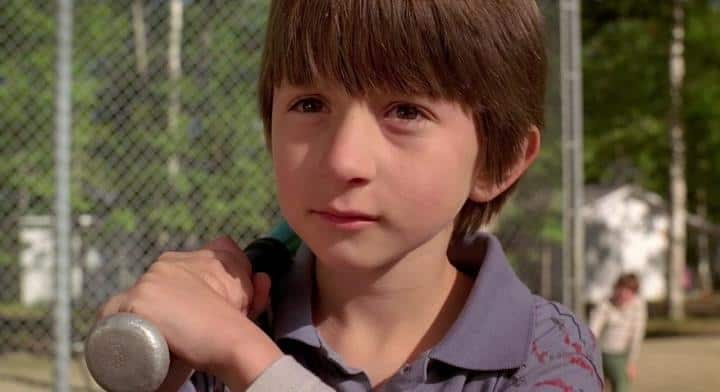
 The Greatest Journeys Are The Ones That Bring You Home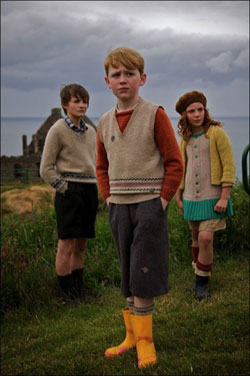
 Despite the witty plot, The Crush has a few shortcomings – such as the camerawork: a bit stale and unnatural at times, and the score (with the exception of the final song) which, when addressed, could have resulted in a real masterpiece. Sometimes the characters’ actions did not ring true, though those of the main protagonist (though played by an obvious newcomer to cinema) inspires heartwarming feelings and sympathies.
 The friendship of little Zezé and Portuga is mutually beneficial despite the significant age difference between them — or maybe because of it. Portuga does not look down at Zeze, and his advice to him and ideas shared between them are given and received with ease. Appreciation, concern for the other’s well-being and tenderness are ever-present, making My Sweet Orange Tree one of the best films with an intergenerational friendship as a central theme of its narrative.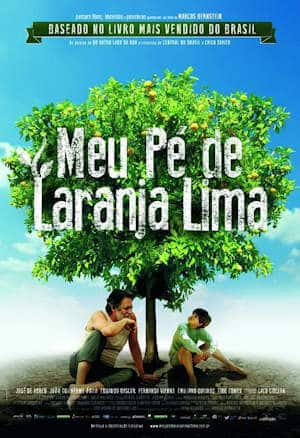
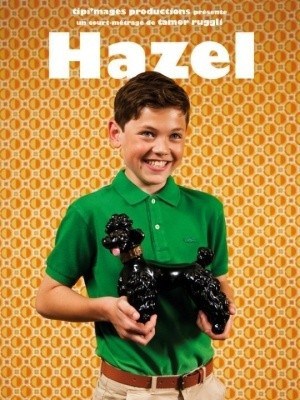
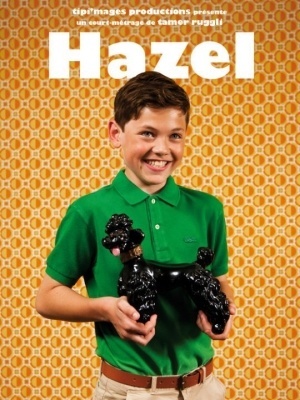 Flamboyant, quirky, funny, provoking and original – all of those adjective are a perfect fit for the 2012 short film from Switzerland Hazel. Provoking as it focuses on the same sex attraction of a young boy. It’s a turn of events that absolutely terrifies his mother, who attempts everything (and I mean EVERYTHING) to scare the gay away from her precious child – including sessions with a dreadful child-psychiatrist.
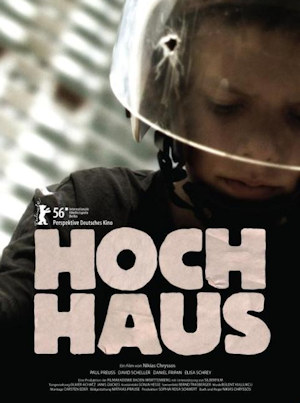 Nikias Chryssos`s 2006 short film Hochhaus (Tower Block) offers a grim portrayal of an urban jungle in Germany where 12-year-old Daniel and his older brother Patrick have to resort to unconventional methods to earn money. Having raised his younger brother, Patrick feels as if he owns Daniel’s life and treats him with sadistic cruelty.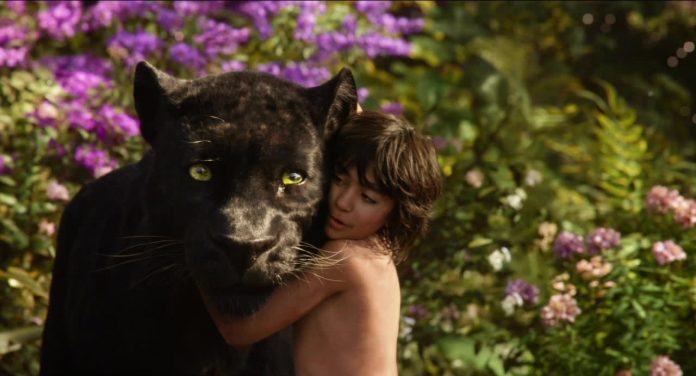
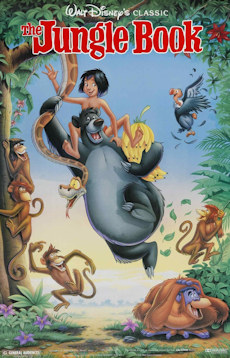 In 1967, Disney released a dumbed-down animated adaptation of Rudyard Kipling‘s Mowgli books: The Jungle Book. It’s not widely regarded as one of their greatest animated features and, indeed, by today’s standards it looks like the period piece that it is. But it was one of my favourite films as a child and I now realize that it was seminal to my interest in vintage cinema.
 This is the tale of orphaned Indian boy Mowgli, a feral child raised by a pack of wolves. The tiger Shere Khan sniffs out the “man cub” and vows to kill him. The pack decide that the child will have to return to the “man village” both for their safety and his own.
 In many ways it delivers. The CGI is amazing with animation so convincing that one really does suspend disbelief and find oneself in a jungle full of talking animals. The production uses this to great effect. It is at times beautifully cute, at others truly scary – perhaps too much so for smaller children.
 The voicing and characterization are excellent too. But it was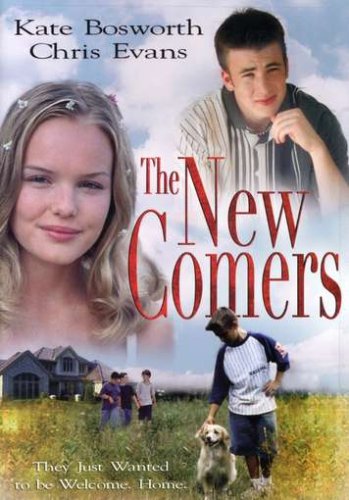
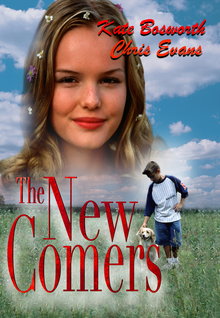 The Newcomers is an American family drama telling the story of a 12-year-old boy named Sam Docherty (played by Christopher McCoy) whose family moves from Boston to Vermont in search of a calmer, more wholesome life. Victimized by bullies in Boston, Sam discovers that the small town boys in his new hometown don’t like newcomers, and he has to struggle to win their acceptance and friendship.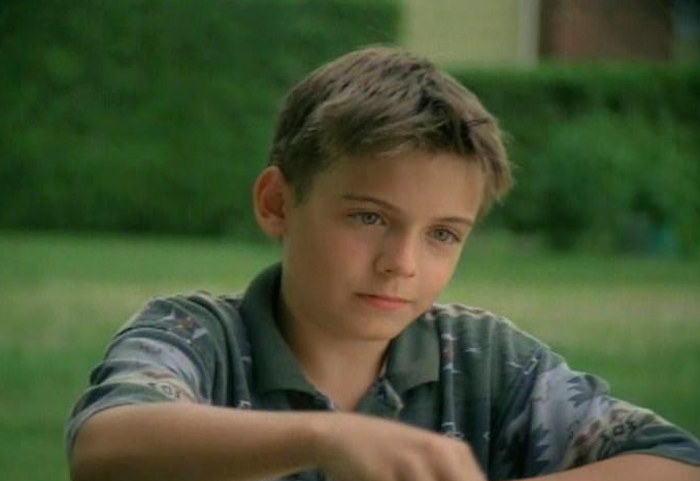
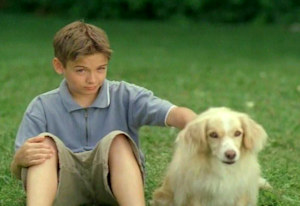 I found the ending amateurish, featuring wipe and dissolve transactions so obvious it’s as if a kid had edited the film using Windows Movie Maker.
 A co-production of Germany and Czechoslovakia, Did Michael Knight End The Cold War? is an intriguing student’s short film telling the story of Jachym, a young boy obsessed with the hero of the TV series Knight Rider.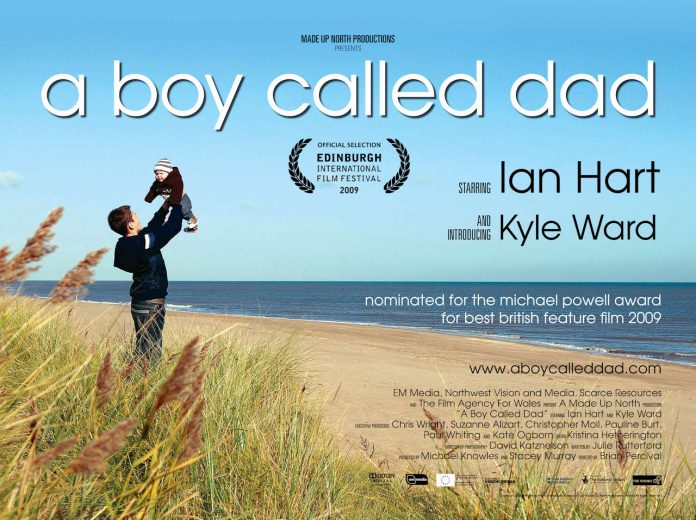
 After a casual, fumbling encounter with classmate Leanne, 14 year-old Robbie becomes a father. But only in the biological sense: she doesn’t want to know him or him to know the child.
 This is a film I’ve seen numerous times, as I use it in social and health education classes with young people around Robbie’s age. I never tire of it, and teenagers love it. Although it has appeal to all ages, the story is pitched at older children – despite the ridiculous 15 classification. (Yes, it contains strong language, but nothing you wouldn’t hear in a typical playground.)

 Inventively mixing elements of childhood fantasy and real life, Kyle McCauley‘s short film James offers a unique insight into the mind of a young boy dealing with bullies and family issues. The movie impressed with its approach, including commentary on social reality through the use of indirections (metaphors and allegories), and through the usage of well-crafted visual and sound effects.