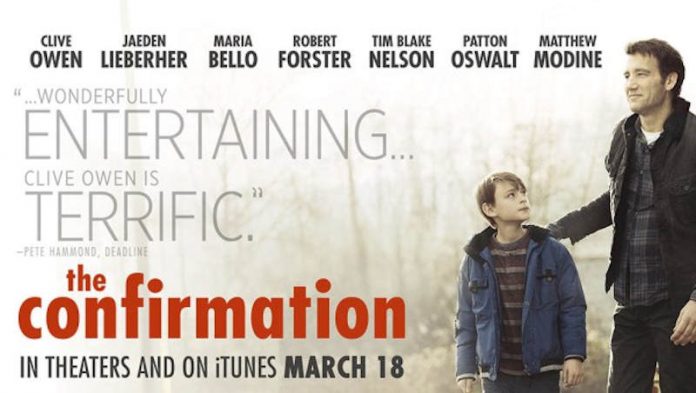
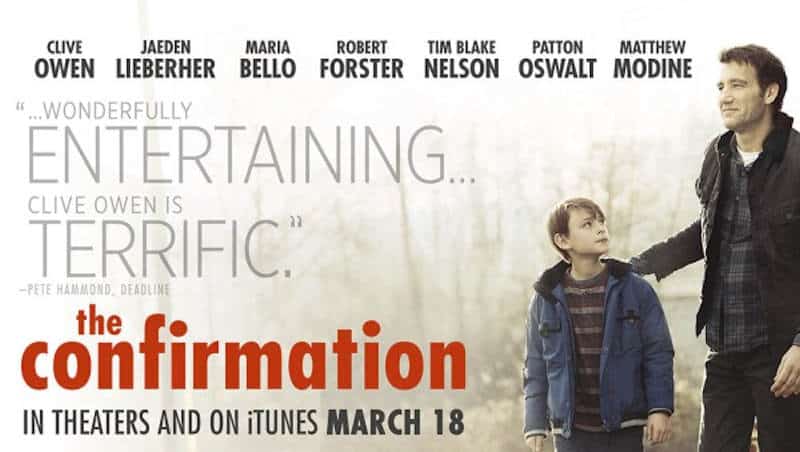
Written and directed by Bob Nelson, The Confirmation is a new Canadian film focusing on the bonding between eight-year-old Anthony (Jaeden Lieberher) and his father, Walt (Clive Owen). The narrative features a wide range of adventures, misfortunes and life lessons.
The movie opens with a scene in which Anthony’s mother (Maria Bello) quite unwillingly leaves her son in the care of her ex—Walt—only after a stern warning that Walt should not drink and must make sure that Anthony stays clean (out of trouble at least) for his upcoming confirmation (the rite at which a baptized person affirms Christian belief and is admitted as a full member of the Church).
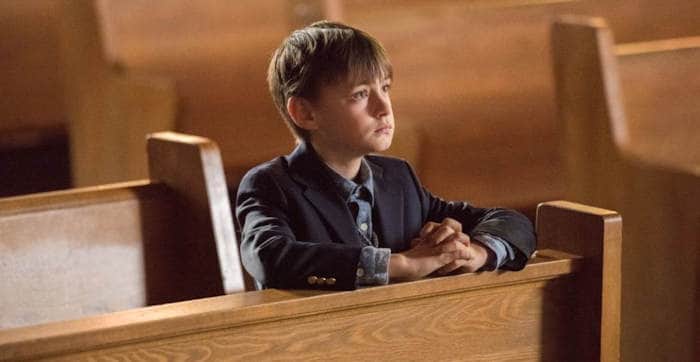
Jaeden Lieberher as Anthony in The Confirmation (2016)
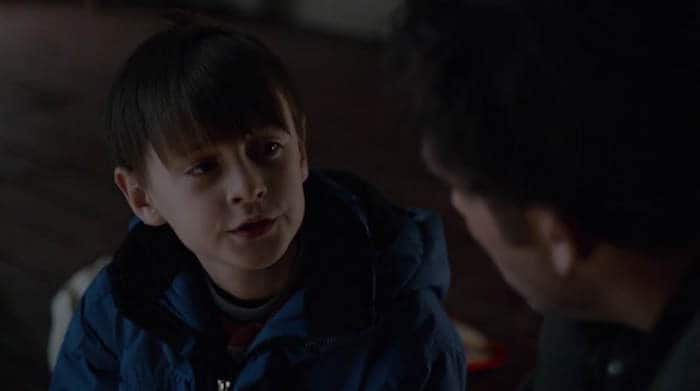
The weekend starts well enough but soon becomes a disaster when Walt’s valuable wood crafting tools are stolen from his pick-up truck. Recovering them is crucial as Walt is a freelancer often out of work. So he takes his son on a search that puts them in hazardous situations among an array of eccentric people who may or may not know who stole the tools.
Admittedly, I failed to associate with or sincerely care for the characters on an emotional level, which doesn’t mean that they were not well developed. On the contrary, by the end of the film, I felt like I really knew them—especially Walt (undoubtedly thanks to Clive Owen’s natural acting performance).
Some questions are hard to answer
Jaeden Lieberher is a child actor with a unique appearance which, combined with his pairing with talented and experienced actors like Bill Murray in St. Vincent and Clive Owen in The Confirmation, has allowed him to learn tricks of the trade that enhance the characters he portrays in the process. That’s so much the case that the roles he’s chosen for almost appear that he’s being typecast. In all of his screen appearances, his posture, mannerisms and self-assured composure strongly surface, which some might find irritating (me too – occasionally), but also evoke an instant recognition of the actor and the will of his characters.
Most of the story is told from Anthony’s perspective, which shapes The Confirmation into a Rite-of-Passage movie. Its narrative feels almost bittersweet at times, as while the laughs of St. Vincent are not present (or perhaps whatever humour is present is just of a different kind), the newly acquired understanding of life was very evident for the young protagonist of the film, for his dad and, last but not least, the audience. The acquisition of that wisdom is a central theme in any coming-of-age narrative, and Bob Nelson skillfully integrates this theme into his film.
The Confirmation Official Trailer
Nelson seems to have found inspiration in an American Western television program called The Rifleman (fragments from it are seen playing on a TV set at a scene set at Walt`s apartment) – especially in the characters (the young Mark absorbing the peculiarities of life while accompanying his father) and the basic idea that everyone deserves a second chance – including Walt who is a recovering alcoholic.
The Confirmation has the unmistakable feel of an independent Canadian production, slightly art-house – serious and with a narrative focusing on real-life issues. This makes it somewhat unsuitable for people used to manipulative dramas or swift actions. Yet it does not bore and results in a rewarding cinematic experience for anyone who invests his/her time in seeing it.
http://www.imdb.com/title/tt4210080/
The Confirmation (2016)
In short
The Confirmation has the unmistakable feel of an independent Canadian production, slightly art-house - serious and with a narrative focusing on real-life issues.
The souls of the adult people have shrivelled up. Last year’s rhubarb’s walking the street, Sir. Timothy Gedge
There seems to have been a golden era of British Television drama in the decade before I was born. I guess it’s swingeing budget cuts that have put an end to that. These days we’re lucky to get more than one outstanding TV movie a year, but back in the 80s the BBC was churning them out on a weekly basis.
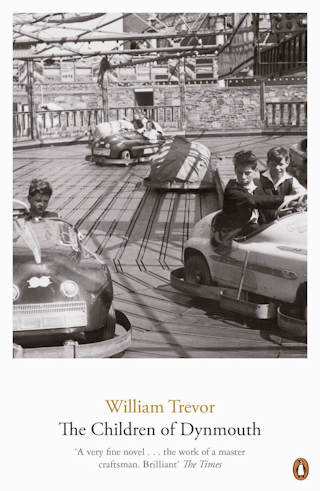
Screen Two was a long-running series of such films. All the ones that I’ve seen were good, many excellent and a few simply stunning. William Trevor‘s screenplay adaptation of his Whitbread Award-winning novel The Children of Dynmouth stands proud in the last category.
Though not a household name, Trevor, who died at the age of 88 last November, was a distinguished Anglo-Irish author, said to have been a candidate for the Nobel Prize for Literature. I’ve been a fan of his work since I was a kid and it was a copy of The Children of Dynmouth, which I chanced upon while browsing through my parents’ paperback collection, that introduced me to him.
When I was told that a dramatized version of the novel was available on You Tube, I was skeptical. Trevor’s writing has a distinctive and quite beautiful narrative voice, which inevitably seems to get lost in a screen adaptation. But I was wrong. This may just be the first film made since The Wizard of Oz that’s actually better than the book on which it’s based.
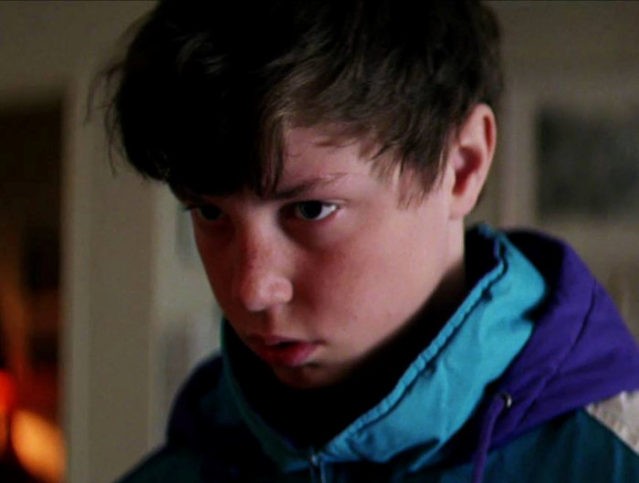
Simon Fox in The Children of Dynmouth
OK, maybe that’s over-hyping what is, after all, a TV movie made on a TV budget. Its creative genes are nevertheless strong: Trevor himself wrote the screenplay; it was directed by the celebrated veteran Peter Hammond (BAFTA Award-winner, noted for such British TV classics as The Avengers, Tales of The Unexpected and Inspector Morse.) The cast features several well-respected names including John Bird, Gary Raymond and a cameo by playwright Peter Jones. Two of the newcomers, Eleanor Tremain and Graham McGrath, went on to have successful acting careers as adults and their promising débuts are documented here. But it was undoubtedly Simon Fox, in his one and only acting role, who stole the show as the main character: 15 year-old Timothy Gedge.
Graham McGrath
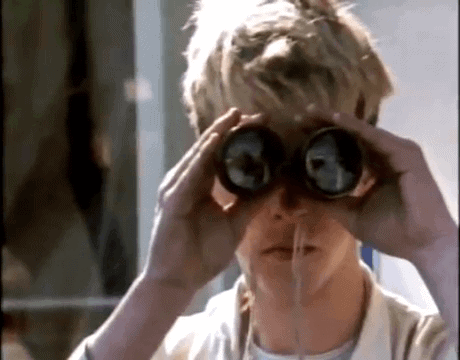
Timothy is a deprived, neglected teenager who spends his days wandering around his small home town spying on people through a pair of binoculars. Few care about him and those who do, like the elderly childless couple the Abigails, live to regret it. As Mrs Abigail herself puts it, “He eats his way into people’s lives – destroys people because he’s been destroyed himself.”
But Timothy can make people laugh – and even though they may often be laughing “at” rather than “with” him, it’s a gift nonetheless. He devises a macabre black comedy sketch for a local spot the talent competition but needs some hard-to-find props. The props are all out there, but he needs to persuade some hostile residents of the town to let him have them, and therein lies the story.
Elainor Tremain
This is a tale of a hapless boy’s blackmail, both literal and emotional, and of half-truths which, when combined with blackmail, can be more insidious than truth or lies alone. Though it has its comic moments, most notably Timothy’s climactic performance in the competition, it’s pretty dark stuff.
If it can be classed as a Coming-of-Age story, then it is one with a twist. For it’s not Timothy who comes of age here: he’s a catalyst who shows no aptitude for learning from experience. His two youngest victims (Tremain and McGrath) learn a few of life’s lessons the hard way at Timothy’s hands, but it’s really middle-aged Mrs Abigail who sees the light in the end during a wonderful showdown with the somewhat inadequate parish priest.
Although he had no prior acting experience, Simon Fox (whose career forked to work behind the camera) was perfectly cast as Timothy. His portrayal of the vulnerable yet manipulative, malicious youngster is creepily realistic and haunted me for days after I watched it. He was, in fact, a young-looking 17 at the time but the maturity with which he handled the role is still remarkable.
Peter Jones
Peter Hammond’s direction, with its characteristic use of reflection and shots through opaque screens, suits the story’s themes well. The cinematography here is immaculate and stops short of letting Hammond’s potentially ostentatious techniques spoil the show.
The original score by Paul Lewis, reminiscent at times of Saint-Saëns’ Danse Macabre, fits the film’s mood to a tee and kept me glued to final credits till the end.
Only a handful of the Screen Two productions have been released by the BBC on DVD and (unforgivably, in my view) The Children of Dynmouth is not among them. Indeed, this film has not been aired since its original screening in 1987. Fortunately, a reasonable print of it is up on You Tube, largely thanks to Simon Fox, who supplied the poster with his personal copy of it.
Incidentally, among the Screen Two productions that have been released on DVD is Michael Palin‘s whimsical Coming-of-Age comedy East of Ipswich, which also comes with my recommendation.
I hadn’t laughed so hard in a long time. Lokas is a wonderful comedy from Chile directed by one of the country’s greatest directors: Gonzalo Justiniano. The plot follows the adventures of Charly, a middle-aged man who lives with his son Pedro (Raimundo Bastidas) in Mexico City. Unfortunately, he gets in trouble and is sent to serve a short sentence in jail. When he gets out, he is unable to find a job and has no other choice but to take his son and return to Chile where his father lives. The last time he saw his father was some 30 years before. Much to his surprise, he finds out that his father is gay and lives with another person. That, in itself, is quite stressful for Charly who stands as a homophobe.
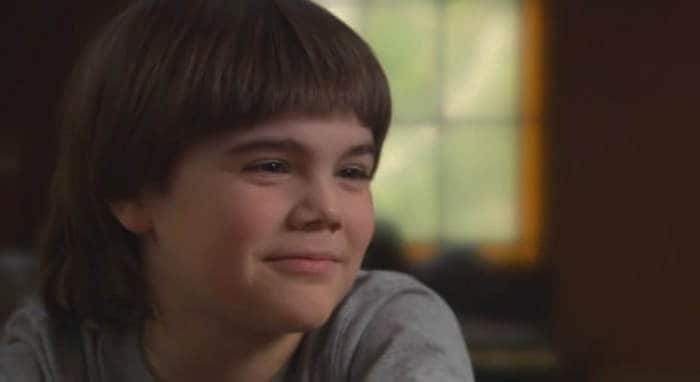
The screenplay was written by Rodrigo Bastidas, who stars in the film himself in the role of Charley. He takes his son Raimundo along and thanks to that the viewer can enjoy the first-class acting of young Raimundo in the role of Pedro.
One “happy” family
In an interview, Rodrigo shared some insight into why he decided to write the script:
“Half a year ago, Raimundo asked me: “Hey Dad, will I be gay?” I said “Look, I think not, your behavior, you say you like girls, you’re in love with this here, that there, so from that point of view, no.” Afterward, those concerns of sexual identity became part of the movie Lokas.
Some movie critic agencies rated the film “Suitable for persons over 14”, which surprised its creators. They found that decision to be discriminatory and declared that it was absurd that the entire film was censored in this way. The director Gonzalo Justiniano said:
“We are surprised by the ratification of age, because the theme of the film today should not be a taboo for children.”
Raimundo Bastidas as Pedro in Lokas (2008)
Rodrigo Bastidas also commented that this movie is for all audiences. “One of its main protagonists, and the theme of the film, is a child of 11 years, who accepted his grandfather being gay naturally, without discriminating. I think it’s a film for over 10 years … if one must put a number to it. I find it very educational to go with your child of 10, 11 or 12 years to see a movie like this.”
In this respect, in my opinion the viewer must consider that the movie rating was wrong as there is not a single scene that I would consider offensive for any age. Rather, it contains well-taught lessons about tolerance and acceptance of people as they are.
The director’s idea was to build a tender and funny film that could also entertain, and I think he successfully met those objectives.
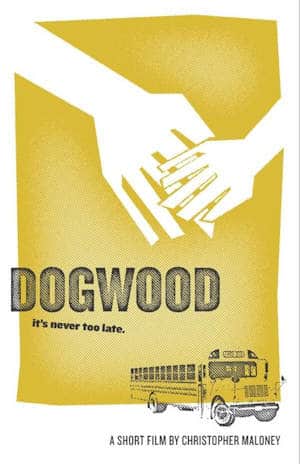
Sometimes all we need is bit of kinship and empathy. And sometimes a simple story told in a movie can make us feel good about the world, about the people and encourage in an ingenious way to “pay it forward”. That is the case with the 2014 short film Dogwood written and directed by Christopher Maloney.
The movie tells the story of Charlie (Rick Parker) – a good natured school bus driver who notices the shines of Rowan (Perrin Jack) young boy who has recently been placed in a foster home along Charlie’s bus route. Charlie shows interest in the boy and the two develop a heartwarming friendship which brightens both of their lives.
Dogwood is beautifully shot and combined with its very fitting musical score (by a band called Town Meeting) – it evokes a sense of calmness and harmony. The story is simple enough to follow and most viewers will be able to relate to it (in my case it brought reminiscences of friends from Germany and elsewhere with whom I have formed a bound regardless of the age difference). My only complaint is the somehow unsatisfying and vague ending.
I love finding old pieces of history in the making: obscure early albums by famous artists, A-list actors playing bit parts in old films and so on. So when I saw a VHS tape of this 1979 TV movie written by Stephen Poliakoff and directed by Stephen Frears in a charity shop, I snapped it up.
This one does, indeed, have Mel Smith in a minor role as a nightclub bouncer, but that’s just the icing on the cake.
Poliakoff is a celebrated playwright best known for his stage productions, though since the 1980s he has done some great writing for British television too. Frears, of course, went on to direct many excellent movies including Dangerous Liaisons (1988) The Hi-Lo Country (1998) and, most notably for me, the (then) daring gay romantic comedy My Beautiful Launderette (1985). So I had high expectations of this film – and it did not disappoint.
It tells a dark story of disturbed young Leo who persuades his easily-led school friend Mike to take part in a prank that goes too far. Leo ends up in the hospital while Mike, terrified and alone, goes on the run. He soon hooks up with Ken (Gary Holton), a drug-crazed car thief who takes the naive boy under his wing and on a roller-coaster journey of delinquency.
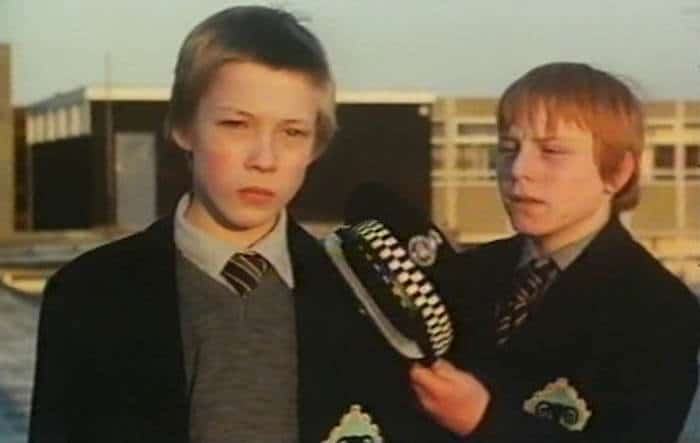
Richard Thomas and Peter Clark in Bloody Kids
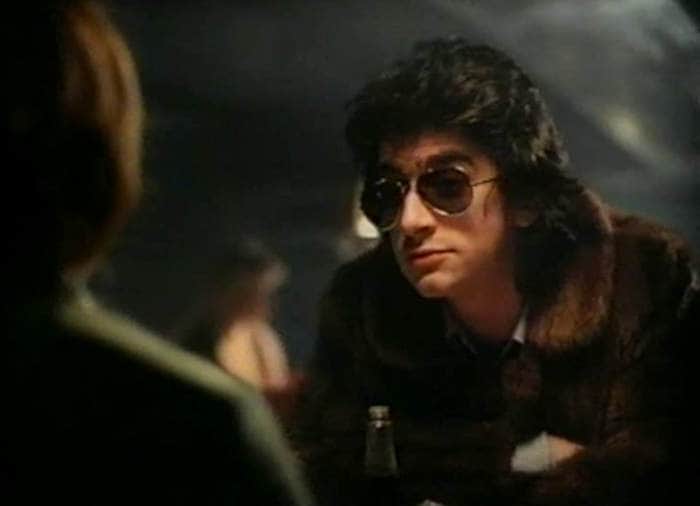
Though neither of the two young leads, Richard Thomas and Peter Clark, pursued a career in acting, their performances are strong, capturing well the sinister feel of their manipulative friendship. The adult cast all do a good job, and Gary Holton is outstanding. Better known as a rock musician, he showed great potential here as a character actor. Sadly, he died from an accidental drink and drug overdose just six years after this film was made.
It’s the production and direction that are the film’s main strengths, though. It has no pretensions of being anything other than a made-for-TV movie, but the cinematography is first-rate. With Stephen Frears and Barry Hanson (who also produced The Long Good Friday) at the helm, one would expect nothing less.
Gary Holton
Although the piece inevitably looks dated, the themes and performances have a remarkably contemporary feel to them. Indeed, for Britons over 30, the story will have chilling echoes of two boys much the same age who committed an unthinkable crime in Liverpool 13 years later, also after a prank sprang tragically out of control.
I was pleasantly surprised to find that, despite its obscurity, Bloody Kids is available as a Region 2 DVD from major online UK suppliers. It has not been released for the North American market.
Trailer
Some may feel that the drug references and depictions of delinquency make the film unsuitable for viewers under 15, but it is likely to appeal to discerning teenagers and adults alike.
Scandinavian films almost always avoid shying away from portraying youthful experiences using false pretenses, which enhances their credibility — especially when compared with most US productions (of course each rule has its exceptions).
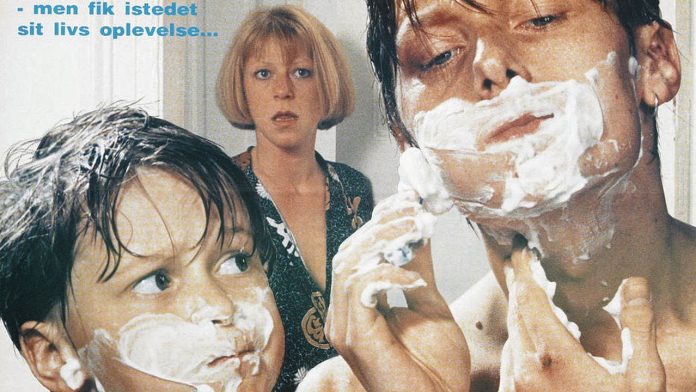
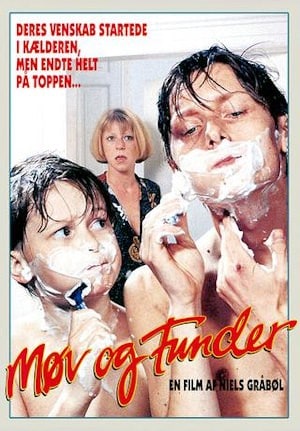
Møv og Funder (Its English title, The Hideaway is so rarely used that I decided to stick with the original Danish one for this review) is a 1991 Coming-of-Age film from Denmark directed by Niels Gråbøl.
Starring Kasper Andersen in the lead role of the 12-year-old (going on 13) Møv, the movie tells the story of the unlikely friendship between a boy and an older juvenile delinquent. Møv (short for Martin) spends quite a lot of time by himself. His parents are separated and both seem to devote more time to their new-found partners than to their son.
Kasper Andersen as Møv / Møv og Funder
The opening scene is essential to one’s understanding of Møv’s personality: posters from the movie Terminator and of Native Americans hang on the walls of his room, suggesting an imaginative and adventurous kid who loves reading (and movies).
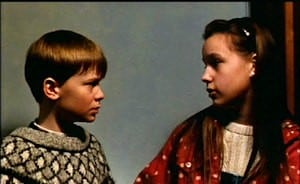
Møv and Rikke
Møv has a crush on Rikke (Kristine Horn), a girl from his building but, other than observing her (with a risk to his life at times), he is not sure how to proceed. When the kids meet, Møv blushes and becomes boastful and clumsy as most boys do around someone they like.
One day Møv witnesses a street fight that ends quite brutally. Later that day, the boy encounters one of the participants of the fight, Funder (Allan Winther), a 22-year-old street bum who has been wounded and is hiding from the police in the basement of the apartment block where the boy lives.
Møv’s friendly demeanor and naivety takes over and, when Funder asks the boy for help, he decides to offer him the family box room as a refuge. Impressed by Funder’s toughness, and his life philosophy (based on statements such as “You’ve got to take it to the limit”), Møv develops something akin to hero-worship towards his new-found friend.
Møv and Funder become friends
The situation becomes complicated when it becomes clear that Funder will require medical attention, in spite of the danger that will place him in, of being caught by the police.
Kasper Andersen and Allan Winther work great as an acting tandem, which enabled the film’s director to achieve a delightful juxtaposition between the innocence of the young Møv and the rebellious manner of Funder. The many close up camera shots, combined with a skillful use of lighting, are used frequently and allow one to sense the emotions of the film’s protagonists, thus enhancing their characters.
Møv og Funder does not have a long screen time (just 70 minutes), but its simple narrative is filled with nuances that make it intriguing and action that makes it intense and a joy to watch. The film manages to accurately portray the first encounter of a young boy with the adult world, with all of its perils and wonders. This provides for the Coming-of-Age nuance of the narrative, making it more than being just a children’s film.
The song played at the film’s end makes for a wonderful finale. Its lyrics focus on growing-up and learning from one’s experiences as well as the importance of friendship:
“You’re nobody until you fall in love; you’re nobody until you care about someone. You can be a king and own all the gold in the world, but it will not bring you happiness in old age.”
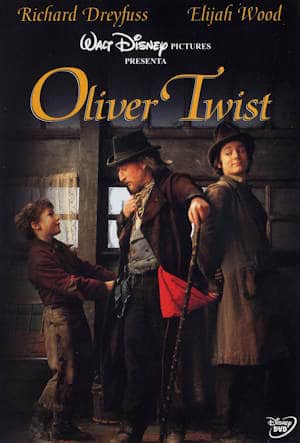
I first saw this production of this classic tale by Charles Dickens when I was 10, and I loved it.
Back then, though, I hadn’t read the novel or watched David Lean‘s excellent 1948 version with John Howard Davies and Alec Guinness. This Disney TV Movie inspired me to do both, and for that I am eternally grateful.
When I found it available on DVD, I ordered a copy for old time’s sake. I wasn’t expecting it to be as good as I remembered (these things rarely are) but I was unprepared for how appalling it really is. Ah well, I suppose I used to love The Tellytubbies too.
The screenplay pares down the Dickens story to its bare bones and then re-writes some aspects of it.
Mr Bumble who, in the novel, epitomises injustice and hypocrisy in the Victorian treatment of the have-nots by the haves, is demoted to a bit part. The episode of Oliver’s apprenticeship to Sowerberry, the undertaker, and his spirited fight with the bully Noah Claypole is cut, leaving Oliver’s decision to run away to London rather nonsensical.
Substituted is a contrived story concerning Oliver’s possession of the locket that his mother gave him, which he is (inexplicably) convinced will lead him to discover his true identity. (The locket is important in the novel, but Oliver is unaware of it until the end.)
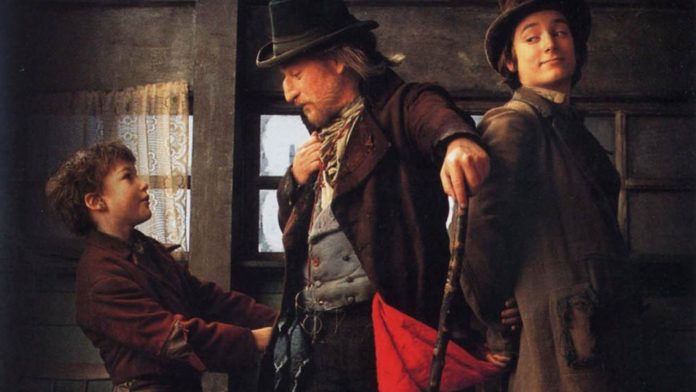
Richard Dreyfuss as Fagin
Although what’s left of the plot is reasonably faithful to the original, the characterization is not. This is particularly true of Fagin (Richard Dreyfuss), who is depicted as an avuncular figure and, in the novel, Fagin was anything but. Fagin was a mean old man in every sense, who beat and bullied the boys in his self-styled “care.” I suspect that, had Dickens created the “elderly receiver” today, he may have had him abuse his charges in ways even more insidious.
To give Dreyfuss his due, he does a good job of playing the part as written, but the performance is a shadow of Alec Guinness’s 1948 opus or even Ron Moody‘s light-hearted portrayal in the 1968 musical.
Elijah Wood is well-cast as Dodger and gives a strong showing. Unfortunately, it’s wrecked for any native Brit-English speaker by his accent – surely the most ludicrous attempt at Cockney since Dick Van Dyke in Mary Poppins. By the final scenes, Elijah seems to have given up and starts sounding American. One really would have thought that Disney had the resources to employ a decent dialect coach. It’s a shame they didn’t, for he is a talented actor.
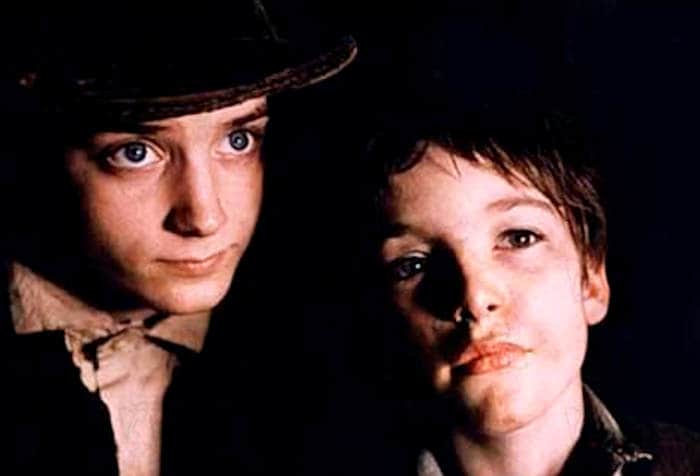
Alex Trench and Elijah Wood in Oliver Twist
No less laughable is the soundtrack, which purports to consist of traditional English music. Those with even a rudimentary knowledge of the subject can’t fail to be amused by the anachronisms. The score features the Christmas carol In The Bleak Midwinter, even though Christina Rossetti‘s words weren’t set to Gustav Holst‘s music until 1906. Another tune used is George Butterworth‘s The Blacksmith – published in 1912. Then there’s Hard, Hard Times, which is at least traditional but, unfortunately, Canadian – it didn’t become associated with the UK until the folk group Steeleye Span re-worked it as Hard Times of Old England in 1975 (a track from which the arrangement used in the film is clearly lifted.)
This looks like what it is: a shoddily made, low budget TV movie – right down to the poor lighting and 4:3 aspect ratio.
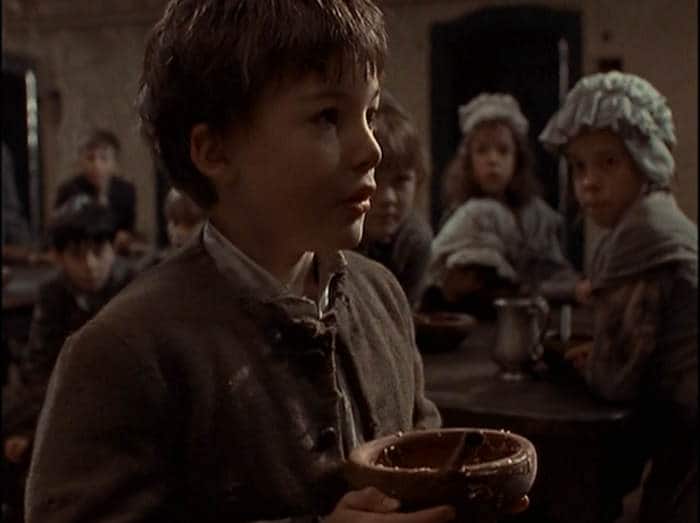
Alex Trench as Oliver Twist
Its saving grace is the otherwise unknown Alex Trench as Oliver. He just so looks the part and carries it off to near perfection: better, in my view, than John Howard Davies’s slightly cloying performance in David Lean’s masterpiece.
Trailer ( fan-made)
http://youtu.be/g-auFdPTnko
Then again, what was Dickens’s underlying moral in this story? That a kind-hearted boy of good character can stay true to himself in the face of hardship, cruelty and poor role-models. That’s so quintessentially Disneyesque that they could hardly have got Oliver himself wrong.
For Alex Trench’s performance, this a flick worth catching if ever it’s re-run on TV, but don’t waste your money on it… Unless you have a 10-year-old kid, in which case it may serve as a useful introduction to the great Victorian author’s work.
It’s a movie about catastrophic loss, and a special child who is somewhere on the autistic spectrum, trying to find his own logic.
Stephen Daldry, Director
Old people, running people, airplanes, tall things, things you can get stuck in, loud things, screaming, crying, people with bad teeth, bags without owners, shoes without owners, children without parents, ringing things, smoking things, people eating meat, people looking up, towers, tunnels, speeding things, loud things, things with lights, things with wings… Bridges make me especially panicky.
Oskar Schell, Protagonist
When 11-year-old Oskar’s father dies in The World Trade Center on that senseless, tragic day, he loses not just a parent but the only person who truly understood him. For Oskar is a weird kid: highly intelligent yet socially stunted, given to spouting apocryphal factoids and occasional bursts of verbal diarrhea in his struggle to explain his fearful perception of the world around him. He carries and shakes a tambourine (“to help keep me calm”) in times of stress and has no friends to speak of.
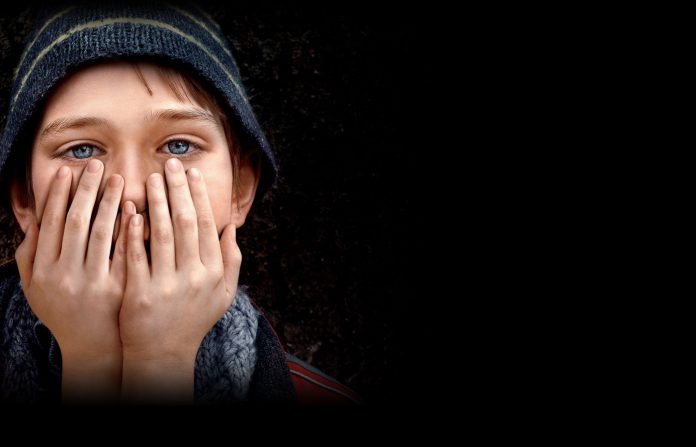
Thomas Horn as Oskar Schell in Extremely Loud & Incredibly Close
So it comes as little surprise when Oskar reveals that he “got tested once to see if I’ve got Asperger’s disease,” though “the tests weren’t definitive.”
Oskar’s beloved father used to send him cryptic treasure-hunt puzzles to encourage the boy’s mental agility and to make him get out and meet people. When Oskar finds a key hidden in his father’s belongings a year after the tragedy, he becomes convinced that this was his dad’s final puzzle and so sets out on a quest to find the lock that the key fits.
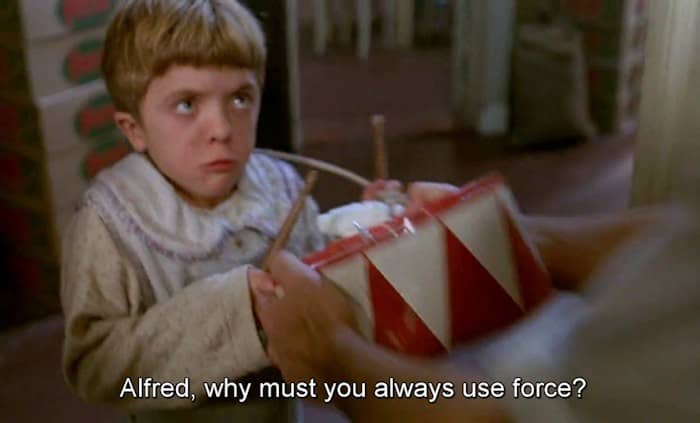
Schlöndorff’s Oskar was clearly an allegory of childhood trauma
As a lover of films about creepy kids and dysfunctional families, the premise of Extremely Loud resonates clearly for me with another weird boy called Oskar who also witnessed historical tragedy and carried a percussive instrument in Volker Schlöndorff‘s adaptation of Günter Grass‘s The Tin Drum. But while both productions caused a fierce division of opinion among critics, and both demand their fair share of belief-suspension from the audience, Extremely Loud is a very different sort of film. Schlöndorff’s Oskar was clearly an allegory of childhood trauma. Oskar Schell, as played by Thomas Horn, is a remarkably lifelike depiction of a child on the autistic spectrum who is trying to cope with overpowering grief and, as we discover, guilt.
This is a demanding part to play. It requires deep understanding of the troubled boy’s psyche to bring it off with anything approaching credibility. Thomas’s portrayal is outstanding (at times scarily so). The empathy and maturity he brings to the subtle nuances between rage, desperation and determination are incredible; it’s hard to believe that he had no previous acting experience.
In fact his casting was fortuitous. During the auditions, the production team spotted him taking part in (and ultimately winning) the kids’ version of the US TV quiz show Jeopardy! Seeing his potential, they invited him to try out for the part and, in what sounds like something from a contrived Disney plot, they found just the boy they were looking for.
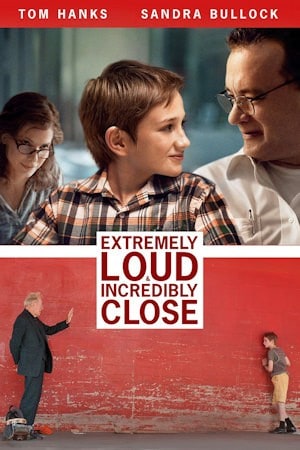
Of course, Thomas doesn’t carry the film on his own. The newcomer is ably supported by a strong and experienced cast who deliver beyond expectations. Tom Hanks is excellent as Oskar’s father and Sandra Bullock as his mother handles a difficult role well. Of all the characters, hers is perhaps the least credible but she smooths over the cracks in the plot with noble skill.
It’s Max von Sydow who steals the adult show, though, as the mysterious mute lodger, striking a memorable balance between sinister and kindly.
Max von Sydow in Extremely Loud & Incredibly Close
Stephen Daldry‘s direction shines throughout. There were times when Oskar reminded me of Jamie Bell in Billy Elliot – and there are several parallels: that was Bell’s film début at a similar age and both characters are driven by determination in the face of insurmountable odds. It’s good to see that Daldry hasn’t lost his touch when it comes to directing inexperienced but talented child actors.
Eric Roth‘s screenplay of Jonathan Safran Foer‘s story is more complex than it appears on the surface. Just when you think that you’ve spotted the punchline, it culminates in a series of Shyamalanic plot-twists and faux-fins. In fact, I feel that the narrative quality here puts even M Night’s best efforts to shame. His twists can chill the spine, but these twists even wrenched the heart of this seasoned cinematic cynic. Make sure you’ve got a hanky handy.
There is an unfortunate (and unnecessary) veering towards tear-jerk Hollywood schmaltz at the end, but I found the strength of delivery made it, if not quite invisible, then at least forgiveable.
Trailer
Many critics panned this film, their main contention being that Oskar is simply not likable enough, if at all. And, sure, he can be intensely annoying; he does have tantrums and swear at people; he is hurtful and heartless towards his devoted mother. But I find it hard to see how anyone can fail to melt when the reason underpinning his behavior is finally revealed.
I guess it’s all down to whether the viewer can relate to a child-like Oskar. I strongly recommend anyone who hasn’t seen Extremely Loud to try it and see.
Personally, I found Oskar adorable; but then bridges make me especially panicky too.
Extremely Loud & Incredibly Close
In short
A story more complex than it appears on the surface featuring Thomas Horn in a remarkably lifelike depiction of a child on the autistic spectrum who is trying to cope with overpowering grief..and more.
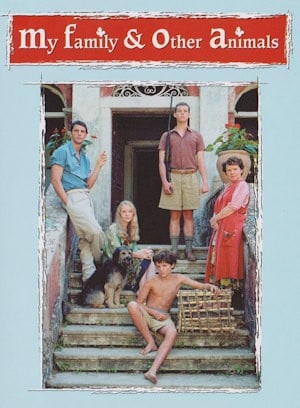
It was just a few days ago when, in a review of Hugh Hudson‘s My Life so Far, I stated my preference towards cinema adaptations of Coming-of-Age memoirs. Unfortunately, not all films that reside in that category are of the same quality. On the lower end of the scale is Sheree Folkson‘s 2005 television film, My Family and Other Animals.
The story is based on an autobiographical work by naturalist Gerald Durrell and focuses on the experiences of an eccentric British family’s stay on Corfu (Greece) seen through the eyes of the youngest family member: 13-year-old Gerald (Eugene Simon).
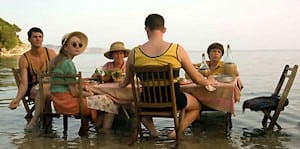
The premise is promising enough: a young boy discovers the world around him – the animals, bugs, birds, lizards and many other kinds of creatures — including his relatives and their peculiar friends. And the series of accidents and happenings that moves the story forward allows for little insights of the boy’s personality. Whenever present, the humor is odd, with the exception of the scenes featuring the character of the taxi driver Spiro (Omid Djalili). The soundtrack (mostly Di-Gue-Ding-Ding by Michel LeGrand) is irritating and completely out of place.
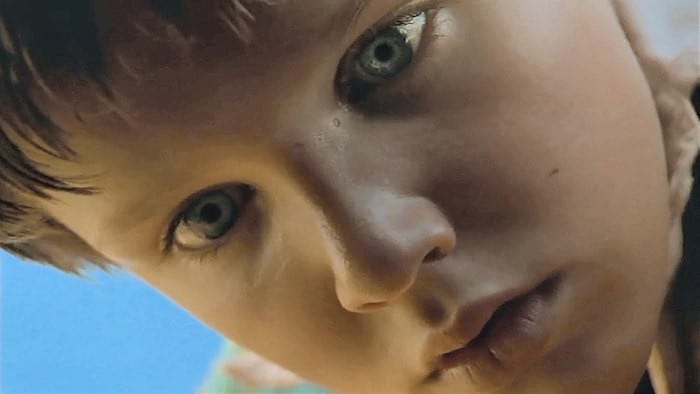
Eugene Simon as Gerald in My Family and Other Animals
There are some redeeming points such as the excellent photography, which manages to capture the beauty of nature. Other strong points include the adorable appearance of animals (subjectively) and Eugene Simon’s portrayal of Gerald who, though he looks the part, unfortunately overacted in a few scenes.
Recalling a series of accidents is not a bad approach in storytelling. But those in My Family and Other Animals simply fail to intrigue and engage in the way they do in other films of the genre, including S.J. Clarkson‘s 2010 TV film Toast (adapted from the autobiography of the English food writer and journalist Nigel Slater) or Hugh Hudson‘s 2010 film My Life So Far. Essentially, despite the skillful cinematic techniques and adorable actor in the lead role, the imperfections of the plot allow for boredom to set in.
I must allow for the possibility that the film’s original title and well-made poster could have raised my expectations too high. Or I may have missed some of the anecdotes, which perhaps a viewer from the UK might find spot on.
As a Coming-of-Age themed film, My Family and Other Animals is fully suitable for family-friendly entertainment. My wish, though, is that the story development matched the quality of its visuals.
The memoir styled narrative, in which the protagonist narrates the story in the first person, is one of the best techniques in telling a Coming-of-Age story on screen.
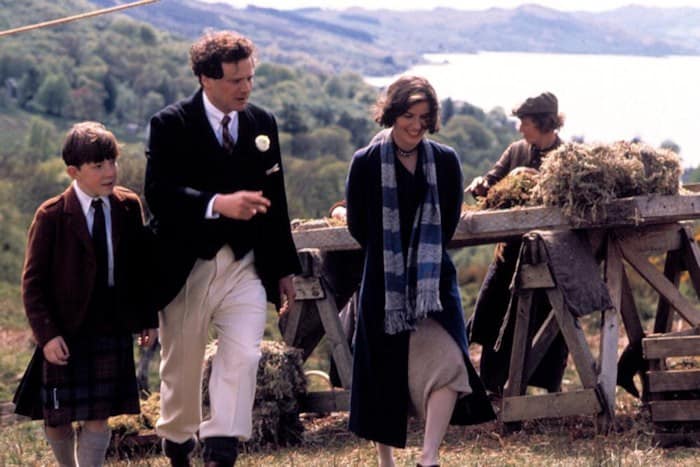
That’s probably why I truly enjoyed the Hugh Hudson 2010 film My Life So Far. Based on Denis Forman’s childhood memoir, Son of Adam, the film offers a splendid depiction of innocent childhood curiosity.
A 10-year-old named Fraser Pettigrew (Robert Norman) is growing up on a lavish estate in the Scottish Highlands during the 1920s. His father is a genius inventor, his uncle a millionaire, and all they seem to care about is enjoying themselves. Admittedly, the high-class status of Fraser’s family and the incredible estate they live on, slightly diminishes the realistic feel of the film. I found myself having trouble imagining that anyone has lived or lives like the Scottish family in My Life So Far.
Scene from My Life So Far
Yet, just as in the Jan Jakub Kolski film Venice(also set in a lavish mansion), one has to assume that this privileged and eccentric way of living does exist, in order to fully appreciate the storytelling. A budding youthful curiosity in human sexuality isn’t something that’s rarely addressed in the Coming-of-Age genre, but when the story is original and presented in a charming way, one is never disappointed from the resulting cinematic experience.
My Life So Far immerses the viewer in real Scottish scenery complete with mountains, the ponds, traditional dances and, of course, when it comes to costumes and garments, the kilts that the boys wear — an unmistakable Scottish trademark. I was surprised to see that a short skinny-dipping scene has made it into the film, having in mind that the censors in its country of origin are known for their rigorousness.
My Life So Far Official Trailer
The film could be classified as comedy, as the growing up experiences of the young protagonist are portrayed largely in a humorous manner (a similar approach is taken in S.J. Clarkson‘s 2010 TV film Toast).
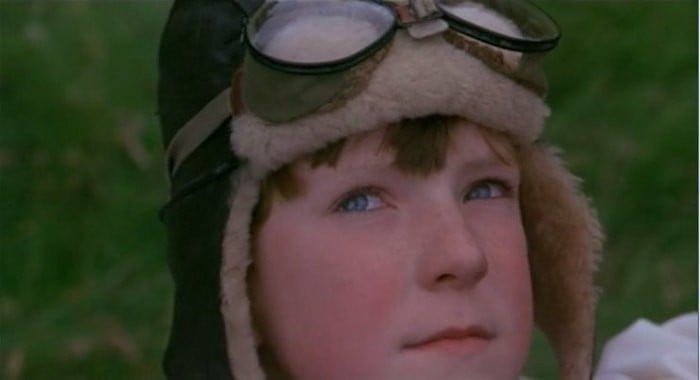
The camera work is excellent, and the shot selection is evidence of masterful directing. Naturally, my favorite shots are the close-ups, especially the ones of the Robert Norman, whose casting as Fraser is a real success. His naturalness and expressiveness matches (and often exceeds) those of his more prolific co-stars, such as Academy Award winner Colin Firth, who plays in the role of Fraser’s dad. His round freckled face is the epitome of innocence while, at the same time, one can sense the sparkle of mischievous rebellion emitting from his eyes.
Robert Norman as Fraser in My Life So Far
It’s fortunate, therefore, that the young actor takes part in the majority of the film’s scenes. And, for those when he’s not in front of the camera, his voice is ever present — narrating the story in the charming innocent manner that gives the film its nostalgic bitter-sweet appeal.
I don’t hesitate to call this movie a perfect choice for a family’s evening entertainment, as it may answer some questions that the youngster may have, while keeping them and their older siblings entertained.
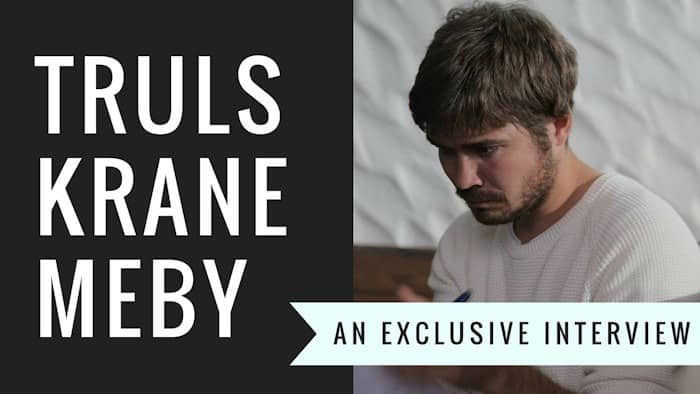
Good Machine Gun Sound (GMGS) and World Wide Woven Bodies (WWWB) are two short movies directed by the Norwegian filmmaker Truls Krane Meby. The movies are a series of thematically connected Coming-of-Age films that caught our interest. After reviewing them on the site, we reached out to the director for an exclusive interview for our readers.
IN THE BEGINNING
Thank you for agreeing to this interview. It’s essential to us, as the largest online media that exclusively focuses on Coming-of-Age movies, to present the filmmaker’s viewpoint in addition to the reviews that appear on the site. Your profile on the Norwegian Film Institute website describes you as self-taught filmmaker. How did you get involved in film?
Truls Krane Meby
I grew up in the far north of Norway, in Lofoten. When I was younger, there were these after-school programs that most kids in my town went to, from when school was out until their parents were off work. When I was younger, I absolutely couldn’t stand cheese, and I have a traumatic memory of being force-fed cheese at this after-school program, and refusing to go back. My parents allowed it, so instead after school I now had four hours of freedom that I inevitably spent in front of the TV watching a cable channel called Filmnet, which had no qualms about screening pretty adult stuff in the early afternoon. My film interests started then, for real. And today I also love cheese, so it all worked out.
Lofoten, Norway
My grandmother had a camera that I would use to make little films as a kid, just playing around. But it became serious when I was 15 and got my own little digital camera. It was a fantastic little thing that was small enough to put in a pocket, so I’d carry it around all the time. More than actually make fiction, I would document my friends and try to make small cinematic moments out the things that were happening around me. Probably a little out of laziness, in these early film making efforts, I didn’t tend to actually make the effort to bring together all the things that a fiction film demands. That was probably a little out of fear of failing at fiction, but mostly because I realized it was really exciting to actually make a cinematic moment that I didn’t know would exist until right before it happened. I’ve tried to bring some of that into my later fictional work.
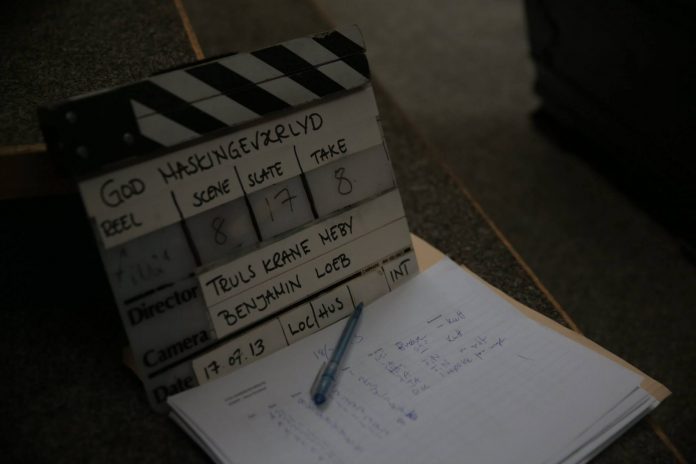
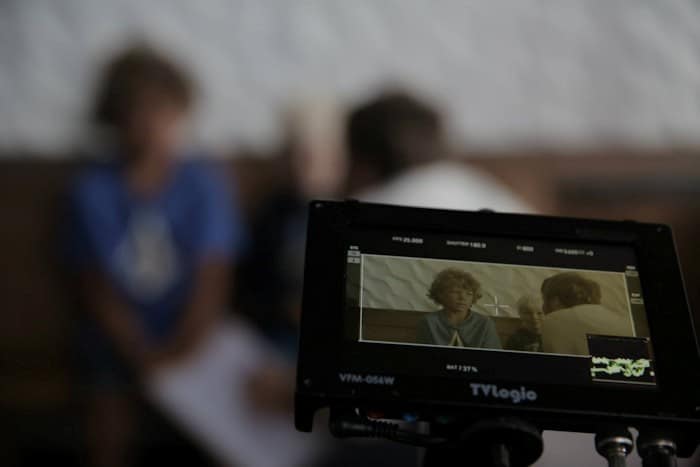
On the set of Good Machine Gun Sound
I got into film professionally after I’d been working odd jobs in Oslo (among other things in psychiatry), and had avoided going to film school (again, a little out of fear of failing). I just dabbled away at my own things for some years, making small films that are securely locked away in a drawer and will never see the light of day. After a half-depressing year in Paris, I became very determined to speed up my work a little. So, when I got home to Oslo, I ended up going to a lot of workshops at a great talent development place in Oslo called Mediefabrikken (“The Media Factory”), and it kind of snowballed from there. Eventually I was making short films quite often, both for the public and just to play around, and I managed to make a living doing freelance film-work.
ON WORKING WITH CHILDREN
The SkyKid.com has its own unique niche – Coming-of-Age films and stories promoting young talent in Music and the Arts. You also mainly make movies about kids and their life stories. Why children? – Why not focus on issues people face in adulthood?
Truls Krane Meby
I very often pick stories that are closely related to and inspired by my own life. There’s something about being able to talk about something with a certain amount of security and authority. I know about these feelings because I’ve had them, and I can give the films a level of detail that I might feel uncomfortable with if I completely made something up. I need to feel like I can really explore the environments of my films, and to do that on a short, I felt it has been best to talk about things that are close to me. When I eventually get to make longer films (and inevitably films that are very far removed from my own experience), I will have to do immense amounts of research to feel comfortable talking about those things with authority and power. I need to feel like I’ve been living a little in my stories. This might boil down to this insecurity again, and fear of failing. I feel secure in these Coming-of-Age stories, because nobody can deny the emotions I’ve gone through.
Heine Dybvik as Muds in World Wide Woven Bodies
So I started this Coming-of-Age series because it gave me an opportunity to talk about chapters in my life that are more closed and “finished” than my life is at the moment — more easily graspable. That said, I’m currently writing a film about a situation I was in last year. The process has been good, but that might also be due to the fact that the situation it concerns is also over and in the past.
More generally, I’m very interested in portraying feelings that are hard to put into words, and that are multifaceted, and where the person feeling them maybe isn’t even aware of what he’s feeling at all. Children are much more susceptible to this than adults, though adults only get better at putting words on their feelings, and rarely the right ones. So making films about children has a lot to do with experiencing things you cannot quite understand, talk about, put into words. It can be very chaotic and scary. Also, I like the feeling of losing myself in this dreamlike state of writing/thinking about the past, where the past becomes a strange foggy landscape of situations and emotions and associations that just float around, and then picking some of these and putting them into a dramatic context.
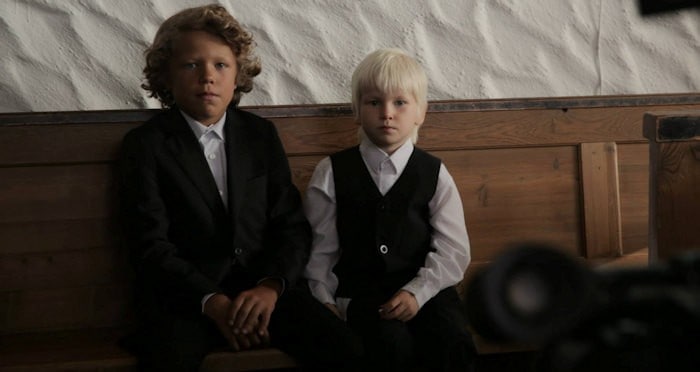
Jermund Hermansen and Erlend Antonsen Meløy / Good Machine Gun Sound
THE CASTING PROCESS
Can you talk about the casting decisions for your films? The young actors in both Good Machine Gun Sound and World Wide Woven Bodies deliver excellent and genuine performances. Where do you find your actors and what do you look for when casting them?
Truls Krane Meby
I found the youngest actor in GMGS, Jermund, in a casting bank, and he was the only one who could say the line “is aintie and the Man in the Moon in the same place in heaven”, without stumbling. But he also had something that I think is very important to look for in kids: are they the character themselves? Do they embody the essence of the character? All three kids were great at delivering scripted lines in believable ways, but they all had big parts of their characters’ essence in them already. Jermund was a little joyous, innocent anarchist, just like his character needed to be. Erlend had the same inward contemplativeness that Arvid needed, and Heine had a playful curiosity that was perfect for Mads.
ON ADDRESSING SEXUALITY IN FILM
World Wide Woven Bodies Trailer
While sexuality is undoubtedly part of most everyone’s Coming-of-Age experience, sometimes audiences are nervous seeing it addressed in a movie. Yet that is exactly what you have done in your short film World Wide Woven Bodies. Does it sometimes bother you that some people may take your work as controversial?
Truls Krane Meby
It’s made me a little nervous, but also very excited. It was definitely a big reason why I wanted to make the film. It’s such a ridiculously natural aspect of our lives, yet it causes so much confusion and distress. I just wanted to naturalize it a little in almost an anti-dramatic way of showing sexuality, where the drama rather came from the taboo and shame-infested social interactions around it.
INSPIRATION
In our previous conversation you mentioned that Good Machine Gun Sound and World Wide Woven Bodiesare both part of a series of thematically connected Coming-of-Age films. So far we have seen one focused on mortality and sexuality. How do you decide which childhood experiences to focus on and where do you draw inspiration – novels, personal experiences or something else?
Truls Krane Meby
This is tricky. In many ways I’ve taken two themes that usually enter one’s life in the chronological order I’ve shown in the films. But I think I’ll have to move away from the chronology aspect now. So, for example, the next film might not be about the first encounter with something. I want to do a film about being a social animal, group behavior, which might be seen through the experience of going to school. Hah! I just had an idea right now, writing this. Yes, it will probably be the film that precedes GMGS in the series, and it might well end up being about the first day of school. So… another first! And the very first film in the series I want to be about the perception of very young children, and about how we see things before we learn what they are. I read about a study where five-year-old children fearlessly held a giant spider in their hands, because they haven’t learnt to feel it might be dangerous. Those are just some ideas. I have some more, but this can all go in many directions.
FILM DISTRIBUTION
I (Georgi Krastev) discovered your films after stumbling upon an article at an online community specializing in Coming-of-Age movies. As your film was not available yet, I got in touch with you and you were kind enough to provide a review copy of it for the site. However, many people are interested in knowing why a short film can’t be immediately shared (even on a pay-per-view basis) among the people impatient for its release. It has happened to me too, at times, when a screener could not be obtained (thankfully quite a rare occurrence). Would you share your take on short film distribution, and movie distribution as a whole, from the point of view of a film maker?
Truls Krane Meby
The internet has become an amazing arena for short films. A permanent home for a short film has been hard to come by in the past, as they’ve been relegated to DVD-collections that very few are lucky enough to get into. Granted, there seems to be some very internet-like aesthetics creeping into short films these days, and sometimes what people call a short seems more like a trailer or a mood-reel. But against that: a short can and should be extremely free to be anything it wants to be, and one really does see that online these days.
Festivals, due to their exclusivity, will always have an important part to play in the life of a short, as a festival can grant opportunities for the filmmaker and also make the short much more visible when it finally does go online. I think for certain shorts, going straight to the internet is very fitting. I have some smaller projects that I’ll be putting out very soon, as I don’t feel the effort and cost of pushing it around festivals will be worth it, and I don’t expect they will be very festival friendly. But the larger projects I’ll always send to festivals first, as they might bring other opportunities for me professionally, and because they will be more easily noticed when one does send them out into the chaos of the internet.
What’s next for you as a director? Are you considering turning any of your shorts into full feature movies?
Truls Krane Meby
I’m working on my next short as we speak, which will hopefully shoot in the autumn. Parallel to that, I’m writing two features, one of which is an exploration of many of the same themes of WWWB, also set in the late 90s when the internet came to northern Norway.
FAVORITE COMING-OF-AGE MOVIES
Let’s finish with a question I always ask filmmakers: As theSkyKid.com mainly focuses on Coming-of-Age films, it would be interesting to know if you have a favorite Coming-of-Age film that you could recommend to the people reading this interview.
Truls Krane Meby
Whew! Difficult. I’ll just name three very different films off the top of my head: This is England, 400 Blows, E.T.
Thank you for taking the time to share with our readers your thoughts about your films, and best of luck with your future projects!
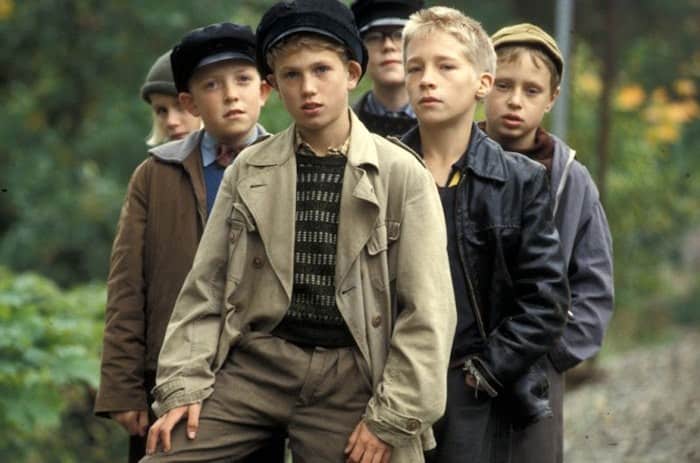
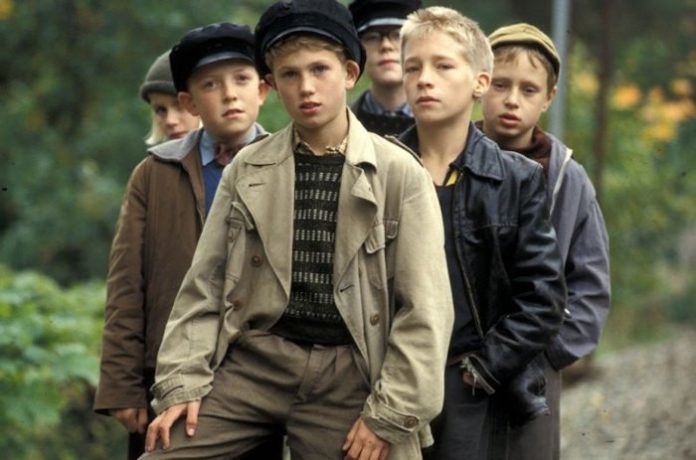
Percy( Camaron Silverek) and other cast members from My Friend Percy’s Magical Gym Shoes
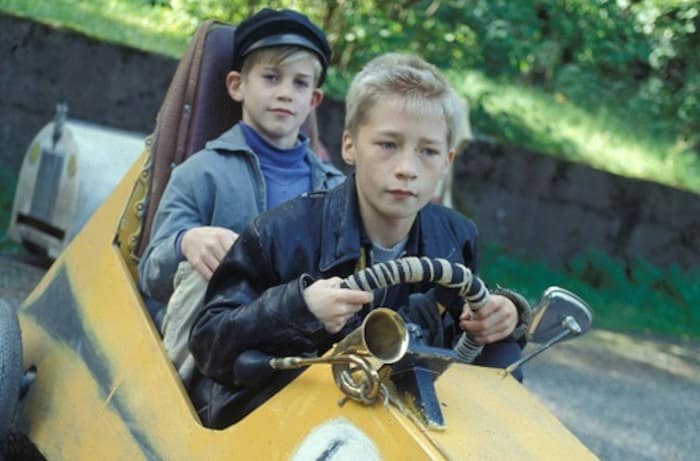
My Friend Percy’s Magical Gym Shoes (original title: Min vän Percys magiska gymnastikskor) is a Swedish Coming-of-Age series based on the youth novel by Ulf Stark.
Each episode (four in total) starts with an interlude, which gives away its novelistic origins by vaguely summarizing the events that are to occur next (in rather a “teaser” rather than in a “spoiler” manner).
The lead protagonist is the nine-year-old Ulf (an angelic looking Tobias Andersson) who is really struggling to make people admire and respect him, avoiding the bullying of his older brother and win the heart of a beautiful classmate.
Yet he is shy and naïve and this often makes him the target of his classmates’ jokes. One day a new boy comes to school – Percy. He is cool, confident, and a real athlete. In short, everything that Ulf ever wanted to be! Ulf takes an interest in Percy, who reveals the source of his power – a pair of run-down sneakers with supposedly magical powers. Ulf knows that he has to have those sneakers, and convinces Percy to sell them to him, but at a dear price…
Percy( Camaron Silverek) and Ulf (Tobias Andersson) in My Friend Percy’s Magical Gym Shoes
The story is simple enough to be followed and enjoyed by younger viewers (the target audience of the series) while, at the same time, grown-ups will find it heartwarming and touching. It has the added attraction of “suffering from a cuteness overload” thanks to the adorable youthful cast. Tobias Andersson is natural in the lead role and so is Camaron Silverek as Ulf’s new “best-friend”, Percy.
While some would compare the common motifs shared by Ulf and the title character of the Mark Twain novel The Adventures of Tom Sawyer, as a whole childhood tribulations such as: doing dangerously wild stuff to impress your friends, dealing with bullies, daydreaming about girls or just being plain silly and/or mischievous — are universal ones. This makes it quite easy for viewers to associate and sympathize with the young prognostic of the film, even if some of his actions are less than admirable (yet mischief is the name of the game).
Percy (Camaron Silverek) and other cast members from My Friend Percy’s Magical Gym Shoes
It’s the true-to-life story development (of the unlikely friendship between Ulf and Percy) that really won my sympathies towards the My Friend Percy’s Magical Gym Shoes. More often than not, films about childhood and growing up in the America, or even some recently released European ones, play the Good Always Wins card which, while educational, can really suck the life (fun) out of a narrative. My Friend Percy’s Magical Gym Shoes makes sure that children learn their lessons (drink their milk…etc) without boring anyone to death with clichéd story resolutions.
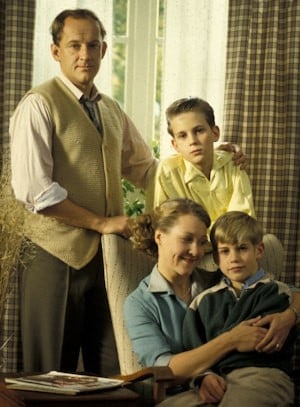
Ulf with his family
There is something that needs to be mentioned, even if it’s not directly related to the series (or maybe it is since it concerns the novel they are based upon)…
Many readers left a negative rating of the novel at Goodreads (a website where people share their takes on novels), mainly because of some of the themes addressed: naked women, girlie magazines and, God forbid, a smoking episode!
I don’t know where the people who left those comments grew up, or who they are trying to convince about their own perfect childhoods, but I fail to understand their point. I will furthermore state that I find the narrative of My Friend Percy’s Magical Gym Shoes perfectly suitable for all ages.
Author’s Note: Interestingly enough, Ulf Stark, the author of the novel (and who is also the prototype of the Ulf of the movie) shared in a Writers Week Q & A, at the Wellington’s city libraries blog, that his novel is being rewritten in Russia because “You cannot write anything about sexuality for young people under 16 years.”
A scene from the film in which Percy shows off his “magic” skills
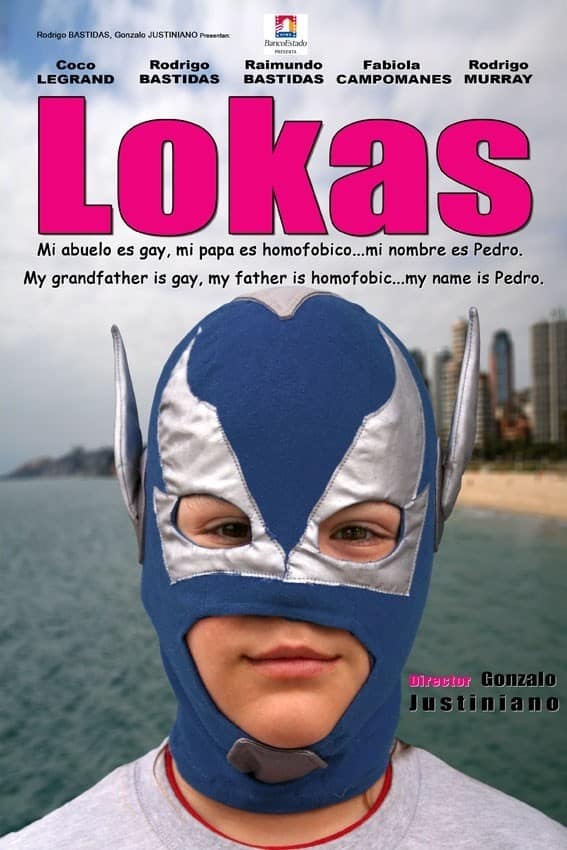
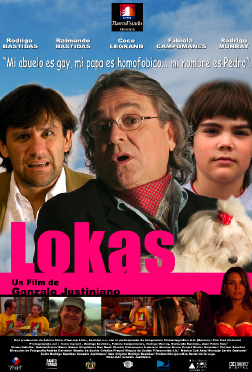 I hadn’t laughed so hard in a long time. Lokas is a wonderful comedy from Chile directed by one of the country’s greatest directors: Gonzalo Justiniano. The plot follows the adventures of Charly, a middle-aged man who lives with his son Pedro (Raimundo Bastidas) in Mexico City. Unfortunately, he gets in trouble and is sent to serve a short sentence in jail. When he gets out, he is unable to find a job and has no other choice but to take his son and return to Chile where his father lives. The last time he saw his father was some 30 years before. Much to his surprise, he finds out that his father is gay and lives with another person. That, in itself, is quite stressful for Charly who stands as a homophobe.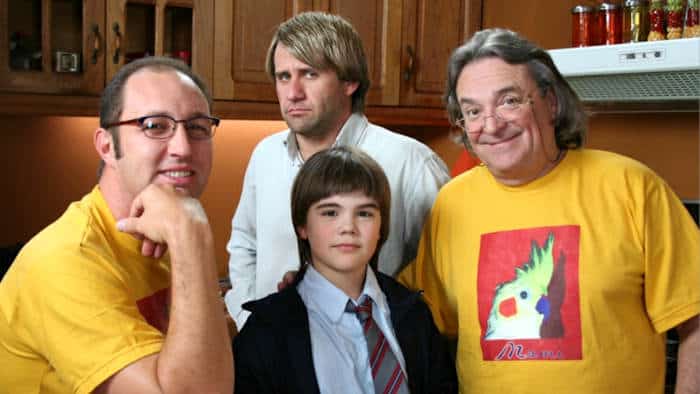
 Sometimes all we need is bit of kinship and empathy. And sometimes a simple story told in a movie can make us feel good about the world, about the people and encourage in an ingenious way to “pay it forward”. That is the case with the 2014 short film Dogwood written and directed by Christopher Maloney.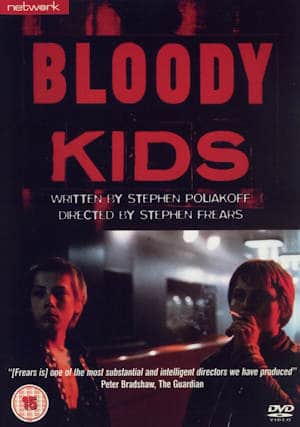
 Scandinavian films almost always avoid shying away from portraying youthful experiences using false pretenses, which enhances their credibility — especially when compared with most US productions (of course each rule has its exceptions).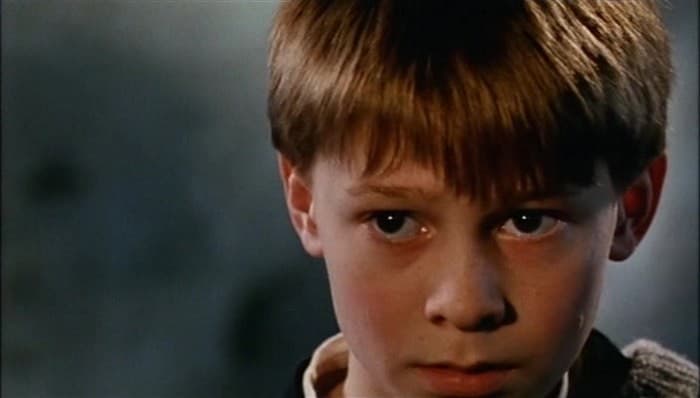
 I first saw this production of this classic tale by Charles Dickens when I was 10, and I loved it.
 It’s a movie about catastrophic loss, and a special child who is somewhere on the autistic spectrum, trying to find his own logic.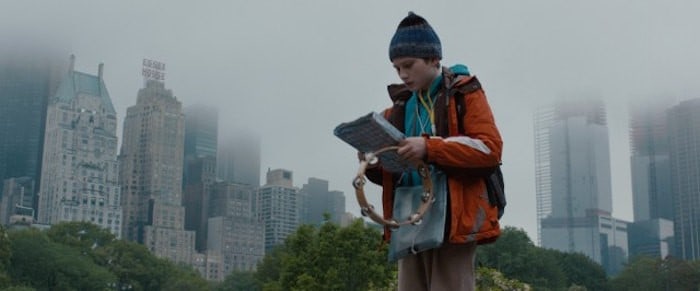
 This is a demanding part to play. It requires deep understanding of the troubled boy’s psyche to bring it off with anything approaching credibility. Thomas’s portrayal is outstanding (at times scarily so). The empathy and maturity he brings to the subtle nuances between rage, desperation and determination are incredible; it’s hard to believe that he had no previous acting experience.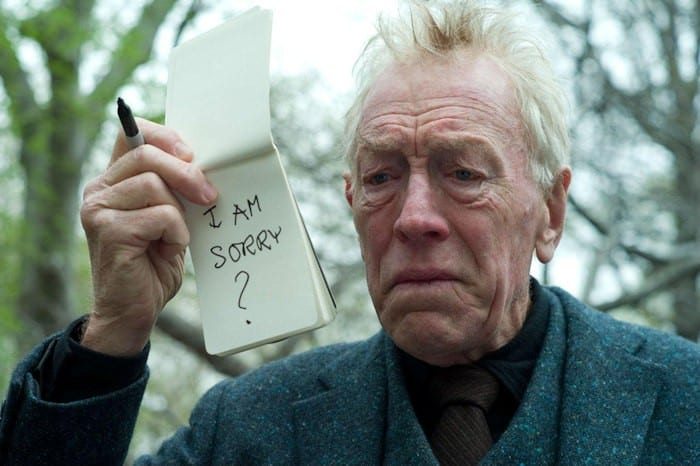
 Recalling a series of accidents is not a bad approach in storytelling. But those in My Family and Other Animals simply fail to intrigue and engage in the way they do in other films of the genre, including S.J. Clarkson‘s 2010 TV film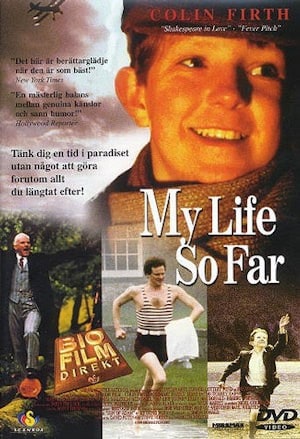



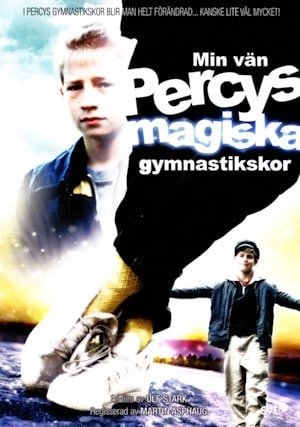 My Friend Percy’s Magical Gym Shoes (original title: Min vän Percys magiska gymnastikskor) is a Swedish Coming-of-Age series based on the youth novel by Ulf Stark.