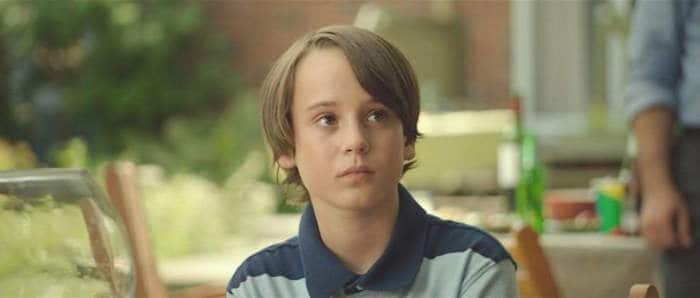
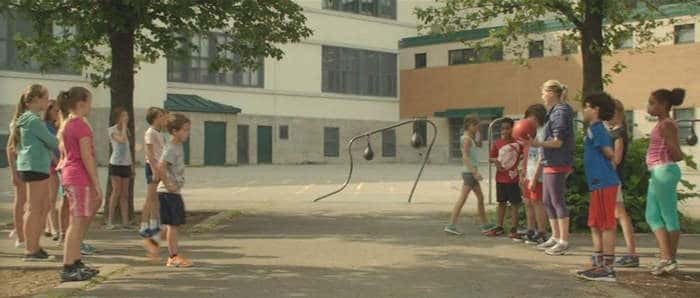
When you are six – things are simple. You like a girl, you kiss her (or kick her – as some do). Yet, with the passing of time everything gets a bit more complicated. At nine – if you fall in love, boy aren’t you in for an adventure …
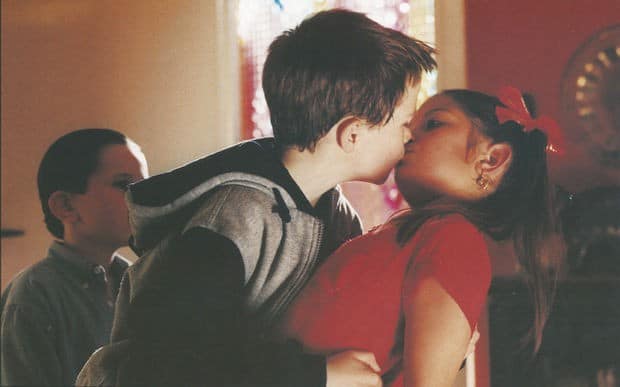
If you don’t believe me, check out the 1999 Danish short film Theis and Nico (original title: Bror, min bror) in which two boys, Theis (Aksel Leth) and his younger brother Nico (Maurice Blinkenberg-Thrane), discover the wonderful world of girls, love and kisses after a poster of the classical love drama Gone With The Wind piques their curiosity.
Scene from Theis and Nico
When the brothers meet the beautiful Giinjha (played by Tess Thorsen), a girl who invites them to her birthday party, they get a chance to put theories into practice. But will they have the guts to do so?
Directed by Henrik Ruben Genz, the Danish short doesn’t offer a complicated narrative – yet the several plot twists, adorable young actors and cute, authentic dialogues result in an enjoyable cinematic experience.
Aimed at young audiences, Theis and Nico is a funny and heartwarming film that be equally enjoyed by viewers of all ages. And who knows? Maybe the viewer might learn some tips on kissing: “use your tongue, your lips must be wet” and that a kiss can be a perfect substitute for a birthday gift (especially if you are nine).
South African-born Australian singer, songwriter and actor Troye Sivan (born June 5, 1995) is now famous.
There is no doubt in my mind that Troy’s success as an artist is the result of his own choice of direction.
Featured in Time Magazine
In 2014 Time Magazine recognized Troye as one of that years’ 25 most influential teens and in 2016 Forbes listed him as one the 30 most recognized musicians. Rolling Stone Australia published an extensive article about his career. With appearances on Ellen DeGeneres and The Tonight Show Starring Jimmy Fallon (twice), fame was inevitable.
Teen Years
Troye Sivan Teen Years
During his early teens in Australia, Troye performed in talent shows like Telethon 2006, but his YouTube channel was the medium that exposed him to the entertainment industry at large.
Even at an early age, Troye’s singing talent was evident as illustrated in his collaboration with Anthony Johnson, when they published a song called For Them, creating an awareness of the plight of homeless children all over the world, through the organisation, Kids Helping Kids.
http://youtu.be/xaxukzu_n7A
Being Special and Unique
There is something special, something different, about Troye’s presentation and his choices. The three videos entitled Blue Neighbourhood following the release of his second EP, Wild, was risky, but the fans loved it, once more proving that Sivan’s pragmatic approach to showmanship is unique and it works.
Taylor Swift enthusiastically tweeted that Wild was, “… STUNNING AND AWESOME…”
In 2009 a Hollywood producer, who noticed Troye on YouTube, cast him along with Hugh Jackman in South African Director Gavin Hood‘s film, X-Men Origins: Wolverine (2009).
In 2010 Roguestar Films released Spud the movie, based on John Van De Ruit‘s, novel about an elite private school in South Africa during the 1990’s, featuring Troye Sivan as Spud Milton and John Cleese as The Guv – Mr. Edly.
Throughout the years, Troye appeared sophisticated, modest and pretty sure about what he did and did not want for himself. His presence on YouTube progressed into a vlog (video diary) of his dreams, aspirations and revelations.
Coming Out
On Aug 7, 2010 Troye told his family that he’s gay and on Aug 7, 2013 he published a “coming out” vlog on YouTube. The community’s response was overwhelmingly positive.
A series of similar videos appeared on YouTube following Troy’s revelation and from the 4.3 million subscribers to his channel, only 4,941 thumbs-down appeared.
Troye Sivan’s Discography
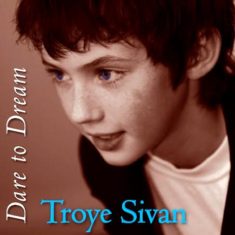
June 2007: 12-year-old Troye released his first (independently produced) EP, Dare to Dream with five cover songs: The Prayer, Unsung Hero, Over the Rainbow, There’s a Hero, Angels Brought Me Here.
June 2012: The next EP, June Haverly, also independently produced, comprises three songs written by Sivan himself: June Haverly, She’s 22 and Make You Love Me. Inspired by the death of Amy Winehouse, June Haverly reflects the melancholic side of Troye’s personality.
August 2014: His third EP, TRXYE, which debuted at number five in the United States, was the first to be released by a major label. The singles The Fault in Our Stars and Happy Little Pill preceded this release.
September 2015: The fourth EP, Wild, released on Sept 4, 2015 was supported by three music videos and the Troye Sivan Live tour. Without trying to sound too critical, Troye looks very awkward on-stage. Let’s hope his performance gets better soon. While I know Troye has a lot of respect for Justin Bieber, his performance is definitely not going to lean in that direction.
On December 4, 2015 Troye released his debut studio album, Blue Neighbourhood and followed that up with promotional tours, Blue Neighbourhood and Suburbia.
Facebook There are some 6,270 photos published on this page alone.
Troye Sivan’s music is available for purchase on iTunes.
Troye Sivan – Life Story
ANDPOP published a video: Troye Sivan: His Life Story, which is the most comprehensive collection of video material I have seen so far.
http://youtu.be/PHKBXE6XOpA
I have followed Troye Sivan’s career, beginning when he was the kid who published a paint recipe for Chroma Key Green on YouTube (TS Productions A-team), to this day when he is one of the world’s most recognized musicians.
Navigating a musical career through childhood is a perilous journey at best, and only a few survive intact. Troye Sivan is one of them and one of the best.
Not just a movie with a Coming-of-Age narrative, but a splendid portrayal of times long gone. How Green Was My Valley exceeds any expectations one may have towards a film released back in 1941.
With a story presented in memoir fashion by an adult protagonist reflecting on his youthful days growing up in a coal-mining town in Wales, in timeless fashion this classic Hollywood film delivers a cinematic experience as rewarding as the one people enjoy when reading a great novel.
Although the narrator’s focus is his boyhood thoughts and emotions about the significance of previous experiences for his adult self, the portrayal of earlier events and people is so poignant that viewers have no choice but to deeply involve themselves with his story. And what a story it is — filled with wisdom, insights and a tint of bitter sweet nostalgia.
“Perhaps it is foolish to think a child can fall in love, but I am the child I was – nobody knows how I felt, except only me”
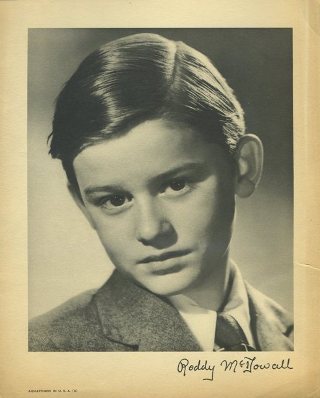
Roddy McDowall
Yet the quality of the narrative, and the dialogue within it, is only the beginning – for How Green is My Valley offers an impressive array of other qualities that turns it into a cinematic masterpiece: from its beautiful black and white cinematography, to the skillful use of lighting that guides the attention of the viewer, to the expressive looks of the young Roddy McDowall as Huw Morgan, the boy protagonist through whose perspective the story is told.
Despite an unusually lengthy duration of nearly two hours, I wasn’t bored for a moment. Like the best Coming-of-Age stories, the narrative addressed universal issues like first love, first days at school, bullying and many others in a unique manner devoid of clichés. Furthermore, the humorous scenes within it are fully capable of brightening one’s day, just as the grimmer ones take their toll on one’s emotions.
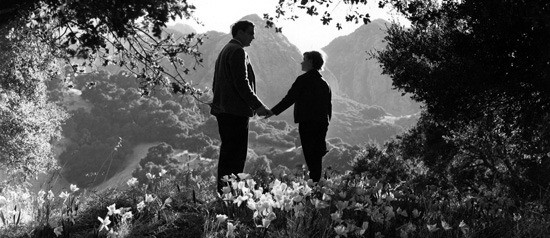
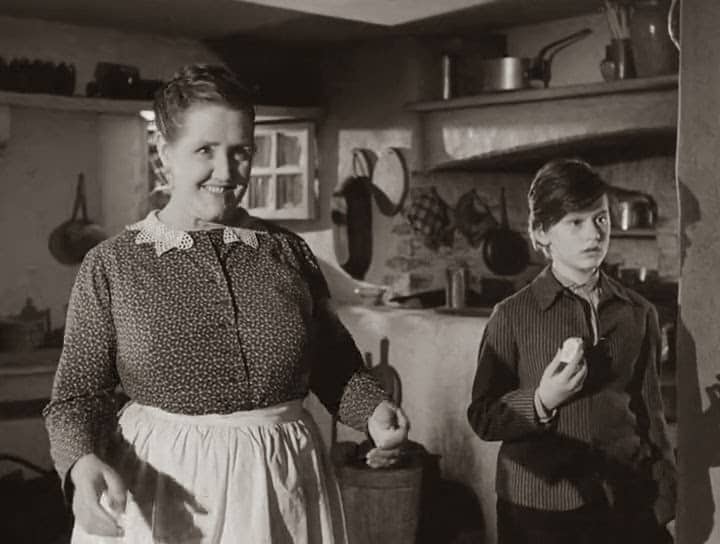
Scene from How Green Was My Valley
There are few a imperfections present, such as the idealization of the “old days” (I find it hard to believe that miners sang when going into the underground pits), or the fact that the main protagonist never really ages on screen, but those imperfections are minor and do not really affect one’s overall appreciation of a story well told.
I don’t hesitate for a minute in recommending this film to the fans of the Coming-of-Age genre, confident that even after reading my review of it, their expectations will not only be met, but exceeded.
http://www.imdb.com/title/tt0033729/combined
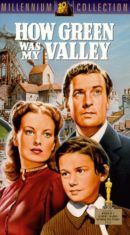
How Green Was My Valley (1941)
CONCLUSION
A timeless portrayal of a bygone, simpler time, How Green was My Valley is a story filled with wisdom, insights and a tint of bitter sweet nostalgia.
2016 was an interesting year – our 11th year online — during which we have published 226 articles by eight different authors. Yes, eight! In the course of the year we were happy to welcome new contributors Red Rodent and Martin Wilde, whose captivating reviews of Coming-of-Age films aided Georgi`s own humble efforts to total 69 full feature and 21 short film reviews.
Movie Reviews
Each reviewer has his own style and refined taste and, while they do not always overlap, introduce the viewers to true cinematic gems: Last Ride (2009), The Devil in the Skin (2011), This is England (2006) and Tom Brown’s Schooldays (2005) are just few of the films that were reviewed on the site this past year. As a whole, in 2016 we have focused on quality over quantity and hope that our efforts have aided the readers of the SkyKid.com in their cinematic journeys.
Movie Reviews at TheSkyKid.Com
Music
With just two book reviews and seven introductions of young and talented musicians – it’s evident that not all areas of the site received the attention they deserve. RJ Mendera introduced Christian Lalama, Henno William, Ty Lewis and The Fandinos. Georgi added pieces about Sara Martin, Marko Bosnjak and Max & Mango. It’s worth noting the objective writing style of RJ Mendera, who is always ready to provide a constructive criticism, setting his articles apart from those of many other authors who write about youth only in superlatives.
Introductions and Reviews of Treble Music with a focus on young singers and performers.
At the SkyKid.com we take pride in providing our readers with insightful interviews with filmmakers who have made significant contributions to the Coming-of-Age genre. 2016 saw the publication of two such interviews of: Truls Krane Meby and Ivan Noel – both notable artist and filmmakers. We’d also like to express our gratitude to Will Emslie for his hard work and dedication in conducting, transcribing and publishing the interview with Ivan Noel in such a stellar manner.
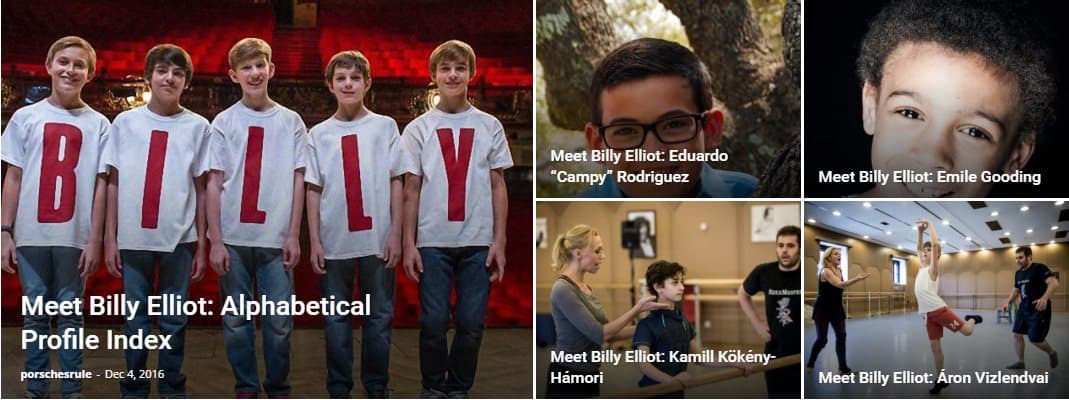
Billy Elliot The Musical (BETM)
2016 was a significant year in the BETM world as it was the year in which the original production of BETM closed. The London production had its final performance on 9-Apr-2016 after an 11-year run. Despite this, BETM is very much alive and well around the world, as is evidenced by the huge number of articles published on the betm.theskykid.com website this year and the constant updating of information within existing articles as such things as a new month of data is added to the Tracking the Billys article, or cast members come and go within productions as noted in our Cast Informationarticle, just to name a couple of articles that we spend a lot of time keeping current over the course of a year.
Articles were written on all 37 of the new productions that opened in the past year. Of these, 32 were North American regional productions, and the other five covered productions in a wide array of countries: Sweden, Israel, Hungary, New Zealand, and a tour of the UK and Ireland.
With these new productions (and within the long running productions of the show) came new Billys: 42 in North America, 12 in Europe, and five from the rest of the world, making 59 in total. Notable among these was Parker Fullmore, the youngest ever Billy who was just 10 years and 3 days old at his debut. Sixty-five new Billy profile articles were actually written in 2016 as, in addition to those written about new Billys, profiles were finally written for six of the Australian Billys who had performed back in 2008/9, before we began doing the profiles.
The writing of those six Australian Billy profiles was done by a new addition to the betm.skykid staff in 2016 – Emily Powis. With the explosion of activity in the BETM world this year, and an equally busy year coming up in 2017, it became evident that we weren’t going to be able to maintain the level of coverage throughout the Billy world without some help. Emily was asked to come on board as editor of the BETM site and has jumped in with both feet – making very significant contributions, both in terms of writing new material and keeping all the statistics we maintain on the site up-to-date. She has also been instrumental in helping with a redesign of many of the older reference articles on the site that were updated this past year to make them more user-friendly for our readers.
Detailed information about Billy Elliot the Musical (BETM), contained in three main sections: Profiles of the Billys, General BETM Information, and Billy Reference Information.
The Skykid.com site receives hundreds of visitors on a daily basis, yet some stand out who have consistently supported us by commenting and/or sharing our articles on the various social media. While it is impossible to mention everyone, we would like to extend our sincere gratitude to Tweeters Lez @saycheezpleez , Ed Berger @Berger9Ed, GSdriver @brusselsinsight, Son Luu @sonlam1102, Fortis Boy Choir @FortisBoyChoir, Felix Mater Society @FelixMater and all the people who left intriguing comments such as Richard, Aidan and Red Rodent. As on the main skykid.com site, we on the BETM side of things are very appreciative of all our readers and supporters. Special thanks goes out to @Berger9Ed, @PerLee74, @melmeyrick1 for their frequent comments and re-tweeting about our new articles in the social media.
Last, but not least, we extend special gratitude to Porschesrule who, as the executive editor on our main site and administrator on the BETM side of things, has spent time with each and every single article we have published.
We hope that you, the readers of this site, appreciate our humble efforts and we look forward to meeting you here in the new year of 2017!
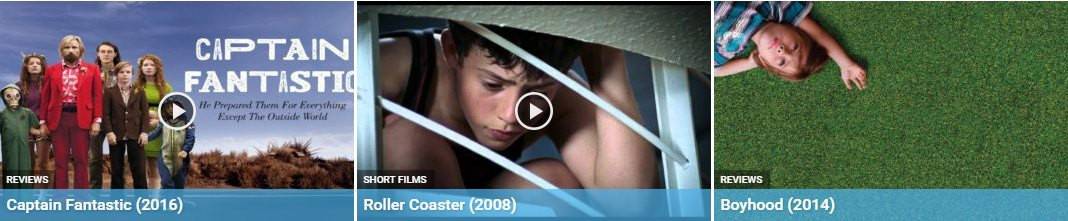
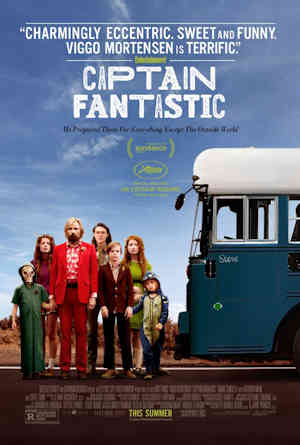
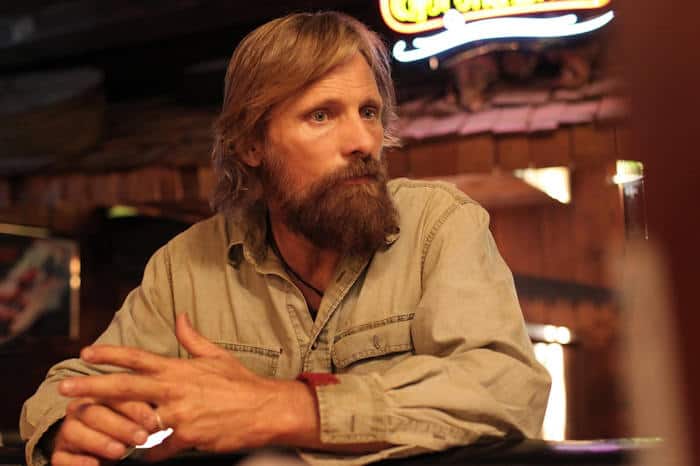
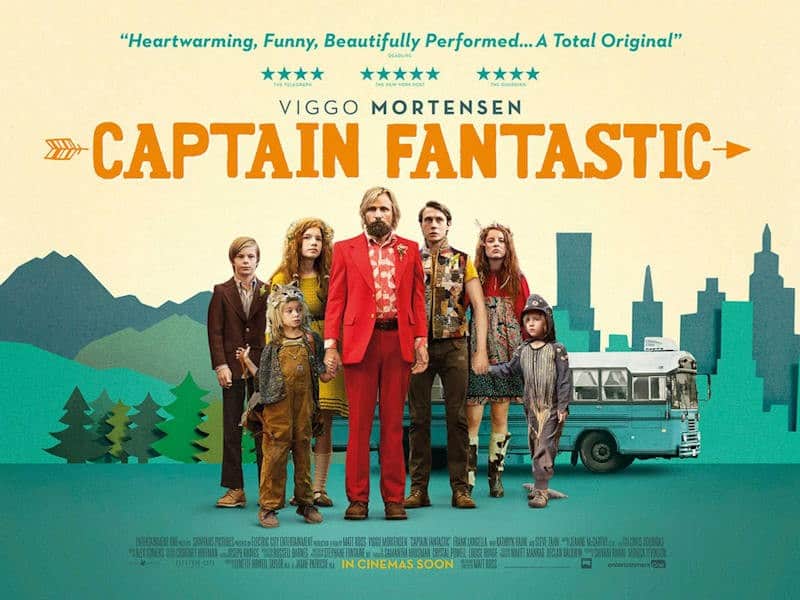
Baby, what a big surprise. Right before my very eyes“, sings the American rock band, Chicago and that was exactly my feeling while watching Captain Fantastic. This film is rated R, so if you’re underage and you want to see Viggo Mortensen drinking coffee without his clothes in a trailer park, you will need a guardian. But that should not be your reason for not watching this excellent movie.
…we inform, you choose…
Captain Fantastic is more of a “we inform, you choose” type of production rather than a critique of an alternative lifestyle portrait, by the characters.
From a personal point of view what would help is the mindset of someone who seeks autonomy, freedom of choice and values the importance of individual judgment.
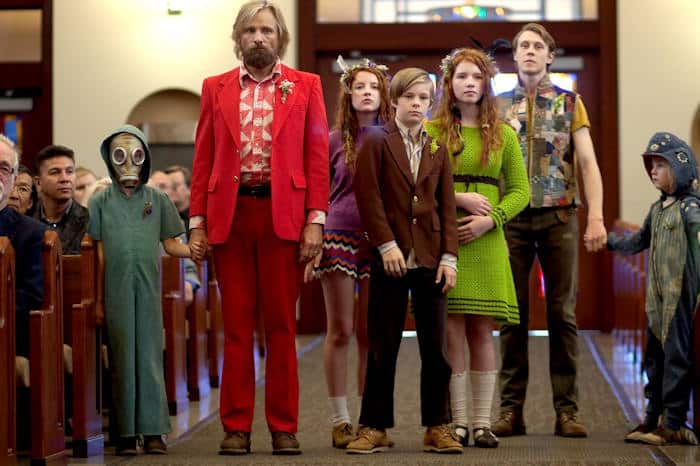
This is the circular story of a father Ben (Viggo Mortensen) and his six children: Bodevan (George MacKay), Kielyr (Samantha Isler), Vespyr (Annalise Basso), Rellian (Nicholas Hamilton), Zaja (Shree Crooks) and Nai (Charlie Shotwell), who live off the grid and, for most of their childhood do their own thing… until reality dictates otherwise.
There are several perspectives to this movie
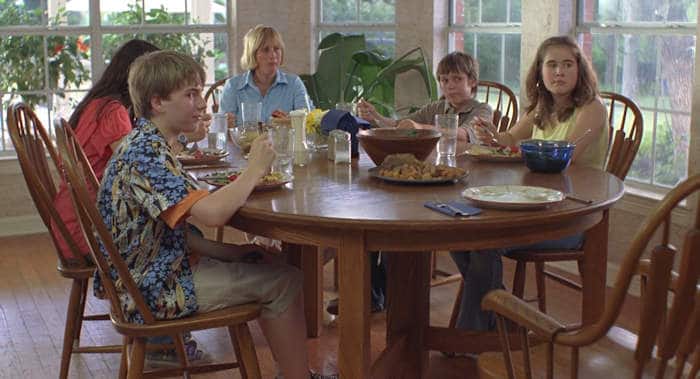
Everyone but the grandparents around a supper table.
Ben distracts his children from more serious matters that are at hand by letting them raid a convenience store for food. Mind you, it is not without cause, as they did try to hunt for food next to a highway but just couldn’t get themselves to do it: “the animals were just standing there”. Their celebration of Noam Chomsky’s day, instead of Christmas, is no doubt a reference to Chomsky’s early statement that essentially there is no difference between Anarchism and Libertarianism. In all fairness, Chomsky changed his mind later on.
Reading matter for the family includes books like: Guns, Germs and Steel (Jared Diamond), Middlemarch (George Eliot, really Mary Ann Evans) and the works of Dostoevsky.
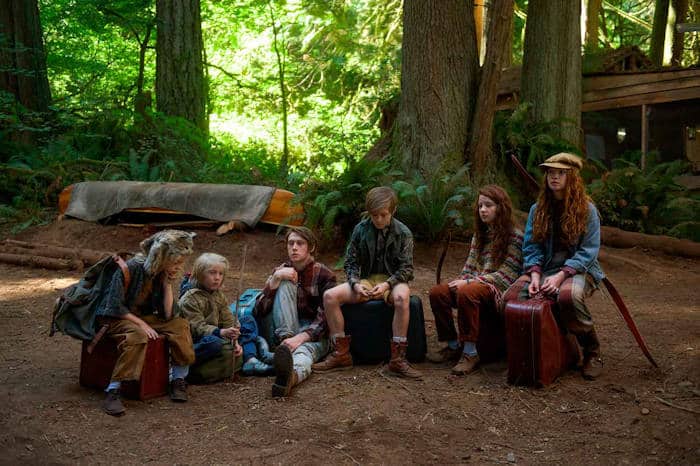
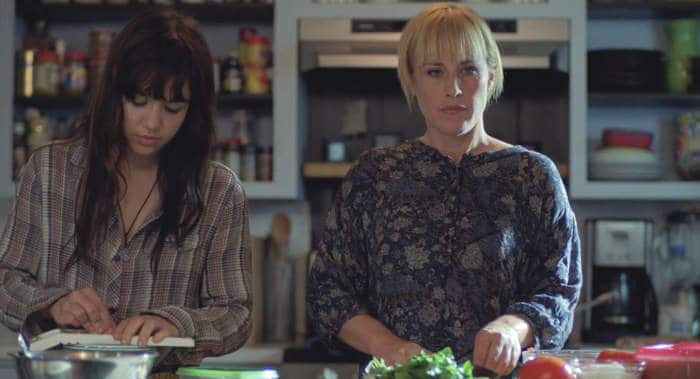
Scene from Captain Fantastic
Spiritual , Social , Physical…
On a more spiritual side, the mother, Leslie (Trin Miller), who is a Buddhist, is only present in the Dad’s dreams while, in reality, she is in a clinic being treated for depression. But her beliefs are respected by the family and adhered to as best as possible.
Socially, the oldest son, Bodevan, rejects the revolutionary theories of Trotsky in favor of the teachings of Mao Tse-tung. But practically, he is more than just awkward, he is clueless.
And if you’re a family member who is more physically inclined, there are rigorous daily exercises, rock climbing and the hunting of animals for food.
Not welcome in church.
I think most of what the family does is fun, but not in a conventional sense. However don’t worry, the actions in this movie have consequences, unlike what often happens in real life. For example: the family, without a buffer or external support except maybe for their grandmother Abigail (Ann Dowd), starts to doubt their own belief system and the formidable Captain Fantastic himself starts falling apart.
Captain Fantastic needs his wife
This is a Coming-of-Age experience for almost all the characters in this film, from the granddad Jack (Frank Langella) to the affable granddaughter Zaja.
Captain Fantastic is highly recommended for the free spirits out there.
http://www.imdb.com/title/tt3553976/
Captain Fantastic (2016)
CONCLUSION
A Coming-of-Age experience for almost all the characters in this film, from the oldest to the youngest. Highly recommended for the free spirits out there.
The 2008 German short film Roller Coaster (original title: Höllenritt) offers an intriguing and original way to portray Coming-of-Age experiences.
Narrated in the first-person by Jacob (Aaron Altaras), its twelve-year-old protagonist, and shot entirely from his perspective, the film offers an insightful examination of the mindset of a young boy and the evolving relationship between him and his father. The father has left the family and now lives with another “daemon”.…. sorry woman (but still a daemon in Jacob’s eyes).
Disappointed, Jacob applies to join ADAAC (“all dads are assholes club”) founded by his friends, Timo and Daniel, whose fathers also left and now see them only on weekends. The goal of the club’s membership is to scorn and annoy the dads so much on the weekend rendezvous with their sons that they will eventually give up on pretending to be nice and caring and reveal their true selves. It’s now up for Jacob to prove that he is worthy of becoming a member of the club. He gets a first opportunity to do so when his dad comes to pick him up for their first weekend together.
Aaron Altaras as Jacob in Roller Coaster
Roller Coaster offers a distinct viewing experience mostly because of the way its story is told — combining humor, fantasy and perceptive observations and startling claims about the world of its young protagonist. The narrative successfully deals with themes related to Jacob’s maturation process with scenes and situations that provide bizarre comic relief while, at the same time, addressing the serious side of coping with change and disappointment.
At 12 years of age, the world may appear bizarre (sometimes this never changes – but do not despair) and the film’s director, Martin Busker, has managed to truthfully portray the inner world of young Jacob, so much so that the viewer will inevitably identify and care for the boy. At 30 minutes, the film’s length is slightly longer than for a typical short film, but Roller Coaster features an abundance of dramatic and visual surprises, making the time fly by.
Highly recommended!
http://youtu.be/HRv8WdXkRzA
http://www.imdb.com/title/tt1341805/combined
Roller Coaster (2008)
CONCLUSION
Roller Coaster features an abundance of dramatic and visual surprises, making its 30 minute length fly by.
Richard Linklater is a great author and director and I love Patricia Arquette. Ethan Hawke is well, just Ethan Hawke, and Ellar Coltrane is cute, but why all the hype about Boyhood?
Twenty-one of the most recognised film critics rate this film 100/100! I’m talking about amongst others, the likes of Rolling Stone, Roger Ebert (rest his soul) and the Wall Street Journal.
Richard Linklater’s trilogy of Before Sunrise, Before Sunset and Before Midnight, had a sense of anticipation, foreboding and closure where unfortunately Boyhood lacked that structure. Rather watch Hope and Glory (1987) or Jungle Child (2011), I say.
No award from me
The film won one Oscar for Patricia Arquette’s performance (I told you that I liked her!) and another 169 awards. It also got nominated for another 202 awards and got none from me.
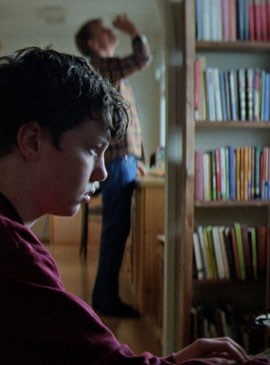
Mason and Dad
So, here’s the story-line (as published by the IFC):
“Filmed over 12 years with the same cast, Richard Linklater’s Boyhood is a ground-breaking story of growing up as seen through the eyes of a child named Mason (a breakthrough performance by Ellar Coltrane), who literally grows up on screen before our eyes. Starring Ethan Hawke and Patricia Arquette as Mason’s parents and newcomer Lorelei Linklater as his sister Samantha, Boyhood charts the rocky terrain of childhood like no other film has before.
Boyhood Trailer
Snapshots of adolescence, from road trips and family dinners to birthdays and graduations and all the moments in between, become transcendent, set to a soundtrack spanning the years from Coldplay’s Yellow to Arcade Fire’s Deep Blue. Boyhood is both a nostalgic time capsule of the recent past and an ode to growing up and parenting.”
Linklater’s method of production was essentially to make several 10 to 15 minute short films over the course of 12 years, each depicting an aspect of Mason’s childhood, and then edit them together as a feature film.
The Family before the storm
Comparing Boyhood to films like Ciske De Rat (1984), or Jungle Child (2011) is like a comparison between a homeopathic remedy and allopathic medicine. For the former to work, you have to believe in it, but the latter has merits of its own despite personal opinion.
I have watched Boyhood twice on my own and once with company and our conclusion is that European cinema (French in particular) can do more in five minutes than Linklater did in 165 minutes with Boyhood. Just consider François Truffaut’sThe 400 Blows alone.
Samantha and Mom
Of course, I give Boyhood recognition for determination and effort in the face of daunting logistics. After all, spending 12 years on one film project can’t be easy.
Wait! Wait!
I’m having second thoughts here. Maybe Boyhood reflects American society’s desire for normalcy — a people that want everyday life to be desirable and safe for themselves and their children. Linklater speaks about the film as “a collection of lesser moments … so, what happens in the movie? Not much.” And that is the essence of Boyhood. Not much. Juxtaposed against a society that sometimes lives in fear of its safety and future, Linklater achieved exactly what he had in mind.
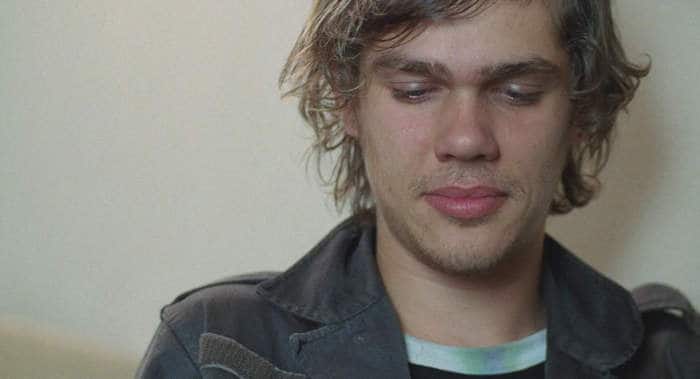
A much older Mason
I recommend Boyhood to Linklater fans who remember their childhood as a collection of lesser moments no one else can recollect.
http://www.imdb.com/title/tt1065073/combined
Boyhood (2014)
CONCLUSION
A deeply superficial tour de force of childhood navigation.
Although sexual awakening is a big part of the Coming-of-Age transformation youth goes through, it is a subject rarely addressed in cinema. And when it is, it’s often in the form of loutish comedy (as in American Pie). Films that accurately portray the reaching of a critical turning point (revolving around adolescent sexuality as it may be) that results in a loss of childhood innocence, such as Kay Pollak’s 1980 Swedish drama Children’s Island (original title: Barnens ö), are hard to come by.
I came upon the following synopsis of the Norwegian short film World Wide Woven Bodies (original title: Verdensvevde Kropper):
“At the end of the 90s, the internet comes to the north of Norway and coincides with the blossoming sexuality of young Mads (12). The introduction of porn into his life complicates his relationship to his parents, and their house becomes a minefield of uncomfortable interactions.”
As a 90’s kid myself, I expected to easily associate with the film’s protagonist and his experiences (times have significantly changed since then, with almost unrestricted access to just about anything online and an abundance of sites such as Omegle and ChatRulette). All my expectations were not just met – but exceeded!
Exploring. Still from Verdensvevde kropper
For starters, the movie is filed with unforgettable 90s memorabilia: from the infamous dial-up sound, the screen resolutions, the 3D Pipes Screensaver and of course the thrilling sensation of waiting for a single picture to load for more than ten seconds, all of which makes the film feel like a true period piece.
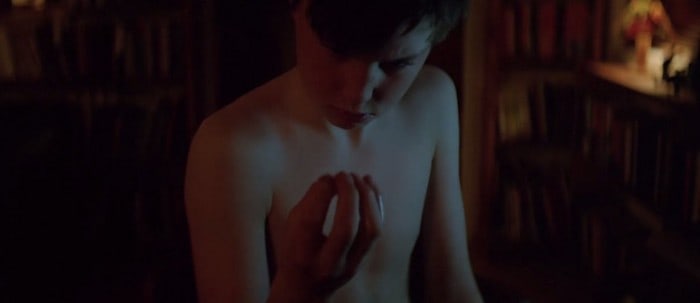
Mads’s rite-of-passage is shown as a real process thanks to the juxtaposition of scenes emphasizing his childhood goofiness with later ones in which he demands respect for his “private sphere” and his reaction to some unfortunate discoveries about the private life of his parents.
Heine Dybvik as Mads
Another highlight of the film is the impressive acting performance of the young Heine Dybvik, in the role of Mads, in which he impeccably portrays the nervousness, impulsiveness and curiosity of his teen-aged character. Aided by the intimate way in which some of the scenes are shot, Heine’s acting boosted the story’s authenticity, This aids the viewer’s identification with his character and his mounting frustration as the narrative moves forward.
In an intriguing way, World Wide Woven Bodies (the title itself suggests the way that the web connects bodies and not simply persons) is as much about the Coming-of-Age of a Norwegian teenager as about the advent of the internet as a historical event, which really sets it apart.
Some Coming-of-Age movies take on teenage life often varies significantly. Some filmmakers, like Stephen Chbosky, focus on a message rather than the real life of youth out there in their films. The Perks of Being a Wallflower is a perfect example of that approach.
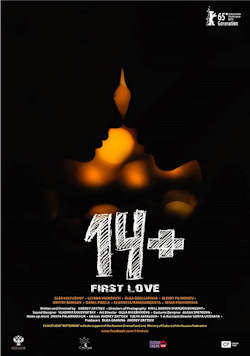
Like the Russian Andrey Zaytsev, other filmmakers opt to shed the false pretenses and pretentious narratives and instead offer a simplified, yet more accurate portrayal of what it is like to be a teenager nowadays, in a thoughtful and honest manner. That second approach results in more engaging and fun to watch films, and the 2015 romantic drama from Russia, 14+, is a perfect example.
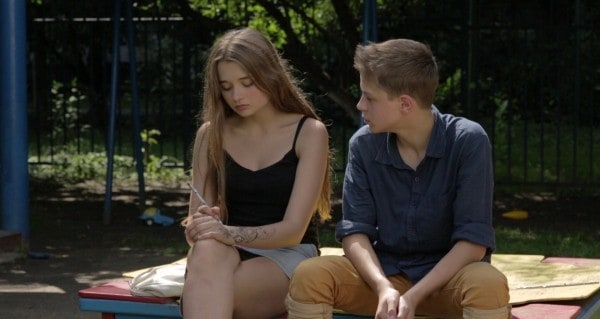
Gleb Kalyuzhny as Alex in 14+
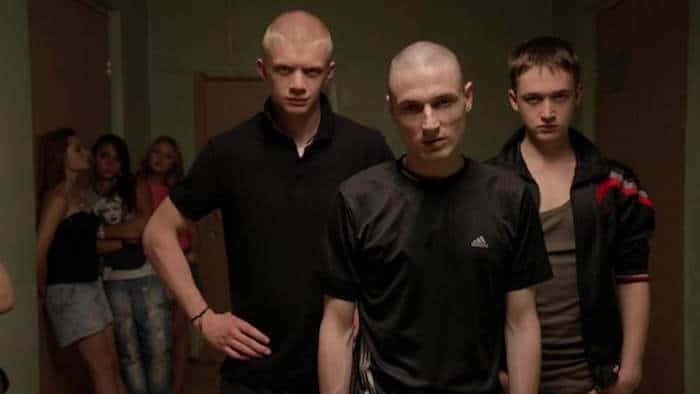
Marketed as a “Love story of a modern Romeo and Juliet”, which is a slight overstatement (if one is to keep true to the original literature characters), 14+ tells the story of Alex (Gleb Kalyuzhny) and his quest to melt the heart of the beautiful Vika (Ulyana Vaskovich). It’s a challenging task, with Vika not only being the first love of the young protagonist, but she also attends a rival school, ruled by the fearsome Wolf, an older boy who leads a gang of tough kids in numerous fights against pupils of other establishments who dare to cross into “their lands”.
The boys from the other school. You would not want to meet them in the dark, would you ?
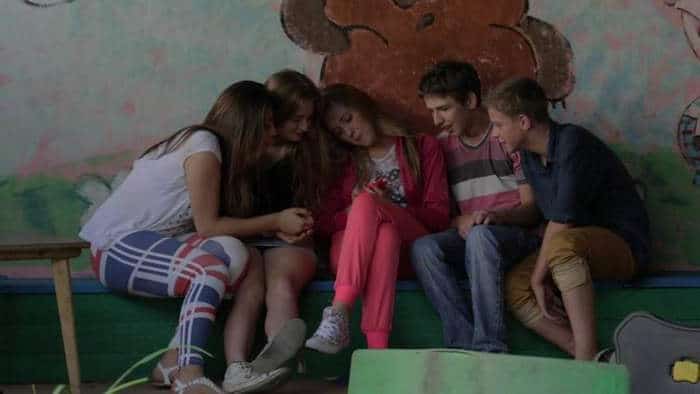
The story is set in the residential areas of Moscow. Yet its universal theme is easily transferable to any large city around the world (and especially in Europe). Alex and Vika belong to a generation that grew up on video games and social networks, with parents who rarely discuss growing-up issues with them, believing that they are old enough. The Russian social network site VK (think of it as the Russian Facebook, if you have never heard of it) is featured quite a lot in the film and it did not come as a surprise that the filmmakers utilized its capabilities to discover and recruit many of the young kids that star in the film. Most of the actors are non-professionals, playing themselves and that probably is part of the reason as to why their performances appear so natural. Of course, we can also attribute that to the capable directing of Andrey Zaytsev.
Teenagers as they are / 14+
It is extremely easy for one to identify with the film’s protagonists, especially with Alex’s feelings and mental state (the nervousness, shyness but also the determination). I can very well remember these from my own teenage days, including a time in which a younger Georgi gifted roses to his “Vika”, while making a fool of himself in front of her entire class.
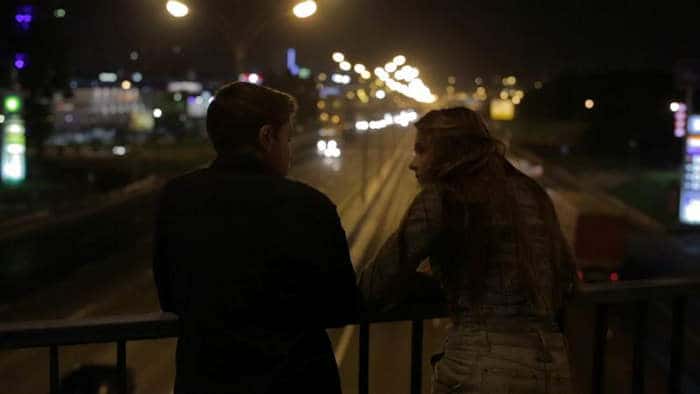
Alex and Vika
14+ is also a film with a great soundtrack featuring spot-on music to the pulse of youth today while giving the nod to the music their parents listened to as well, including: Radiohead, Manu Chao, Serge Gainsbourg, Adriano Celentano (by Alexey Sulima) and many other Russian songs. The songs liven up the scenes and make the film even more enjoyable to watch, especially for young audiences.
All in all, I greatly enjoyed the film. It’s very objective and does a credible job in portraying the trials and tribulations of first love and growing up.
https://www.imdb.com/title/tt4427076/reference
14+ (2015)
CONCLUSION
An accurate portrayal of what it is like to be a teenager nowadays, presented in a thoughtful and honest manner.
What are you looking for in a short movie? Maybe a tense, intriguing story with a surprising twist guaranteed to evoke that “Wow “effect? If yes, Tim Hyten’s 2016 short film Snake Bite has you covered.
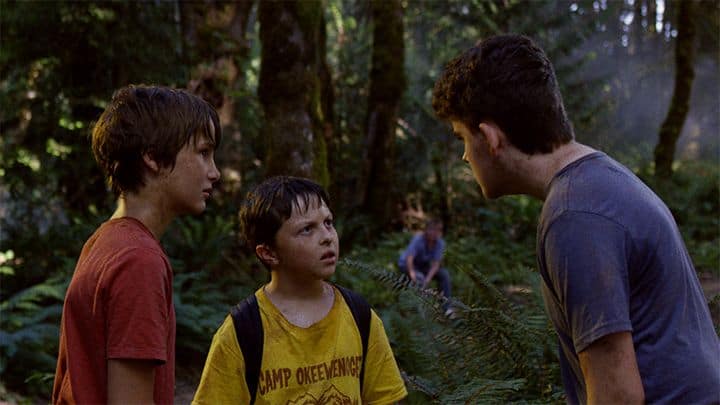
Four boys venture deep in the woods exploring the marvels of nature. One carries a book on poisonous snakes, ensuring they can identify each species they may stumble upon. It’s an adventure with a tint of danger, the perfect ingredients for a boyish day out. All is fun and games until one of them gets bitten – and not by just any snake – but by the infamous Black Widowmaker. The guide helps them identify it, but does not offer a remedy. Time is running out for the bitten boy and a harsh choice has to be made …
Can they save their friend? / Snake Bite
The plot is both simple and complex and the story encompasses a single happening in the life of its young protagonists. As crucial a happening as it is, how it’s handled by the boys allows the viewer to get to know the characters largely through their dialogue and reactions.
The cinematography impresses with the skillful use of lighting and framing that gives the film a naturalistic, true-to-life atmosphere while high lining the action. A suspenseful short film, Snake Bite manages to grab one’s interest and holds it throughout – all the way to its original ending.
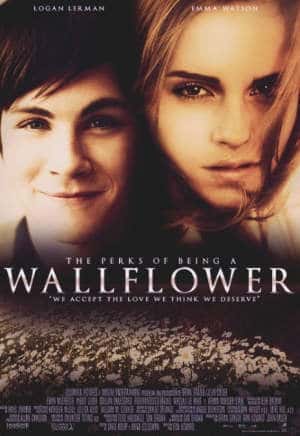
The journey from outsider to insider is the guiding theme of this excellent Coming-Of-Age drama/ romance that does almost everything right.
Being different is something I can personally identify with, and The Perks of Being a Wallflower was just the kind of medicine I needed to counter the somewhat useless reality that I am unique just like everyone else.
The Perks of Being a Wallflower is set over the course of one school year during the early 1990s in the USA, the time of The Rocky Horror Picture Show, David Bowie and Nirvana.
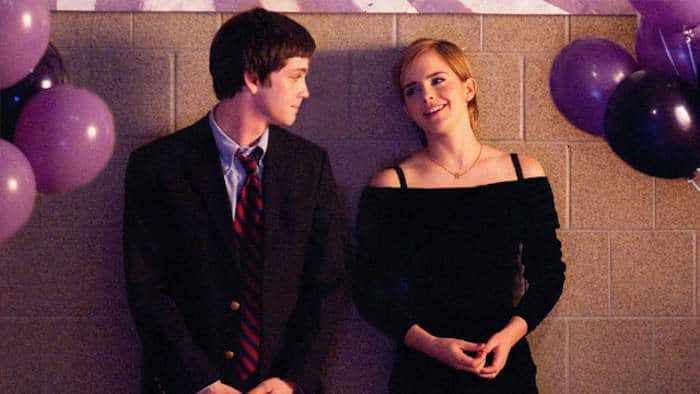
As 15-year-old Charlie (Logan Lerman) enters high school with some trepidation, he does what most outsiders would do – watch and learn. Even though school isn’t exactly the kind of place where common sense prevails, by necessity sub-cultures exist to accommodate those who do not conform.
Ezra Miller as Patrick and Logan Lerman as Charlie.
Luckily for Charlie, two seniors soon adopt him: Sam (Emma Watson) and Patrick (Ezra Miller). Their attitude of “vive la différence” is just what Charlie needs. He doesn’t realise it at first, but soon discovers that the time has come for adventurous and hedonistic pursuits instead of existentialist introspection. Alas, things are never that simple. Charlie has issues. He falls in love with Sam, who is not available, suffers from depression and struggles to cope with the suicide of his best friend.
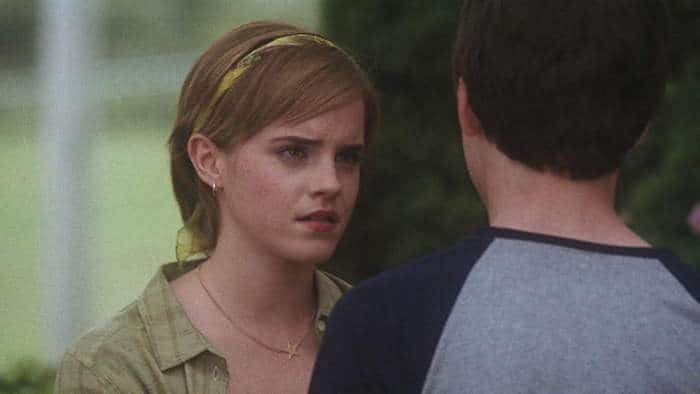
Emma Watson as Sam
Mr. Anderson, his English teacher (played by Paul Rudd), provides appropriate reading material like The Catcher in the Rye. Charlie even starts dating the gregarious Mary Elizabeth (Mae Whitman). But his newly adopted lifestyle becomes “too much too soon” and Charlie spirals out of control, however not quite like Albert Camus’s “The Stranger” (one of the books he is given to read) who is condemned to failure.
Scene from The Perks of Being a Wallflower
On a superficial level this narrative is all too familiar, so what sets The Perks of Being a Wallflower aside from the rest? Right from the start it’s obvious that this movie is more than a glib treatment of the high school Coming-of-Age genre. Chbosky’s belief that there should be no stigma attached to mental health issues is central to the theme of The Perks of Being a Wallflower and that makes for enthralling viewing.
Stephen Chbosky proves once again that some of the best films come from authors who produce their own work.
If, for some reason you haven’t seen it yet, The Perks of Being a Wallflower is highly recommended.
http://www.imdb.com/title/tt1659337/combined
The Perks of Being a Wallflower (2012)
CONCLUSION
The journey from outsider to insider is the guiding theme of this excellent Coming-Of- Age drama-romance that does almost everything right.
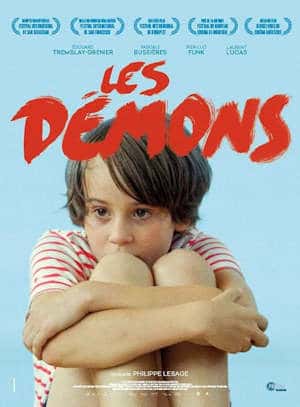
If this review of the 2015 French-Canadian film The Demons (Les Démons) makes you as uncomfortable as I am writing it, it’s achieved its goal.
The film is essentially a Coming-of-Age drama where the end represents a return to innocence with exceptions. Philippe Lesage (the Writer/Director of The Demons) takes us through some of the riskiest, immoral, and illegal territory known to man.
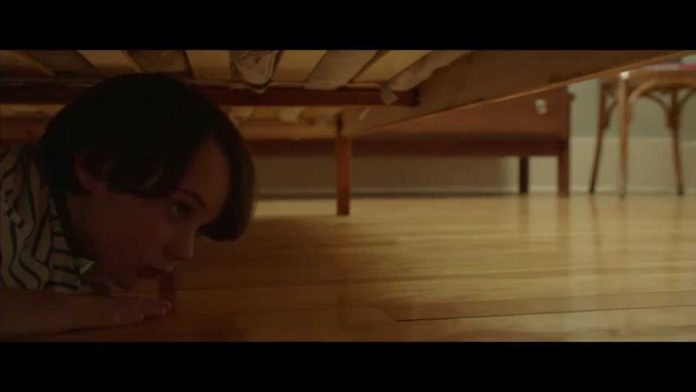
Édouard Tremblay-Grenier as Félix observing the family activities.
The Demons depicts stereotypical everyday activities that belong to the Canadian society our protagonist lives in but, right from the start, it’s evident that something is different. Days that could be boring are now imbued with an undercurrent of menace.
Edouard Tremblay-Grenier stars in Philippe Lesage’s The Demons
Ten-year-old Félix, played by Edouard Tremblay-Grenier, stands apart from his schoolmates and teachers in The Demons. His quiet, introspective nature—marked by a hesitant step or a watchful gaze—sets him apart. He is different and more of an observer than a participant in the clichéd life of others. Through his interpretation of events and others’ social interactions, Félix lives in fear, and his imagination creates unrealistic doom-and-gloom scenarios. The film takes a slow, observational approach, often isolating him in the frame to emphasize his perspective.
Symmetrical wide-angle scenes are often used.
The cinematography is deliberate, with long, unhurried takes that emphasize Felix’s introspective nature. Silence plays a role, often replacing music to create a naturalistic, almost documentary-like atmosphere. This enhances the film’s realism, making small moments feel weighty and significant. So I followed with interest, trying to pick out hints about Felix’s character.
The film strategically foregrounds the children’s vulnerability, prompting our innate desire to nurture and protect. It then deftly subverts this instinct by exposing the dark exceptions to that impulse.
The Demons‘ ambiance is not subtle. Philippe Lesage explains that he took some risks instead of sanitizing the story, as many contemporary directors do. And yet, after investing some time watching the film and trying to analyze all of Felix’s character traits, the finale disappointed me. There is no clear resolution or transformation for Felix, making the ending feel frustrating and unsatisfying after all the time spent developing his psychological journey.
I like normally like art house cinema and character-driven dramas, but The Demons disappointed me. The film built up expectations only to abandon them, and the slow pacing was unjustified. Maybe the narrative tries to reflect the unpredictability and confusion of childhood—how fears come and go, how kids don’t always get clear answers, and how life moves forward even after disturbing events. But even if that’s the case – I will hesitate before recommending The Demons.
The Demons (2015)
CONCLUSION
As a coming-of-age drama, The Demons, is not light entertainment, it is a realistic perspective of the world of the guiltless and the guilty.

 South African-born Australian singer, songwriter and actor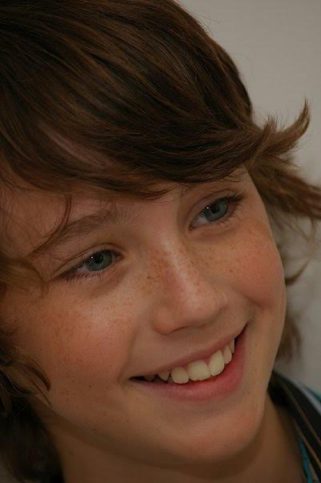
 On Aug 7, 2010 Troye told his family that he’s gay and on Aug 7, 2013 he published a “coming out” vlog on YouTube. The community’s response was overwhelmingly positive.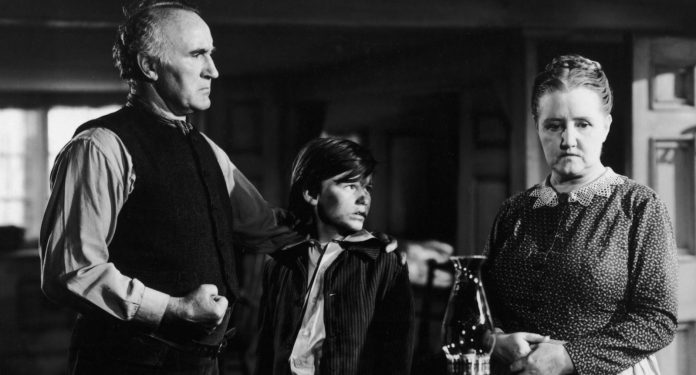


 Captain Fantastic is more of a “we inform, you choose” type of production rather than a critique of an alternative lifestyle portrait, by the characters.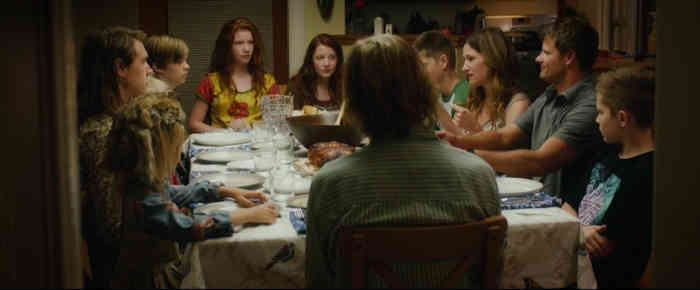
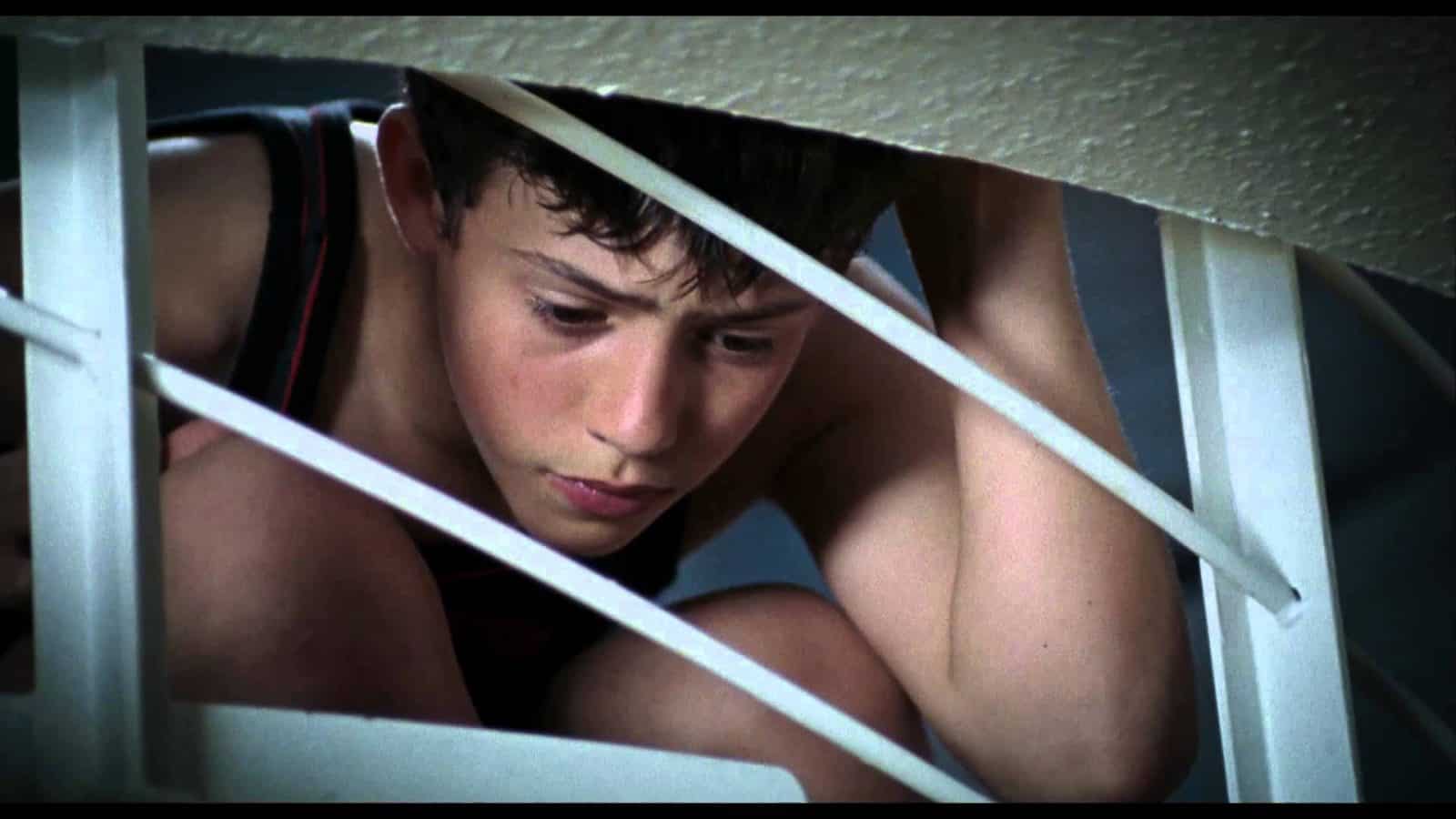
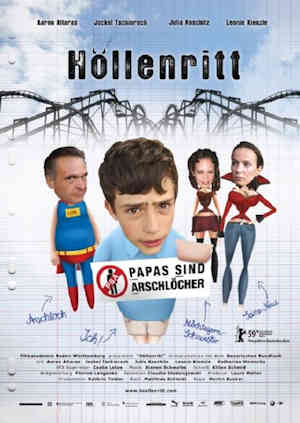 The 2008 German short film Roller Coaster (original title: Höllenritt) offers an intriguing and original way to portray Coming-of-Age experiences.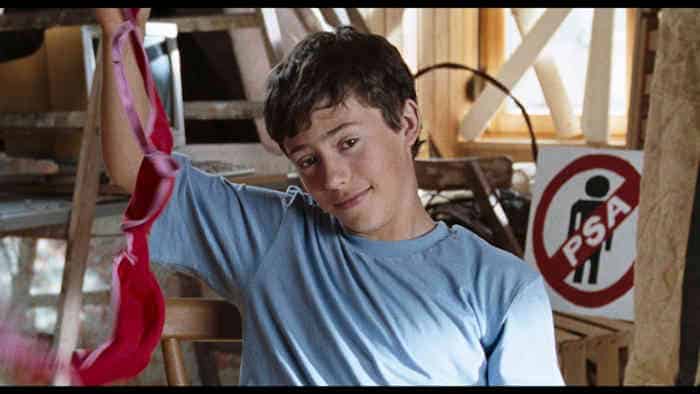

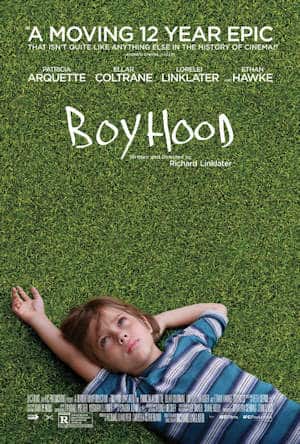 Richard Linklater is a great author and director and I love Patricia Arquette. Ethan Hawke is well, just Ethan Hawke, and Ellar Coltrane is cute, but why all the hype about Boyhood?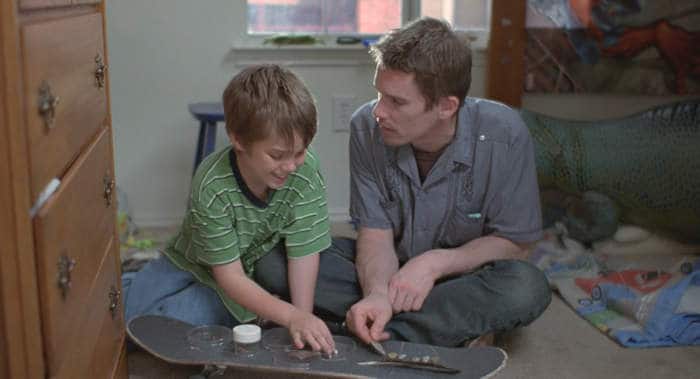

 Although sexual awakening is a big part of the Coming-of-Age transformation youth goes through, it is a subject rarely addressed in cinema. And when it is, it’s often in the form of loutish comedy (as in American Pie). Films that accurately portray the reaching of a critical turning point (revolving around adolescent sexuality as it may be) that results in a loss of childhood innocence, such as Kay Pollak’s 1980 Swedish drama Children’s Island (original title: Barnens ö), are hard to come by.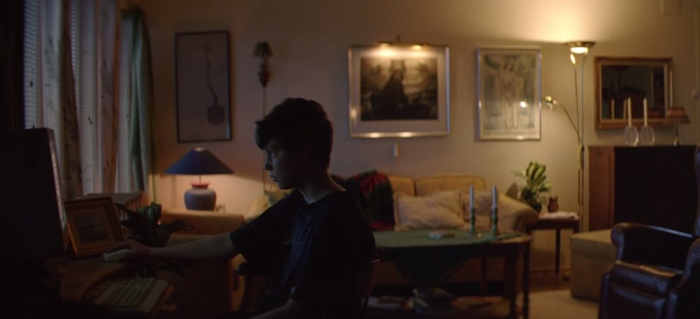
 Some Coming-of-Age movies take on teenage life often varies significantly. Some filmmakers, like Stephen Chbosky, focus on a message rather than the real life of youth out there in their films.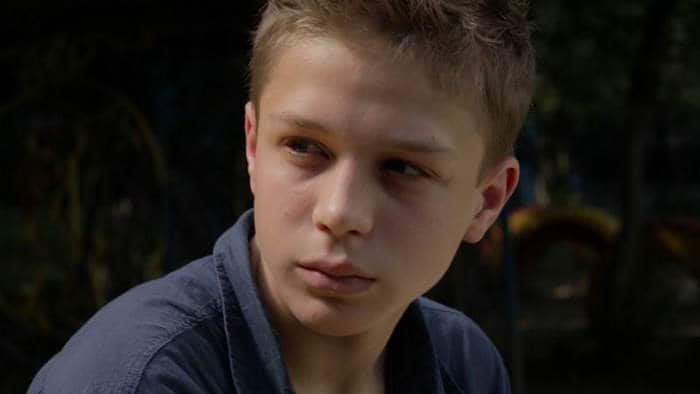
 The journey from outsider to insider is the guiding theme of this excellent Coming-Of-Age drama/ romance that does almost everything right.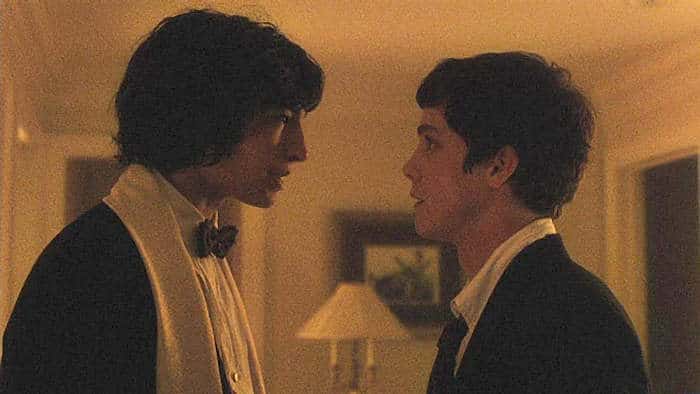
 If this review of the 2015 French-Canadian film The Demons (Les Démons) makes you as uncomfortable as I am writing it, it’s achieved its goal.