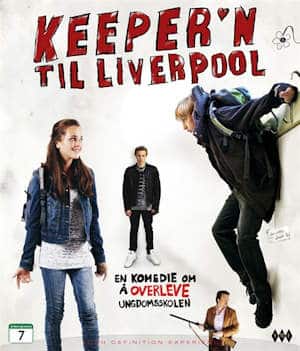
 If one judges a movie by its title, the 2010 Norwegian film by Arild Andresen, The Liverpool Goalie, could be easily mistaken for a sports-oriented flick. You know the kind: Carlitos and the Chance of a Lifetime, Devil’s Kickers, Kicking and Screaming, and Believe are just a few of the many sports films the Coming-of-Age genre is so rich with.
So yes, titles can be misleading, but only slightly so in the case of The Liverpool Goalie. The sports motif is present but is not pivotal for the film’s storyline. Based upon a novel by the Norwegian author Lars Maehle (who has authored a number of books for children, both fiction and nonfiction), The Liverpool Goalie tells the story of 13-year-old Jo (Ask von der Hagen).
Jo is an introverted kid, shy (and slightly wimpy) with a vivid imagination — navigating through the peculiar world of middle school (where bullies lurk) and home (run by a single and ever working mom). To make things more complicated, a new girl, Mari (played by Susanne Boucher), joins Jo’s class and, thanks to her beauty and intellect, he falls madly in love with her. First loves are the strongest, or so they say.

I have rarely seen such a quirky character as the young protagonist of The Liverpool Goalie. His mom’s constant worries have rubbed off on him, and he spends a lot of his time imagining a zillion possible outcomes of his decisions or actions that may end his youthful life in a gruesome manner. His fantasies – ingeniously portrayed on screen as sequences of possible happenings and narrated in the first-person by him — provide for great comedy relief, even if most of the humor is black and poor Jo’s fear and anxiety shine through. To avoid trouble, Jo has agreed to do a classmate’s homework, a classmate who uses his superior physique to intimidate the already very daunted boy. And when Mari joins his class… things go completely out of control.

On several occasions I have praised Scandinavian filmmakers for their ingenious ways of portraying youthful life (most recently in the review of the 2002 film from Finland Changes/Muutoksii). The Liverpool Goalie is no exception. Having previously demonstrated his ability to direct young actors in the 2006 TV Series Gutta Boys (highly recommended for any fan of the Coming-of-Age genre), Andresen’s directing is still quite refreshing, helping a young cast deliver natural performances, as opposed to the over-rehearsed and stilted ones that plague many films featuring young, amateur actors.

And yet, while the acting is excellent, it’s the visual effects and the editing that makes The Liverpool Goalie an absolute joy to watch. From the very first scene (and even during the opening credits), one is exposed to an original, brightly colored, and energetic manner of storytelling. It might be dark humor with a tint of sarcasm, yet the viewer will hardly be able to wipe a smile off his face once the story gets going.
A story as quirky as its protagonist, yet terrific in showcasing the inner world of an adolescent boy. To some viewers, Jo’s fantasies and ideas about life might seem a bit wicked and funky, but most people will probably recall having similar thoughts at that age (nostalgia striking back). Or, if the viewer is younger (it’s a kid-oriented film after all), he will probably identify with like situations in his own life.

First-love, friendship, bullying, self-acceptance, and respect are characteristics of many Coming-of-Age films. But, fear not. The Liverpool Goalie lacks clichés and is great fun to watch.
There are some serious issues below the light-hearted surface of the film, making it suitable for older audiences who may choose to focus on them, in addition to laughing their heads off at the funky scenes. But that’s optional, ensuring everyone will find something to enjoy in Arild Andresen’s movie. The Liverpool Goalie may not be preachy or overly concerned with realism (though, from what I’ve seen, the life of some Norwegian kids may be exactly as shown). Still, it delivers fun and a refreshing cinematic experience.
http://www.imdb.com/title/tt1488574/combined
 If you want to feel the pulse of modern youth, Scandinavian cinema is the way to go. These movies feature upbeat music scores in line with what today’s young people are really listening to, new creative camerawork (increasingly drones are being used as a cinematic tool) and all-around talented child actors. For the latter, often amateurs with no previous acting experience can be viewed delivering natural, true-to-life performances.

 Unfortunately, despite its excellent opening and intriguing story, during the last 30 minutes of the film the poignant and true-to-life narrative somehow transforms into cheesy nonsense. The story’s final resolution is so weak and meaningless that it makes one wonder if all of a sudden the filmmakers got scared of potentially losing their pre-teen audiences by having an acute, realistic finale. A hijacked bus and hot pursuit may excite some people, but after enjoying a suspenseful and intriguing drama, I found the sudden mood swing to be very insulting.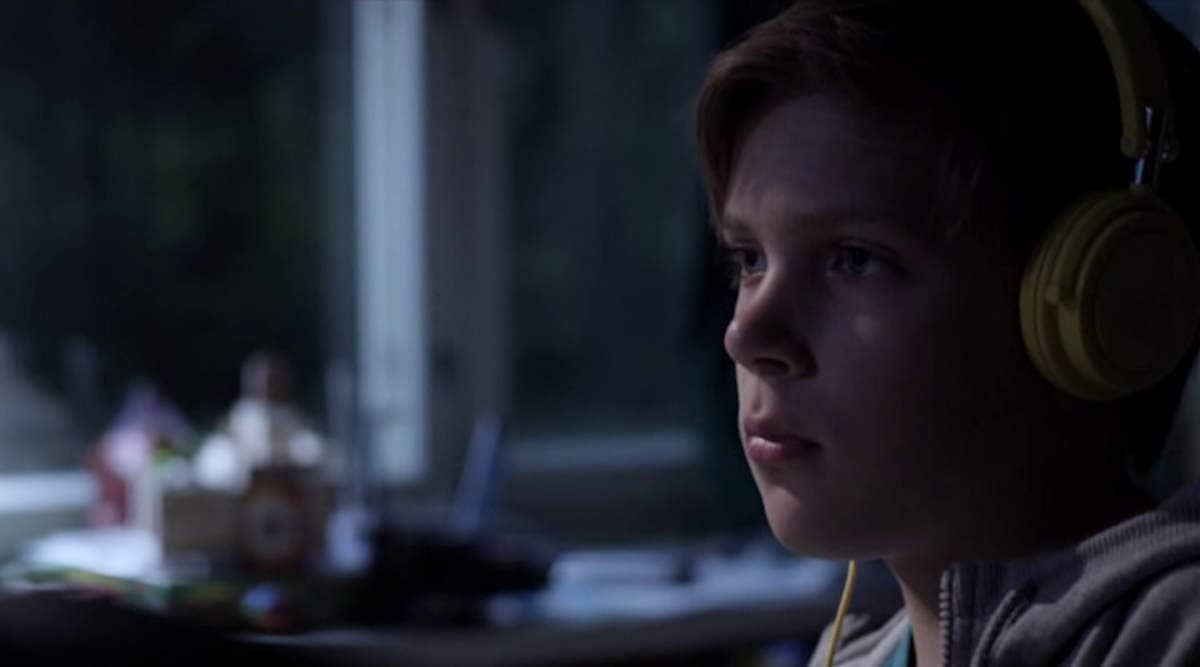

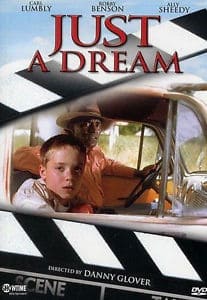 A twelve-year-old boy (Jeremy Sumpter) Comes-of-Age (what his father refers to as: “becomes enlighted”), while spending a summer of his young life working in a bar in Danny Glover‘s 2002 American drama – Just a Dream.
 It’s a good thing those scenes are not that frequent, especially compared to those in which Jeremy Sumpter appears, which is just about every scene of the film.
 I read an article in an on-line newspaper in which the columnist refers to the characters in Roberto Minervini’s Low Tide (2012), as “trailer trash”. The article has since disappeared but it provoked me into writing this review about the life of a 12-year old boy (newcomer Daniel Blanchard) and his mother (Melissa McKinney — who, in real life, is Daniel’s sister).


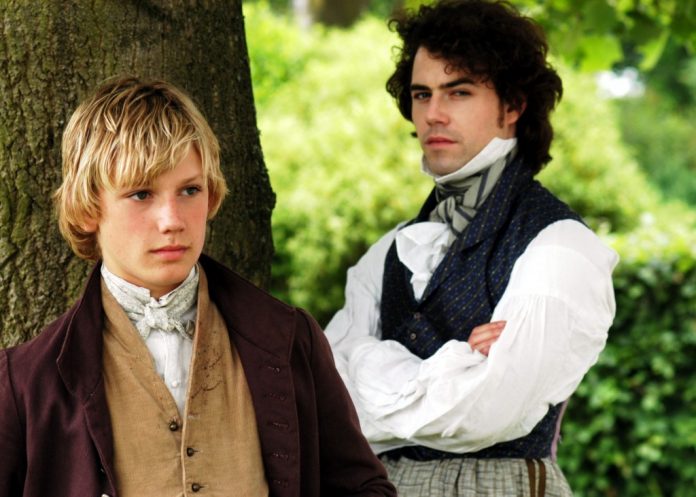
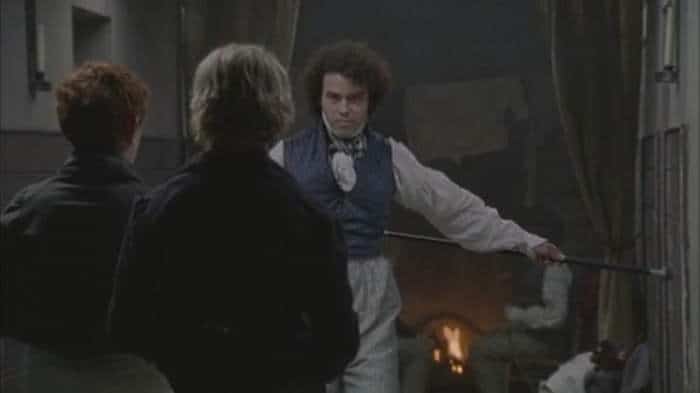
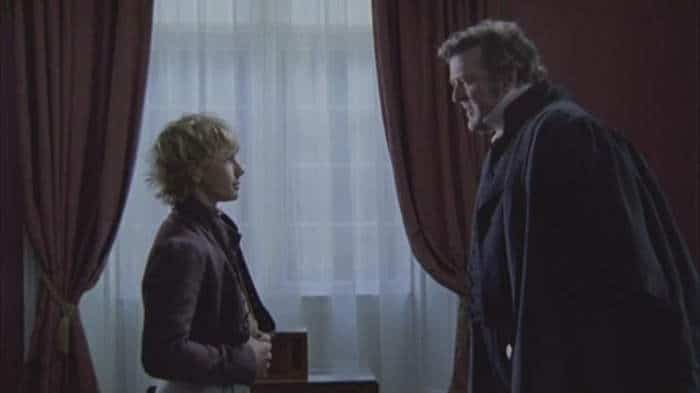
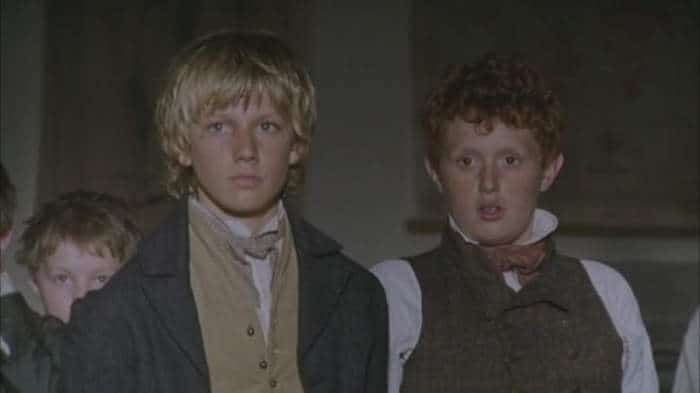
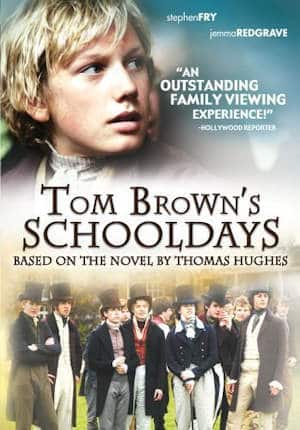 From the novel of renowned author, Thomas Hughes, comes a remarkably powerful story of Victorian England where rugby school dormitories were left to their own devices and new boys were subjected to extreme bullying by the seniors until they had proven their manliness.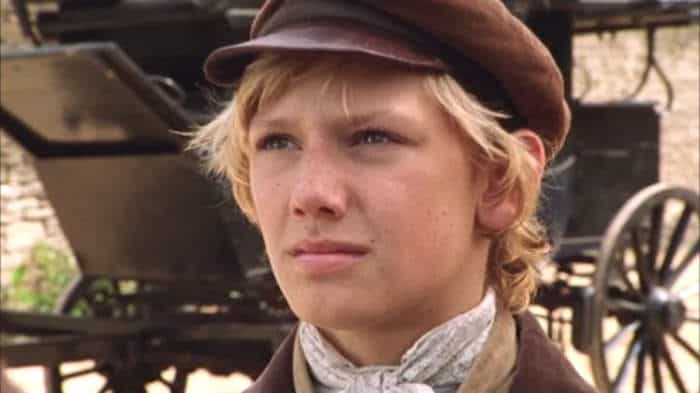



 It is all so confusing!



 A comment by Robert Duvall on the




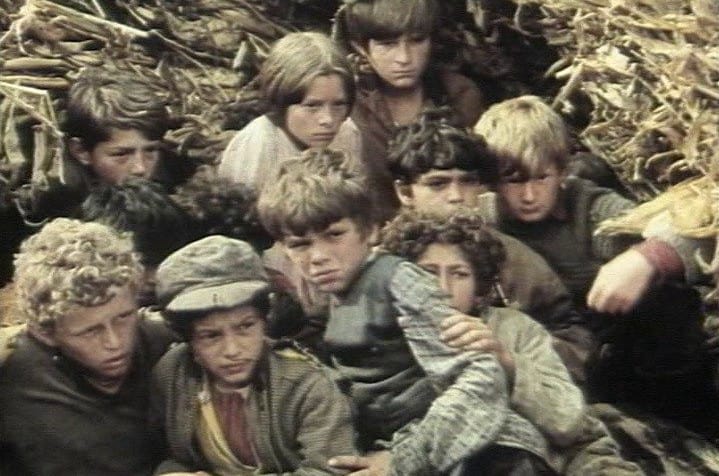
 The poster artwork of the 1969 Yugoslavian film A Bloody Tale (Original title: Krvava bajka) doesn’t leave much room for interpretation, nor does its title. It’s a film dedicated to the memory of people subjugated to massacre and, as such, it is extremely hard to watch –especially because the story is told from the view point of children.


 Gil, a 13-year-old boy (played by P.J. Verhoest) and his grandmother Mrs. A (Polly Bergen), are traveling to their summerhouse in Manhattan New York, while the housekeeper Betty (Dana Ivey), prepares the house for their arrival.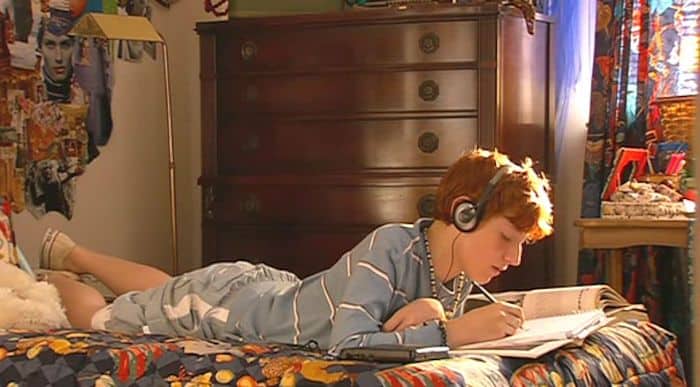



 Hanging out with friends during those long summer days with nothing to do but pass the time of day, has got to be a universal growing up experience – significant in its insignificance. Writer/Director Julien Paolini decided to use that experience as the premise for his 2011 short film Boredom Killer (original title Tuer l’ennui).
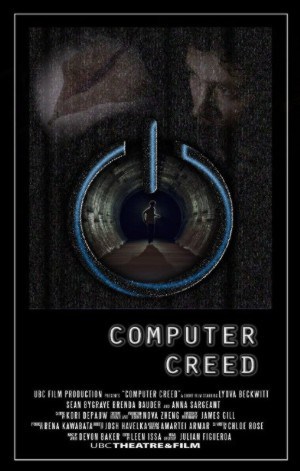 In this day and age, when many of us are glued to screens of various dimensions, we consume content – a lot of content — that informs, misinforms or to simply entertains us. But where is all this digital addiction going to lead us?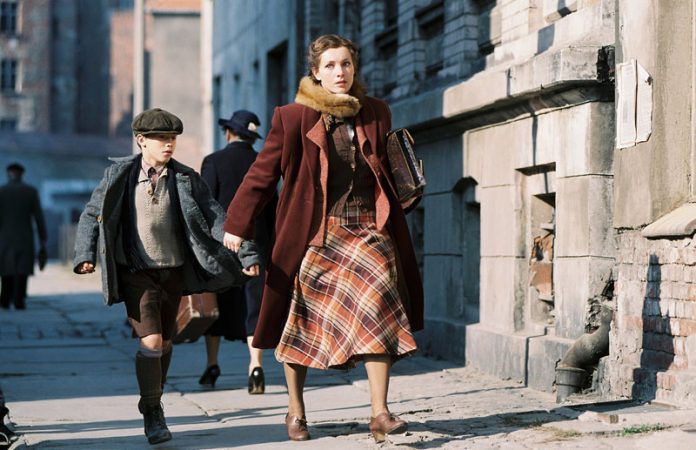
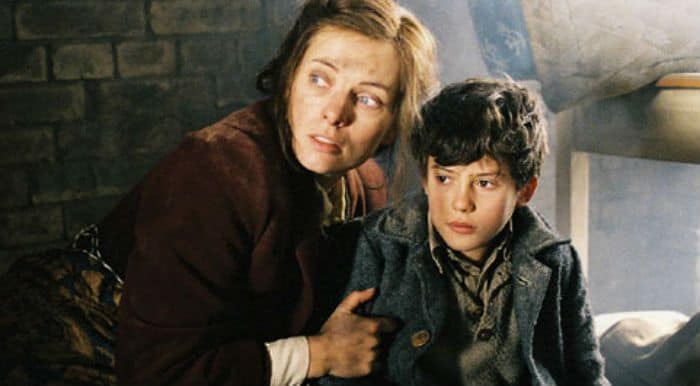

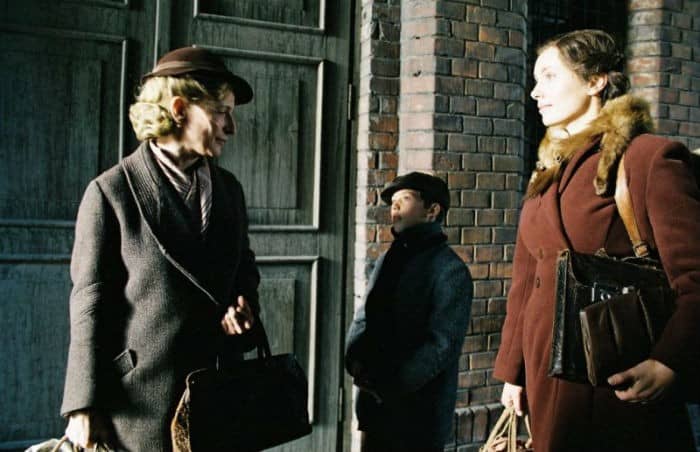 The fact that Not All Were Murderers is a made-for-TV movie doesn’t mar the result. The quality of the sets and costumes is sufficiently convincing, although they are likely to be responsible for some serious issues the film has with the passage of time concept. The issue doesn’t become apparent until the last scenes when, in conjunction with the seemingly rushed ending, they ruined the whole effect the film is supposed to have on its viewers. For this reason alone, it’s probably better to pick up the book on which the film is based, or another film with more consistently told story such as